
Last Updated: April 2026
TL;DR
- Leather wins on longevity: A quality leather backpack lasts 10 to 20 years with basic care. Canvas typically lasts 3 to 7 years. Nylon lasts 3 to 5 years under daily use before showing visible degradation.
- Nylon wins on weight: Nylon backpacks weigh roughly half as much as leather equivalents. If ultralight carry is the priority, nylon is the practical choice.
- Canvas wins on rugged casual style: Canvas develops a worn-in aesthetic that suits outdoor and vintage-inspired looks. It sits between leather's polish and nylon's technical appearance.
- Leather wins on cost per year: A $150 leather backpack used daily for 10 years costs $15 per year. A $60 nylon backpack replaced every 3 years costs $20 per year. Leather is cheaper over time despite the higher upfront price.
- The right material depends on your use case. Leather suits professionals, daily commuters, and anyone who values long-term investment. Nylon suits outdoor activity and ultralight travel. Canvas suits casual, rugged aesthetics.
WHAT YOU NEED TO KNOW
- Leather is the only material of the three that improves with age. Top-grain and vegetable-tanned leather develop patina, darkening and becoming more characterful over the years of use. Canvas softens but fades. Nylon degrades.
- All three materials can resist water, but through different mechanisms. Leather's natural oils repel surface moisture. Nylon uses DWR (Durable Water Repellent) coatings. Canvas requires wax treatments. None of the three is truly waterproof without additional treatment.
- Leather requires more maintenance than the other two. Conditioning every two to three months keeps leather supple and protected. Nylon and canvas require minimal ongoing care beyond occasional cleaning.
- Professional appearance is where leather separates completely. A leather backpack is appropriate for offices, client meetings, and business travel. Canvas and nylon read as casual in most professional settings.
Choosing between a leather, canvas, or nylon backpack is not really about which material is "best."
Each one excels in different situations, and the right choice depends on how you plan to use the bag, how long you want it to last, and what impression you want it to make.
This guide compares all three materials across the categories that matter most for daily carry: durability, appearance, comfort, weather resistance, cost over time, and environmental impact.
If you are choosing the right leather backpack or trying to decide whether leather is worth the higher price, the comparison data here will help you make that decision confidently.
Durability: How Long Each Material Actually Lasts
Durability is the most important factor for anyone buying a backpack they plan to use daily.
The difference between materials is significant and measurable.
Top-grain leather has a tensile strength of 25 to 45 MPa, depending on the grade and tanning method.
This makes it the strongest of the three materials by a wide margin.
More importantly, leather does not degrade with regular use the way synthetic materials do.
The fibers become more flexible, and the surface develops patina, but the structural integrity remains stable for decades with basic conditioning.
A well-cared-for leather backpack typically lasts 10 to 20 years of daily use.
Many last longer.
The limiting factor is usually hardware failure (zippers, buckles) rather than the leather itself.
High-denier nylon (600D to 1680D) offers good abrasion resistance and tensile strength for a synthetic material.
However, nylon degrades over time through UV exposure, repeated flexing, and the breakdown of DWR coatings.
Under daily use, most nylon backpacks show visible wear within 2 to 4 years and typically need replacing within 3 to 5 years.
Canvas (heavy-duty cotton weave, often 12 to 18 oz weight) is tougher than nylon against abrasion and tearing.
Canvas backpacks can last 3 to 7 years, depending on weight, weave quality, and whether the canvas has been waxed for additional protection.
Canvas does soften with age, which some users consider an aesthetic benefit, but it also loses structural rigidity over time.
For a deeper look at what determines how long a leather backpack performs, our guide on how long leather backpacks last covers leather grade, construction quality, and maintenance factors in detail.
Full Comparison Table: Leather vs Canvas vs Nylon
| Category | Leather | Canvas | Nylon |
|---|---|---|---|
| Typical lifespan | 10 to 20+ years | 3 to 7 years | 3 to 5 years |
| Weight (empty, avg 25L) | 1.3 to 2.0 kg | 0.9 to 1.4 kg | 0.5 to 1.0 kg |
| Water resistance | Good (natural oils repel surface moisture) | Poor unless waxed | Good (DWR coating, degrades over time) |
| Professional appearance | High: suits offices, meetings, business travel | Casual: suits creative and outdoor settings | Casual to athletic: reads as sporty or technical |
| Ageing character | Develops rich patina; looks better over time | Softens and fades; vintage character | Degrades: pilling, fading, coating breakdown |
| Maintenance required | Condition every 2 to 3 months | Re-wax every 3 to 6 months (if waxed) | Minimal: spot clean as needed |
| Typical price range | $100 to $300 | $40 to $150 | $30 to $100 |
| Cost per year (daily use) | $10 to $30 | $15 to $40 | $15 to $35 |
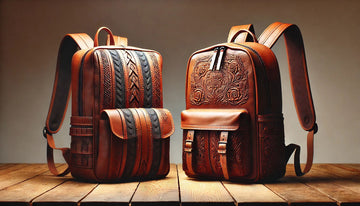
| Customization | Monogramming, embossing, and laser engraving | Screen printing, patches | Limited (mass-produced) |
| Best suited for | Professionals, daily commuters, and long-term investment | Casual use, outdoor, vintage style | Outdoor activity, ultralight travel, gym |
Appearance and Style: What Each Material Communicates
The visual impression a backpack creates matters, especially if you carry it into professional environments.
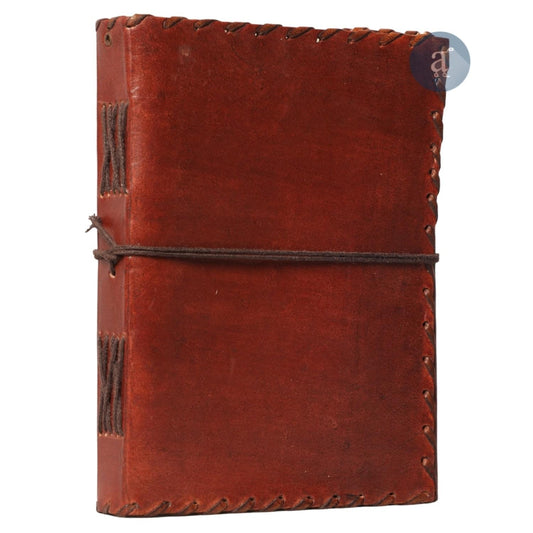
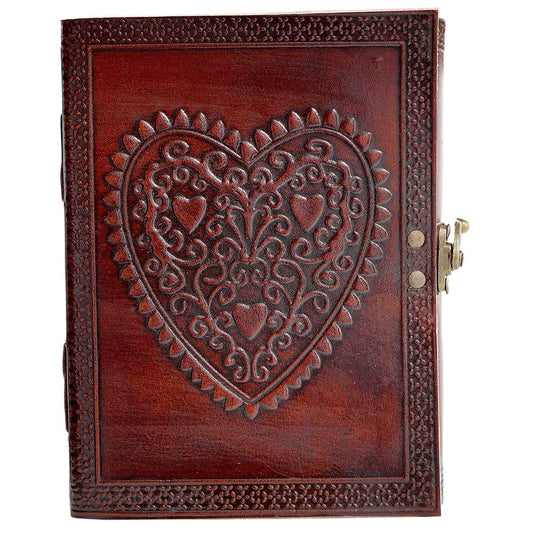
A leather backpack projects polish and deliberate style.
In office settings, client meetings, and business travel, leather is the only backpack material that reads as professionally appropriate.
A well-maintained leather backpack communicates the same thing a quality briefcase does: that the person carrying it cares about their presentation and has invested in their tools.
Canvas projects a relaxed, rugged aesthetic.
Waxed canvas backpacks in olive, tan, or charcoal carry a heritage-inspired look that suits outdoor brands, creative studios, and casual workplaces.
Canvas softens and develops a worn-in character over time, which appeals to people who prefer their accessories to look lived-in rather than pristine.
Nylon projects practicality and function.
Sleek nylon backpacks in black or grey can look clean and modern, but they rarely cross into "professional" territory in the way leather does.
Brightly coloured nylon backpacks or those with visible technical features (compression straps, mesh pockets, reflective strips) read as athletic or outdoor gear, which can feel out of place in formal office environments.
The aging factor is where leather separates most dramatically.
A leather backpack at three years old looks better than it did when new, with darker patina, softened edges, and a depth of color that only develops through use.
A nylon backpack at three years old typically looks faded, pilled, and worn out.
Canvas falls between the two: it develops a vintage charm but also shows dirt, staining, and structural softening that can read as neglect rather than character depending on the context.
Comfort and Ergonomics
Comfort differences between materials are real but often overstated.
Nylon is the lightest material, which gives it an inherent comfort advantage for heavy loads or long carrying periods.
A nylon backpack weighing 0.7 kg leaves more of your carrying capacity for the actual contents compared to a leather backpack weighing 1.5 kg.
For hikers, cyclists, and anyone carrying 10 kg or more for extended periods, this weight difference matters.
Leather straps, however, have a comfort advantage that offsets the weight difference for most daily use scenarios.
Leather molds to the shape of your shoulders over weeks of use, creating a personalized fit that synthetic straps do not replicate.
Padded leather straps distribute weight evenly and do not dig into shoulders the way thin nylon webbing can.
Canvas straps vary widely in comfort depending on construction.
Thicker canvas with cotton padding performs well.
Thin, unpadded canvas straps can be uncomfortable under load.
For the majority of daily commuters carrying a laptop, a notebook, and daily essentials (typically 4 to 7 kg total), the comfort difference between leather and nylon is minimal.
The weight penalty of leather becomes significant only for heavy loads carried over long distances.
The Backpack That Gets Better Every Year
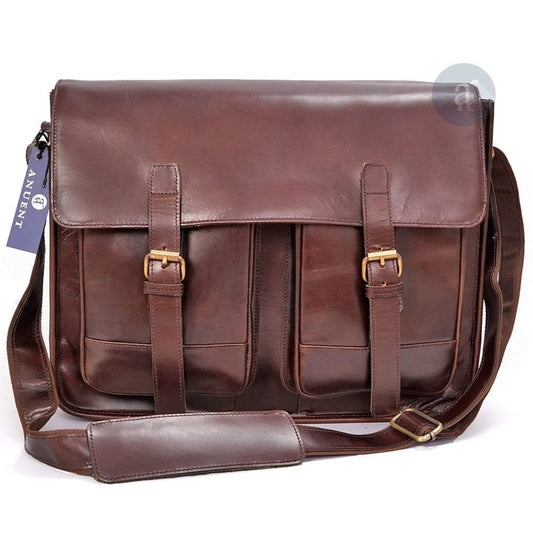
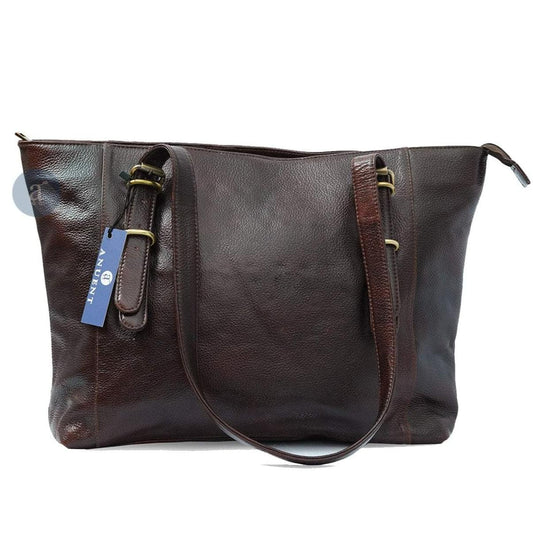
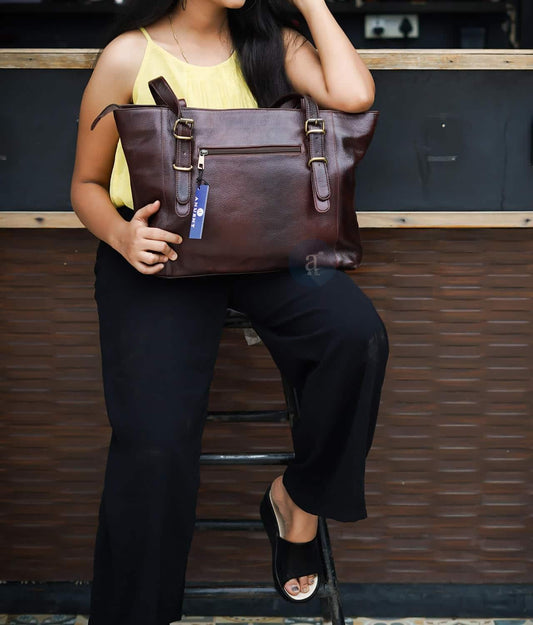
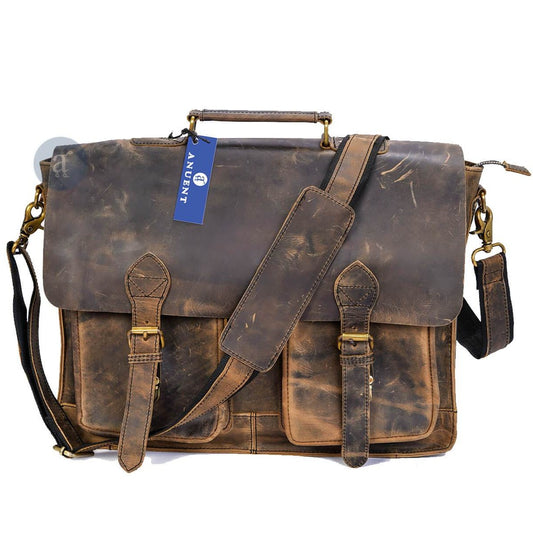
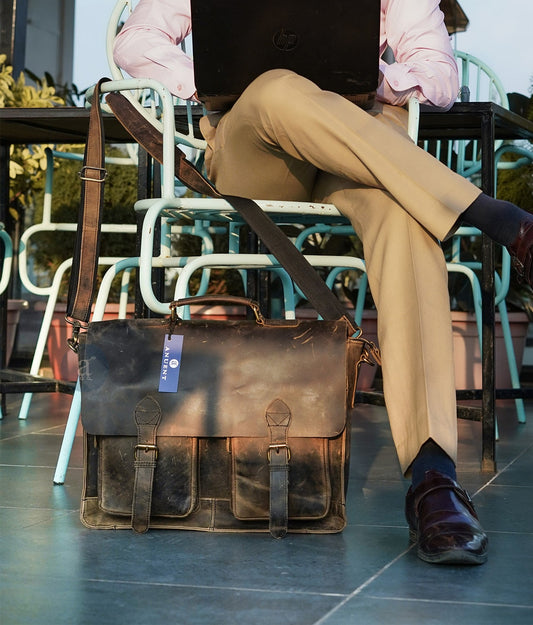
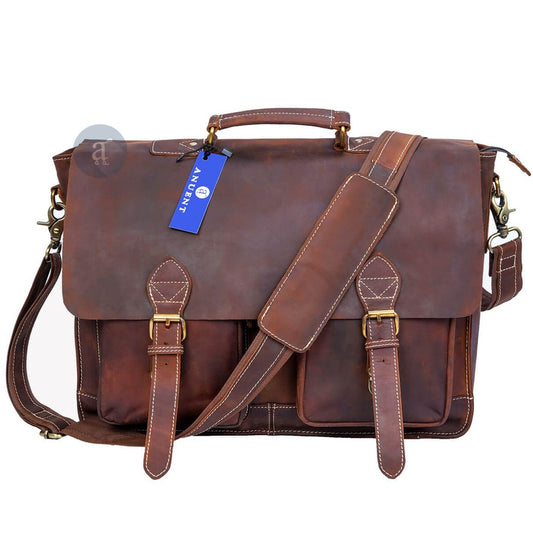
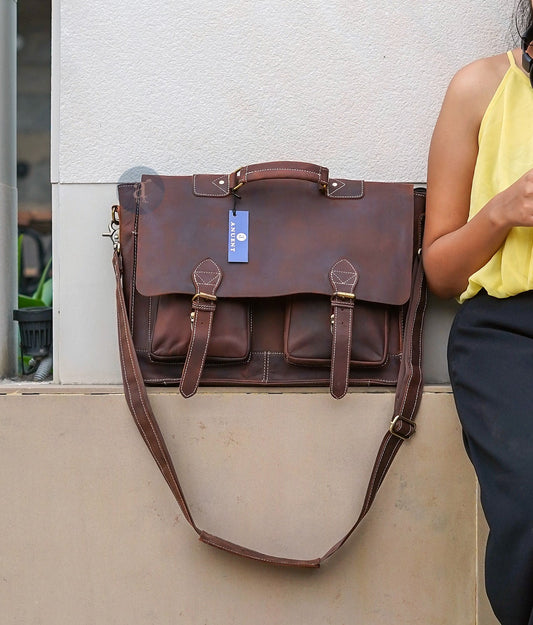
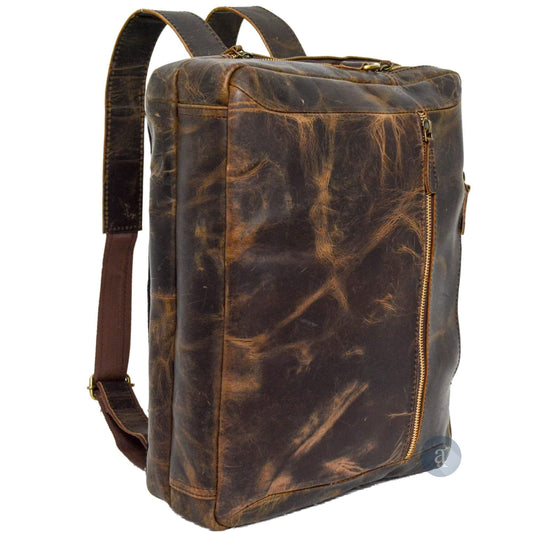
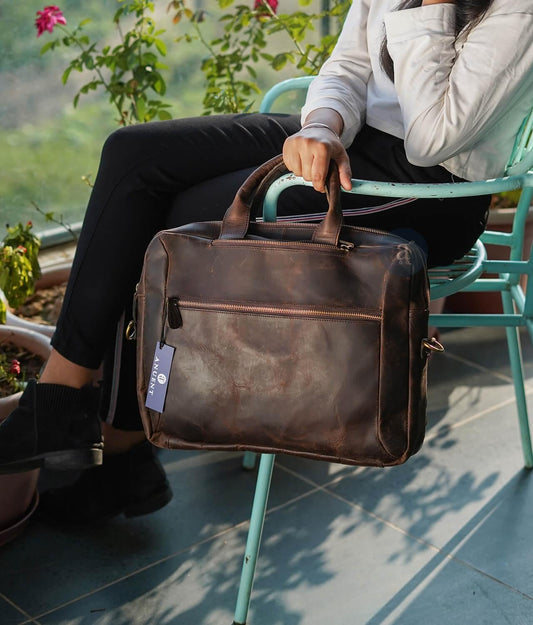
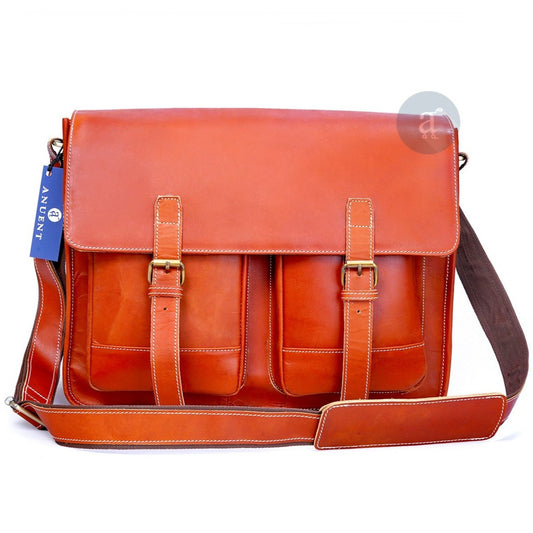
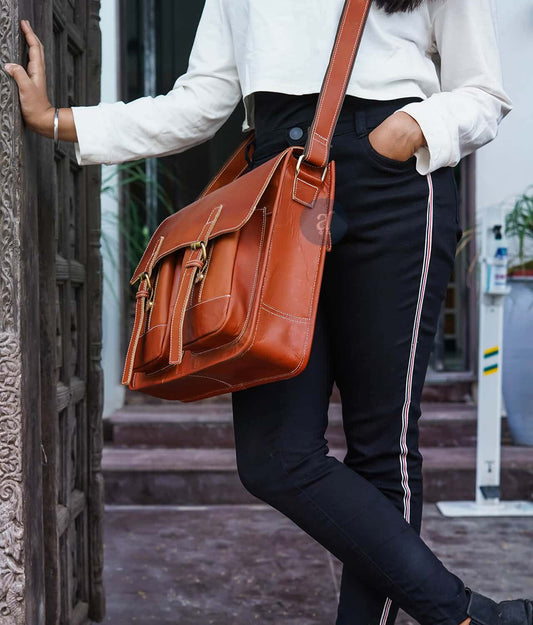
Anuent leather backpacks are expertly crafted from top-grain buffalo leather with padded laptop compartments, adjustable straps, and free monogramming. Prices from $69.99 with free shipping.
Weather Resistance: How Each Material Handles Rain and Moisture
None of the three materials is fully waterproof in its natural state, but each handles moisture differently.
Leather has natural water resistance thanks to the oils retained in the tanning process.
Surface moisture beads up and can be wiped away without absorbing into the material, provided the leather is regularly conditioned.
Prolonged heavy rain will eventually saturate leather, but for commuters caught in a typical shower, a conditioned leather backpack protects its contents effectively.
For detailed weatherproofing advice, our guide on waterproofing a leather backpack covers spray treatments and wax-based options.
Nylon is treated with DWR (Durable Water Repellent) coatings during manufacturing, which causes water to bead and roll off the surface.
Fresh DWR coatings are highly effective.
However, these coatings degrade with use, washing, and UV exposure, and need to be reapplied periodically (roughly every 6 to 12 months of regular use) to maintain performance.
Untreated canvas absorbs water readily and is the least water-resistant of the three materials.
Waxed canvas offers significantly better performance, repelling light to moderate rain effectively.
However, waxed canvas requires re-waxing every 3 to 6 months to maintain its water-repellent layer.
Cost Per Year: The True Price of Each Material

The upfront price of a backpack tells only part of the story.
The real cost is the total amount spent divided by the number of years the backpack lasts.
Consider three scenarios for daily professional use.
A leather backpack purchased for $150, used daily, and lasting 10 years costs $15 per year.
Over a 20-year period, the total spend is $150 (one backpack).
A nylon backpack purchased for $60, used daily, and lasting 3 years costs $20 per year.
Over a 20-year period, the total spend is approximately $420 (seven replacements).
A canvas backpack purchased for $80, used daily, and lasting 5 years costs $16 per year.
Over a 20-year period, the total spend is approximately $320 (four replacements).
Leather has the lowest cost per year despite the highest upfront price.
This is the financial case for treating a leather backpack as an investment rather than a purchase.
The resale value of leather reinforces this further.
A well-maintained leather backpack retains meaningful secondhand value. Used nylon and canvas backpacks have effectively zero resale value.
Environmental Considerations
The environmental comparison between these materials is more nuanced than it appears at first glance.
Nylon is a petroleum-derived synthetic.
Its production generates greenhouse gases, and nylon does not biodegrade.
However, recycled nylon (rPET) is increasingly available and reduces the environmental impact significantly compared to virgin nylon.
Canvas made from organic cotton is biodegradable and uses a renewable resource.
However, cotton farming is water-intensive, and untreated cotton canvas has a shorter lifespan than leather, meaning more frequent replacement and more total resources consumed over the same period.
Leather is a byproduct of the meat industry.
The hide would otherwise go to waste.
Vegetable-tanned leather, which avoids the chromium salts used in chrome tanning, is the most environmentally responsible tanning method.
The longevity of leather (10 to 20+ years from a single hide) means fewer total products manufactured and discarded over a lifetime compared to nylon or canvas.
The most sustainable choice is whichever material you use the longest before replacing it.
On that measure, quality leather has a clear advantage.
When Leather Is the Wrong Choice
Leather is not the best material for every situation, and being honest about its limitations helps you make a more informed decision.
If your primary use case is hiking, trail running, or outdoor sports, nylon is the better choice.
The weight difference matters over long distances, and nylon handles dirt, sweat, and machine washing far better than leather.
If you need a backpack you can throw in a washing machine without thinking about it, nylon wins.
Leather requires hand cleaning and conditioning.
Canvas can tolerate some machine washing but loses shape and water resistance over repeated cycles.
If your budget is genuinely constrained to under $50, leather is not a realistic option at that price point without significant quality compromises.
A well-made nylon or canvas backpack in that range will serve you better than a poorly made leather one.
If you work in an environment where your bag takes regular physical abuse (construction sites, warehouses, outdoor fieldwork), nylon's combination of light weight, abrasion resistance, and easy cleaning makes it a more practical daily tool.
When Leather Is the Right Choice
Leather is the right material when longevity, appearance, and cost per year matter more than minimum weight.
For daily commuters who carry a laptop, documents, and personal items to an office, a leather backpack provides professional polish that canvas and nylon cannot match.
It transitions seamlessly from public transport to office to client meeting without ever looking out of place.
For professionals who want their bag to project competence and personal style, leather is the only material that communicates these qualities.
A leather backpack in a professional and business setting sends the same message as a quality watch or well-made shoes: that the owner values quality and pays attention to details.
For anyone buying one backpack that they want to last for years, leather offers the best return on investment.
The cost per year calculation consistently favors leather over 10+ year timeframes, and the patina development means the bag looks better at year five than it did at year one.
For understanding the differences between leather types and which grade produces the best long-term results in backpacks, read our guide on types of leather used in backpacks.
How Leather Backpacks Age Compared to Canvas and Nylon
The way a material ages over years of daily use is one of the most underappreciated differences between backpack materials.
Leather develops patina.
The surface darkens gradually, develops a warm luster, and takes on subtle color variations where the bag is handled most.
Scratches on top-grain leather can often be buffed out or blended into the surface with conditioner.
The net result is that a leather backpack at five years old has more visual character and depth than it did when new.
Canvas develops a worn-in, softened look.
Waxed canvas accumulates scuff marks and develops uneven color where the wax wears away, which some owners find appealing as a rugged vintage aesthetic.
An untreated canvas simply fades, stains, and loses structural rigidity over time.
Nylon degrades visibly. Fabric pilling, color fading, coating breakdown, and stitching wear all accumulate.
A nylon backpack after three years of daily use typically looks like it needs replacing, regardless of whether it is still structurally functional.
For a deeper look at the leather aging process specifically, our article on how leather ages over time explains patina formation, color development, and how different tanning methods affect the aging character.
Frequently Asked Questions
Is a leather backpack worth the higher price?
Yes, if you plan to use it daily for multiple years.
The cost per year of a $150 leather backpack used for 10 years ($15/year) is lower than a $60 nylon backpack replaced every 3 years ($20/year).
Leather also retains resale value, develops a better appearance over time, and projects a more professional image.
The higher upfront price is an investment in a product that costs less over its full lifespan.
Which material is best for a work backpack?
Leather is the best material for a work backpack in any professional environment.
It is the only backpack material that reads as professionally appropriate in offices, meetings, and business travel.
Canvas and nylon read as casual in most workplace contexts.
If your workplace is business-casual or formal, a leather backpack is the clear choice.
Are leather backpacks heavy?
Leather backpacks are heavier than nylon equivalents but not prohibitively so for daily commuting.
A typical leather laptop backpack weighs 1.3 to 2.0 kg empty compared to 0.5 to 1.0 kg for nylon.
For most daily carry loads (4 to 7 kg of contents), the weight difference is noticeable but manageable.
Leather straps that mould to your shoulders over time partially offset the weight through improved comfort and weight distribution.
Can leather backpacks handle rain?
Conditioned leather repels surface moisture effectively and handles typical rain showers without issue.
Prolonged heavy downpours can saturate unprotected leather, so applying a leather protector spray adds an extra layer of defense for commuters in rainy climates.
Leather recovers well from occasional wetting as long as it is allowed to air dry naturally and conditioned afterward.
Is canvas or nylon more durable?
Heavy-duty canvas (12 to 18 oz) is more resistant to abrasion and tearing than most nylon fabrics.
Canvas backpacks typically outlast nylon under equivalent daily use by one to three years.
However, canvas is heavier, absorbs water unless waxed, and loses structural rigidity faster than nylon.
Nylon's advantage is in its lighter weight and superior water resistance, not raw durability.
How do I care for a leather backpack?
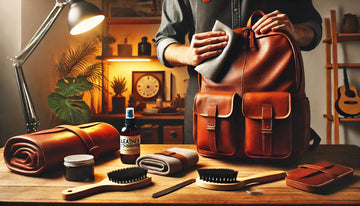
Wipe with a dry cloth after use, condition the leather every two to three months with a quality leather conditioner, and store the backpack upright in a breathable dust bag when not in use.
Avoid prolonged direct sunlight and never use household cleaning products on leather.
For a simple conditioning recipe using household ingredients, read our guide on how to make your own leather conditioner.
Which backpack material is most environmentally sustainable?
The most sustainable choice is whichever material you use the longest before replacing.
On that measure, quality leather has the strongest case: 10 to 20 years from a single product versus 3 to 7 replacements in nylon or canvas over the same period.
Vegetable-tanned leather uses no chromium and is biodegradable.
Leather is also a byproduct of the meat industry, meaning the hide would otherwise go to waste.
Can I use a leather backpack for travel?
Yes. Leather backpacks are excellent travel bags.
They fit under airline seats and in overhead bins, protect contents well due to their structured construction, and project a polished appearance at airports, hotels, and business events.
The durability of leather also means the backpack handles the physical stress of travel (being set down on floors, squeezed into overhead bins, loaded onto conveyor belts) better than nylon or canvas over repeated trips.
One Backpack, One Purchase, Years of Use
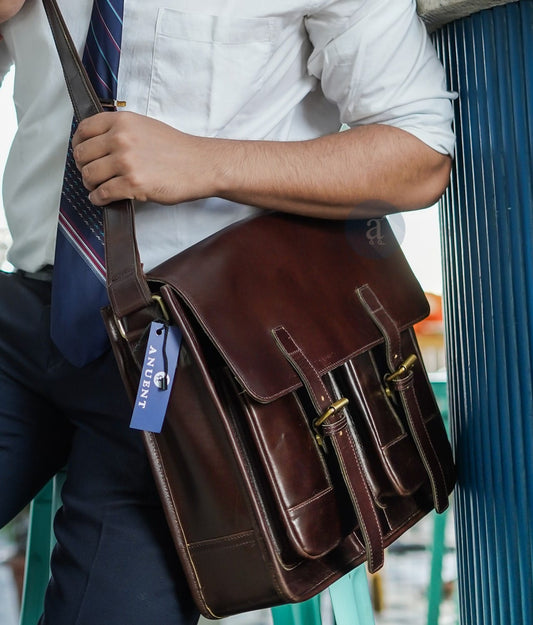
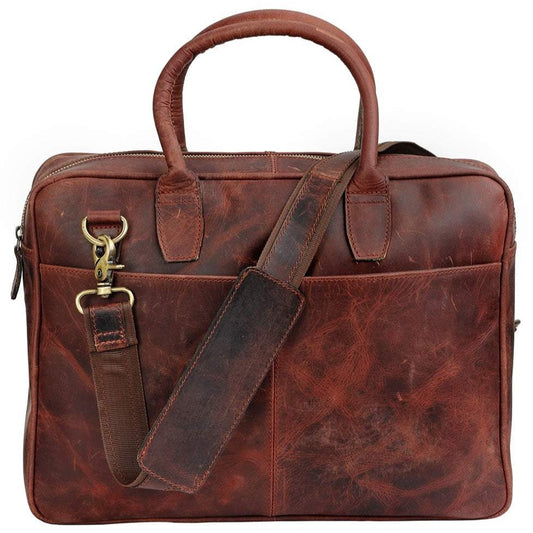
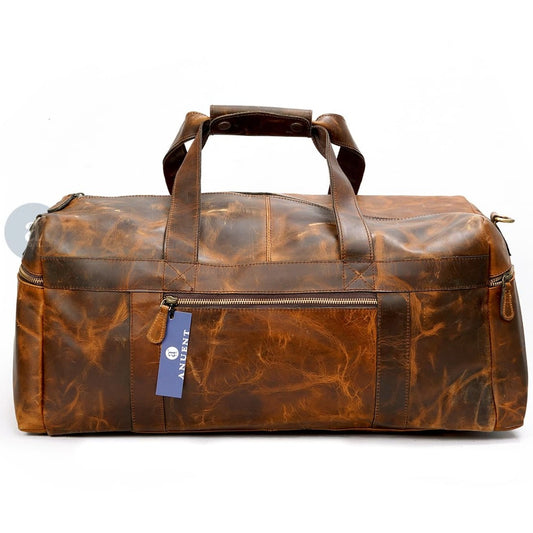
Anuent backpacks are expertly crafted from top-grain buffalo leather with padded laptop compartments, adjustable straps, and brass hardware. Every order includes free monogramming and free shipping to the USA, UK, and Canada.
Genuine leather backpack collection