
Last Updated: March 2026
- The honest answer: A genuine leather backpack made from full-grain or top-grain leather lasts 15 to 25 years with proper care. Entry-level genuine leather lasts 5 to 10 years. PU and synthetic backpacks last 2 to 4 years.
- Leather grade is the biggest factor: Full-grain leather retains up to 85% of its original strength after a decade of use. Top-grain lasts 10 to 15 years. The grade of leather determines lifespan more than any other single variable.
- Four things that shorten lifespan: Poor construction and cheap hardware, lack of conditioning, prolonged exposure to rain and direct sunlight, and overloading the bag beyond its designed capacity.
- Cost per year calculation: A $150 genuine leather backpack lasting 20 years costs $7.50 per year. A $50 synthetic backpack replaced every 3 years costs $16.67 per year. Quality leather is the cheaper choice over any 10-year period.
- The maintenance rule: Condition every 3 to 6 months, clean with a leather-specific cleaner, protect from sustained rain exposure, and store correctly. These four habits alone add years to any leather backpack.
WHAT YOU NEED TO KNOW
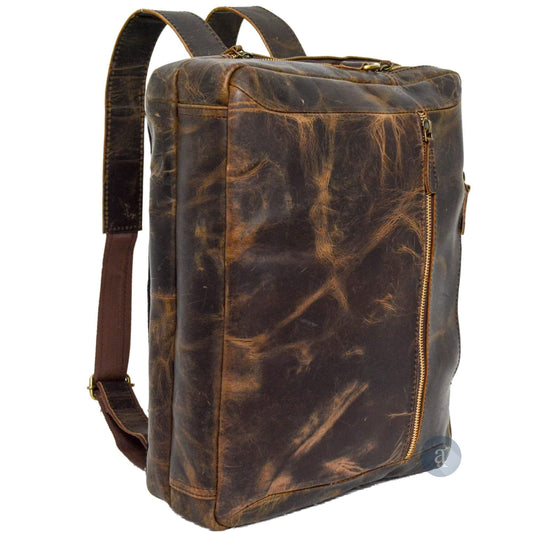
- Full-grain leather backpacks: Last 15 to 25 years or more with proper care. The densely packed collagen fibers of the top hide layer provide exceptional resistance to tearing, stretching, and daily wear. Develops a protective patina that actually strengthens the surface over time.
- Top-grain leather backpacks: Last 10 to 15 years. The outer grain layer is lightly sanded for a more uniform appearance, which slightly reduces structural density compared to full-grain but still delivers far superior longevity over synthetic alternatives.
- Genuine leather backpacks: Last 5 to 10 years. Lower in the leather quality hierarchy, genuine leather uses layers below the top grain and is more susceptible to cracking and surface peeling under heavy daily use.
- Synthetic and PU backpacks: Last 2 to 4 years before the coating begins to peel and delaminate. No amount of care can restore a synthetic bag once the surface coating fails.
- Hardware matters as much as leather: Solid brass zippers and hardware significantly extend overall bag lifespan. Cheap alloy hardware corrodes and fails, often forcing a bag replacement before the leather itself has degraded.
- Stitching quality: Reinforced saddle stitching using waxed linen or polyester thread is a strong signal of construction quality. Single-needle machine stitching unravels faster under stress at strap attachment points and base corners.
If you are deciding whether a leather backpack is worth the investment, the lifespan question is the right one to start with.
A well-built, genuine leather backpack is one of the few accessories that gets more attractive with age rather than wearing out.
This guide gives you the specific numbers, the four factors that determine how long your backpack will last, and a practical maintenance routine to get the maximum life from it.
How Long Do Leather Backpacks Last? The Numbers by Leather Grade
Lifespan varies significantly by leather grade.
Here is the full breakdown with realistic figures based on regular daily use:
| Leather Grade | Daily Use Lifespan | Occasional Use Lifespan | Key Characteristic |
|---|---|---|---|
| Full-grain leather | 15 to 25 years | 30+ years | Develops protective patina, improves with age |
| Top-grain leather | 10 to 15 years | 20+ years | Uniform surface, more stain-resistant |
| Genuine leather | 5 to 10 years | 10 to 15 years | Affordable entry point, shows wear earlier |
| Bonded leather | 2 to 5 years | 5 to 7 years | Leather scraps bonded with adhesive, peels over time |
| PU / synthetic leather | 2 to 4 years | 4 to 6 years | Coating delaminates and cannot be repaired |
| Canvas | 5 to 7 years | 10+ years | Susceptible to mold and staining without treatment |
| Nylon | 2 to 4 years | 5 to 7 years | Lightweight, prone to fraying at stress points |
The data above is consistent with findings from the Leather Working Group, which has documented that full-grain leather retains approximately 85% of its original tensile strength after a decade of regular use.
No synthetic material comes close to this retention rate under real-world daily use conditions.
For a detailed breakdown of how leather grades are structured and what the differences mean practically, our guide to full-grain vs top-grain vs genuine leather covers every grade from the top of the hide down.
The 4 Factors That Determine How Long Your Leather Backpack Lasts
Factor 1: Leather Grade and Tanning Method
The grade of leather is the single most important determinant of lifespan.
Full-grain leather is cut from the top layer of the hide, where the collagen fibers are most densely packed.
This natural "interlocking mesh" of fibers gives the leather immense tensile strength.
A full-grain leather strap can support repeated loads of 20 to 30 lbs without stretching or tearing at stitch holes, and instead of wearing out, the surface absorbs oils and develops a protective patina that actually toughens the material over decades.
The tanning method also matters significantly.
Vegetable-tanned leather, produced using natural tannins from bark and plant materials, is the most durable option when cared for correctly.
Chrome-tanned leather is softer and more flexible immediately, but slightly less resistant to long-term wear.
Our guide covering all leather types and tanning methods explains the practical difference in more detail.
Factor 2: Construction Quality and Hardware
The leather itself is only part of the equation.
A poorly assembled backpack made from excellent leather will fail before a well-built backpack made from a slightly lower grade.
The construction elements that matter most are:
- Stitching: Saddle stitching using waxed linen or high-strength polyester thread is the benchmark for backpack construction. If one stitch breaks in saddle stitching, the others hold. Single machine stitching unravels progressively once it starts, particularly at the base corners and shoulder strap attachment points where load stress is highest.
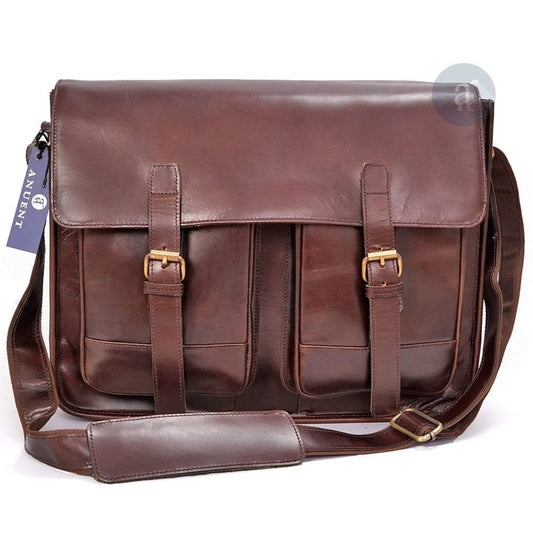
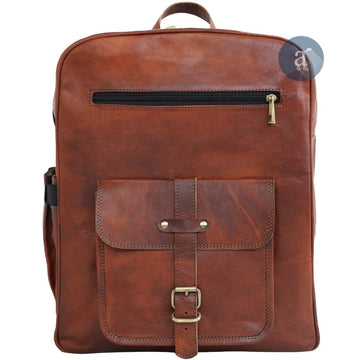
- Hardware: Solid brass or forged steel zippers, buckles, and D-rings resist corrosion and mechanical failure over decades of daily use. Cheap alloy hardware corrodes within a few years, particularly in humid climates, and is nearly impossible to replace without specialist repair work. Always check the hardware on any leather backpack before buying.
- Lining: A cotton or canvas interior lining adds structural support and protects the inside surface of the leather from abrasion by items carried inside the bag. Synthetic linings tend to crack and peel faster than natural fabric linings.
Built to Last Decades
Genuine Leather Backpacks for Men and Women
Every Anuent backpack is built from top-grain buffalo leather with solid brass hardware and reinforced stitching. Designed for daily use and built to develop a richer character with every year you carry it. Free shipping to USA, UK and Canada.
Shop Leather Backpacks30-day money-back guarantee · Free monogramming on every order · 2,000+ verified reviews
Factor 3: Usage Patterns and Load
How you use a leather backpack directly affects how long it lasts.
Daily use in harsh conditions, including sustained rain, extreme heat, and heavy loading, will shorten the lifespan compared to moderate daily use in temperate conditions.
Some practical guidelines:
- Avoid overloading: Consistently exceeding the bag's designed weight capacity stretches the stitching, distorts the leather around attachment points, and accelerates wear at the base corners where the load concentrates. Most leather backpacks are designed for a maximum of 10 to 15 kg.
- Rotate bags when possible: Giving your backpack a day off each week meaningfully extends its life. Leather needs time to breathe and recover from compression, particularly in warm climates.
- Handle with care during travel: Airport conveyor belts, overhead bins, and baggage handling create concentrated abrasion and impact stress. Using a dust bag or protective cover during travel significantly reduces this wear.
Factor 4: Maintenance Consistency
Even the best leather will dry out, crack, and fail without regular conditioning.
This is the most controllable factor in determining how long your backpack lasts, and it is the one most buyers neglect.
A consistent maintenance routine adds years to any leather backpack, regardless of its starting grade.
The single most important maintenance step is conditioning.
Our guide to conditioning and moisturizing leather properly covers the best products to use and how to apply them without damaging the surface.
How Leather Ages Compared to Other Backpack Materials
One of the most misunderstood aspects of leather backpacks is that aging and wearing are not the same thing. Nylon frays, canvas stains and molds, and synthetic coatings peel.
Leather does something entirely different: it develops patina.
Patina is the gradual darkening and softening of the leather surface as natural oils from your hands, air exposure, and sunlight work into the grain.
Rather than damaging the material, this process creates a protective layer that toughens the surface over time.
Areas of the bag that receive the most handling often become the most attractive parts of the bag after several years of use.
This is why well-maintained leather backpacks from 20 or 30 years ago are still functional and often more visually appealing than when they were new.
For a detailed look at why leather outperforms canvas and nylon on every long-term metric, our article comparing leather backpacks versus canvas and nylon alternatives covers the full comparison.
The True Cost of a Leather Backpack Over Time
The upfront price of a genuine leather backpack is higher than synthetic alternatives.
The cost per year of use tells a very different story:
| Backpack Type | Purchase Price | Average Lifespan | Cost Per Year | 10-Year Total Cost |
|---|---|---|---|---|
| Full-grain leather | $150 to $250 | 20 years | $7.50 to $12.50 | $150 to $250 (one purchase) |
| Genuine leather | $80 to $130 | 7 years | $11 to $19 | $160 to $260 (1.5 purchases) |
| Canvas | $50 to $80 | 6 years | $8 to $13 | $83 to $133 (1.7 purchases) |
| Nylon / synthetic | $40 to $70 | 3 years | $13 to $23 | $133 to $233 (3+ purchases) |
The calculation above does not account for the resale value of well-maintained leather backpacks.
High-quality leather bags retain 30 to 50% of their original resale value on secondary markets.
Synthetic bags have zero resale value once they begin showing wear.
How to Make Your Leather Backpack Last Longer: Practical Care Routine
The difference between a leather backpack that lasts 10 years and one that lasts 25 years is almost entirely down to how consistently it is cared for.
The routine is simple and takes less than 30 minutes every few months:
Monthly (during heavy daily use)
- Wipe down the exterior with a soft, dry cloth to remove surface dust and oils.
- Check strap attachment points and base corners for any early signs of stitching stress.
- Empty the bag completely and shake out any debris from the interior.
Every 3 to 6 months
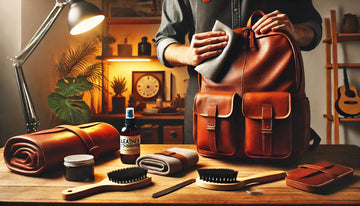
- Clean: Use a pH-neutral leather cleaner on a soft cloth to remove built-up surface grime. Work in small circular motions and avoid saturating the leather. Allow to dry fully in a cool, shaded area before conditioning.
- Condition: Apply a quality leather conditioner with a clean cloth. Work into the leather surface, paying extra attention to stress areas including strap connections, base corners, and any fold lines. Allow to absorb for at least 20 minutes before use.
- Protect: Apply a leather protectant spray to create a barrier against moisture and minor abrasion. This step is particularly important before seasons with heavy rain or high humidity.
Rain and weather protection
Genuine leather can handle light rain without damage, but sustained exposure to rain without protection accelerates surface degradation.
Before carrying your backpack in wet weather conditions, apply a wax-based waterproofing treatment or a silicone-free leather protectant spray.
Our dedicated guide to protecting a leather backpack from rain and stains covers the full process, including which products to use and how to treat a wet bag after the fact.
Storage
- Store in a dust bag or cotton pillowcase when not in use for extended periods.
- Stuff with tissue paper or bubble wrap to maintain the bag's shape during storage.
- Keep in a cool, dry location away from direct sunlight and heat sources.
- Never store in plastic, which traps moisture and causes mold growth on genuine leather.
Shop Anuent Leather Backpacks
Find the Right Leather Backpack for Your Daily Use
Whether you need a leather backpack for work, travel, or everyday carry, Anuent has a bag built for the way you move. Top-grain buffalo leather, solid brass hardware, and free personalised monogramming on every order. Free shipping to the USA, UK, and Canada.
Signs Your Leather Backpack Is Wearing Out (and What to Do)
Knowing when leather is genuinely deteriorating versus simply aging normally helps you intervene early before minor issues become irreversible damage.
- Surface dryness and fine cracking: Early-stage dryness appears as a loss of sheen and very fine surface cracks. This is reversible with a thorough conditioning treatment. Apply leather conditioner generously and allow it to absorb for over 24 hours. Repeat twice over a week for severely dry leather.
- Deep cracking and flaking: If cracks penetrate through to the base material, the leather has been chronically under-conditioned. Deep cracks cannot be fully reversed, but can be stabilised with a leather repair product followed by regular conditioning to prevent further progression.
- Stitching unravelling: Check strap attachment points and base corners regularly. Early unravelling can be repaired by a leather cobbler at low cost. Ignored unravelling leads to strap failure and structural collapse of the bag.
- Hardware corrosion: Surface tarnishing on brass hardware is normal and easily polished away. Active green corrosion on alloy hardware indicates the metal is failing. Hardware replacement is possible but expensive. Brass hardware rarely reaches this point under normal use.
- Interior lining tearing: The lining usually wears before the leather itself. A torn lining can be replaced by a leatherworker or tailor, extending the bag's life significantly without replacing the exterior leather.
Frequently Asked Questions
How long does a genuine leather backpack last?
A genuine leather backpack made from full-grain or top-grain leather lasts 15 to 25 years with regular conditioning and proper care.
Entry-level genuine leather (lower in the hide) lasts 5 to 10 years.
The leather grade is the single biggest determinant of lifespan.
Are leather backpacks worth the investment?
Yes, for daily use over any period exceeding 5 years.
A quality leather backpack costing $150 to $200 and lasting 20 years costs less per year than repeatedly replacing $50 synthetic backpacks every 3 years.
Leather also retains resale value, while synthetic bags have zero secondary market value once worn.
How often should I condition my leather backpack?
Every 3 to 6 months under regular daily use.
In dry climates or during winter when indoor heating reduces humidity, conditioning every 2 to 3 months is recommended.
Signs that conditioning is overdue include loss of surface sheen, slight stiffness in the leather, and the appearance of very fine surface cracks.
Can a leather backpack be repaired?
Yes. Most leather backpack damage, including surface scratches, dry cracking, torn stitching, and worn lining, can be repaired by a leather specialist or cobbler at a reasonable cost.
This is one of the key advantages genuine leather holds over synthetic alternatives, which cannot be meaningfully repaired once the surface coating fails.
Do leather backpacks get better with age?
Genuine full-grain and top-grain leather backpacks do genuinely improve with age, developing a patina that deepens in color and warmth over years of use.
This patina also slightly toughens the surface.
Lower-grade genuine leather and bonded leather do not develop patina in the same way and will simply show wear over time rather than character.
How do I know if my leather backpack is high quality?
Check four things: the leather grade (full-grain or top-grain markings), the hardware material (solid brass or forged steel, not lightweight alloy), the stitching style (saddle stitching or double-needle reinforced stitching at stress points), and the interior lining material (natural canvas or cotton rather than thin synthetic).
A strong natural leather smell is also a reliable indicator of genuine high-quality hide.
The Bottom Line
A genuine leather backpack built from top-grain or full-grain leather, with solid brass hardware and reinforced stitching, will last 15 to 25 years of daily use with a basic maintenance routine.
That is not a marketing claim. It is a straightforward consequence of the material's physical properties and the quality of construction that reputable leather goods manufacturers apply.
The investment calculates to less than $10 per year of use, which is significantly cheaper than replacing synthetic backpacks every few years.
Browse our full range of leather backpacks for men and women, find a leather laptop backpack built for daily work carry, or explore our leather travel backpacks designed for both daily commutes and longer trips.