
Last Updated: April 2026
TL;DR
- The leather briefcase is one of the most universally recognized symbols of professional authority. Its meaning has remained remarkably consistent across cultures and centuries: preparation, competence, and serious intent.
- The word "briefcase" comes from the legal profession. Lawyers in the 1800s carried their legal "briefs" in flat leather cases, and the name stuck as the accessory spread to other industries.
- In Western business culture, the briefcase signals organization and professional ambition. In Japan, it communicates respect for one's work. In parts of Africa, locally crafted briefcases represent a blend of professional identity and cultural heritage.
- The briefcase has declined and revived multiple times. After being overshadowed by backpacks in the 2010s tech-casual era, it is experiencing a renewed cultural moment as professionals seek intentional, polished accessories that project clarity and competence.
- In film and literature, the briefcase functions as a storytelling shorthand for power, mystery, and high stakes, from the glowing case in Pulp Fiction to James Bond's gadget-filled attaché.
WHAT YOU NEED TO KNOW
- The briefcase predates modern office culture. Its ancestor is the Roman legionnaire's leather satchel (the loculus), a 45x35cm case carried across the Empire for documents and essentials.
- It became a professional standard in the 19th century when lawyers and executives needed a durable, portable way to carry legal documents and business papers between offices and courtrooms.
- A man with a briefcase projects a specific message: readiness, organization, and professional purpose. Research on workplace perception consistently shows that appearance signals, including the accessories a person carries, influence how competence and trustworthiness are judged.
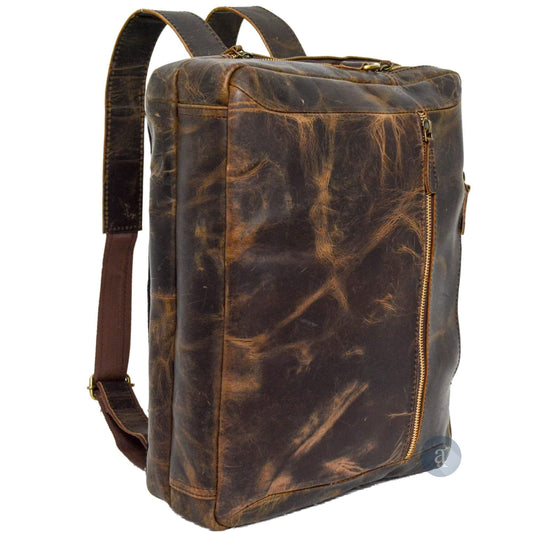
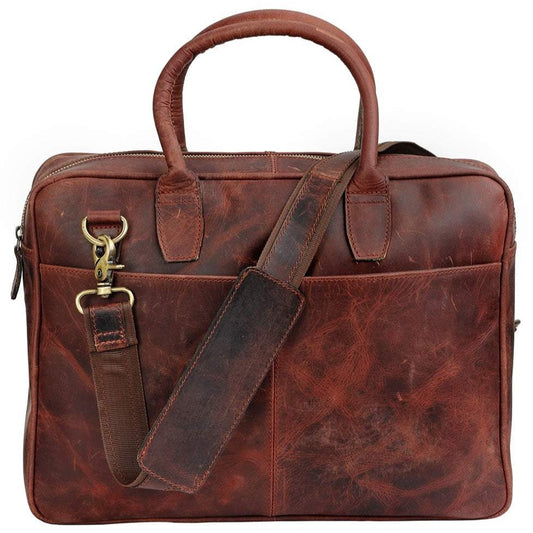
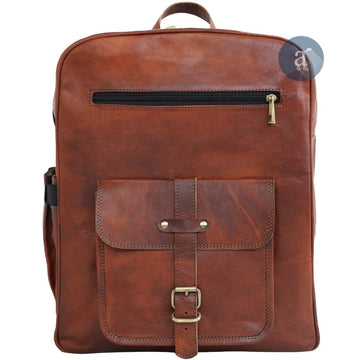
- The modern briefcase has evolved. Today's versions include padded laptop compartments, detachable shoulder straps, and convertible designs that shift between briefcase and backpack formats, while retaining the structured silhouette that carries the accessory's symbolic weight.
Few accessories carry as much symbolic weight as the leather briefcase.
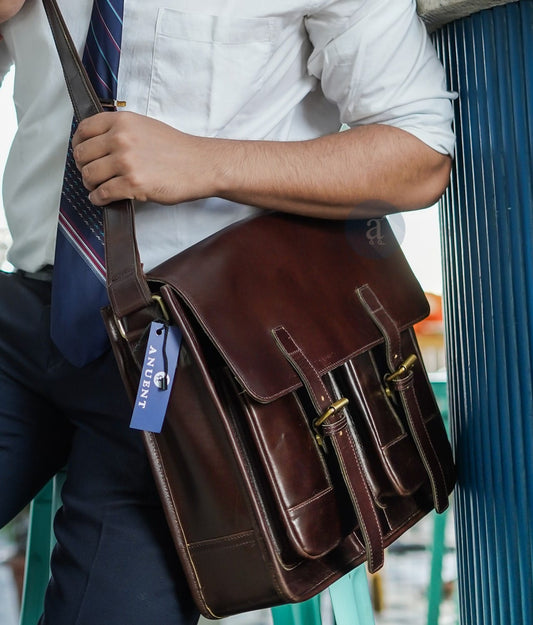
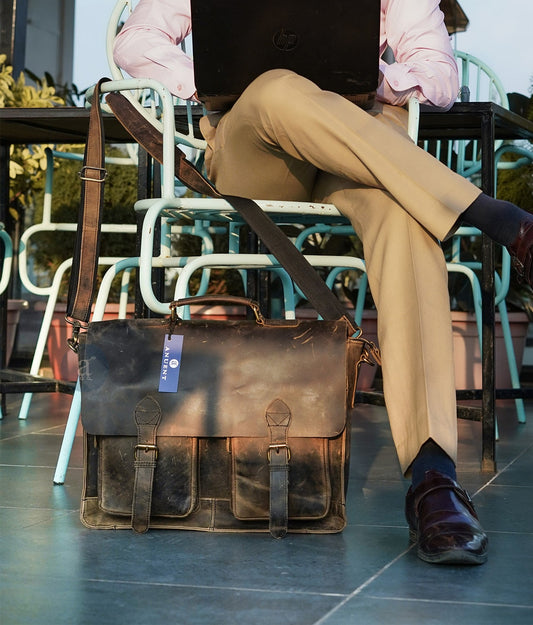
A man with a briefcase walking into a meeting communicates something before he says a single word: that he is prepared, that he takes his work seriously, and that he has given thought to how he presents himself professionally.
This article traces where that symbolism comes from, how it varies across cultures, why the briefcase keeps returning to relevance even after periods of decline, and how it has been used in film and literature to signal power, mystery, and high stakes.
Where the Word "Briefcase" Comes From
The term "briefcase" is a direct product of the legal profession.
In 18th and 19th-century Britain, lawyers carried their legal briefs, the written arguments and case documents filed with courts, in flat leather carrying cases designed to keep the papers organized and protected during transit between chambers and courtrooms.
The name combined "brief" (the legal document) with "case" (the container), and it stuck even as the accessory expanded beyond the legal world into business, finance, and government.
By the mid-1800s, the leather briefcase was standard equipment for any professional who needed to transport documents reliably.
The British government formalized the briefcase's connection to power in a literal way.
From 1860 onward, the Chancellor of the Exchequer carried the annual budget papers to Parliament in a red leather dispatch box, a tradition that continued for over 150 years.
The image of a government official holding that red case became one of the most recognized symbols of fiscal authority in the English-speaking world.
What the Briefcase Symbolizes in Western Culture
In the United States and Europe, the leather briefcase has carried a consistent set of symbolic associations since the early 20th century: professionalism, authority, organization, and upward ambition.
The golden age of briefcase symbolism ran from the 1950s through the 1980s, when the image of a suited man carrying a slim, rectangular leather case became the defining visual shorthand for the corporate professional.
This was the era when the briefcase was not optional.
In law firms, banks, and corporate offices, carrying one was a baseline expectation, a signal that you belonged in the room and took your role seriously.
The slim, hard-sided briefcase of the 1950s communicated precision and control.
The larger, more robust cases of the 1980s reflected the era's emphasis on volume, technology, and power.
As workplaces evolved and laptop computers became standard, the briefcase adapted by incorporating padded compartments and softer constructions.
The symbolism never changed, even as the designs did.
A professional carrying a leather briefcase still signals the same things their counterpart did in 1960: preparation, competence, and intentionality about their professional image.
For a detailed look at which briefcase styles suit which professional environments, our guide to the most professional briefcase color covers how color and style choices communicate different messages in different workplace cultures.
Briefcase Symbolism in Asian Professional Culture
In Japan, the briefcase carries a cultural weight that goes beyond its Western associations with status and ambition.
Japanese business culture places enormous value on respect for one's work and on the visible signals of that respect.
Carrying a briefcase communicates diligence, seriousness, and attention to the details of professional presentation.
The Japanese relationship with structured carrying cases begins in childhood.
The randoseru, a rigid leather backpack, has been standard issue for elementary school students in Japan for well over a century.
Children carry them through six years of school, and the tradition instills an early association between structured leather cases and personal responsibility.
By the time a Japanese professional enters the workforce, the shift from randoseru to business briefcase feels like a natural continuation of a cultural value already deeply embedded.
In China, the briefcase has historically been associated with government officials and senior business executives.
Carrying one signals authority and decision-making power rather than just professional organization.
In business meetings, the quality and condition of a person's briefcase can communicate their level of seriousness and their position within an organizational hierarchy.
In India, briefcases remain particularly common among professionals in law, finance, and government.
The legal profession in India retains much of the formal accessory culture inherited from the British colonial legal system, and leather briefcases remain a standard part of the professional uniform for advocates and barristers appearing in court.
Briefcase Symbolism in African Professional Culture
Across the African continent, the leather briefcase occupies a dual role.
It carries the same professional authority signals it does globally, but in many regions it also represents something additional: the blending of professional identity with cultural heritage.
African designers and leather artisans have increasingly incorporated traditional materials, patterns, and techniques into briefcase construction.
A briefcase made with locally tanned leather, using regional dyeing methods or featuring patterns drawn from local textile traditions, communicates both professional competence and cultural pride simultaneously.
In countries with rapidly growing professional classes, such as Nigeria, Kenya, and South Africa, owning a quality leather briefcase signals professional achievement and personal investment in one's career.
The briefcase serves as a visible marker of having entered the professional world and of taking that position seriously enough to invest in the right tools.
The Briefcase in Film and Literature
In storytelling, the briefcase functions as one of the most efficient visual symbols available to filmmakers and writers.
Its appearance in a scene immediately signals that something important is at stake: money, secrets, power, or danger.
The most famous briefcase in cinema is arguably the one in Pulp Fiction (1994).
Its contents are never revealed, and the glowing golden light that spills out when it is opened turns the case into a pure symbol of desire, mystery, and the lengths people will go to for what they want.
The briefcase works as a plot device precisely because audiences already understand its symbolic weight: whatever is inside must be worth killing for.
James Bond's gadget-filled attaché case in From Russia with Love (1963) established the briefcase as a symbol of sophisticated preparedness.
The case contained hidden weapons, gold coins, and survival tools, all concealed within a perfectly ordinary-looking leather exterior.
The message was clear: the man carrying this case is more capable than he appears.
In The Godfather, briefcases appear repeatedly as symbols of the family's power and the business side of organized crime.
Characters carry them between meetings, and their presence signals that deals are being made and decisions are being enforced.
In literature, Ralph Ellison's Invisible Man uses the briefcase as a central symbol of identity, aspiration, and the burden of societal expectations placed on the protagonist.
The case contains the documents and artefacts that define who the narrator has been told he should be, and carrying it becomes an act of both compliance and quiet resistance.
What all these examples share is that the briefcase is never just a container.
It is always a signal, a prop that tells the audience something about the character holding it before a single line of dialogue is spoken.
Carry Something Worth Carrying
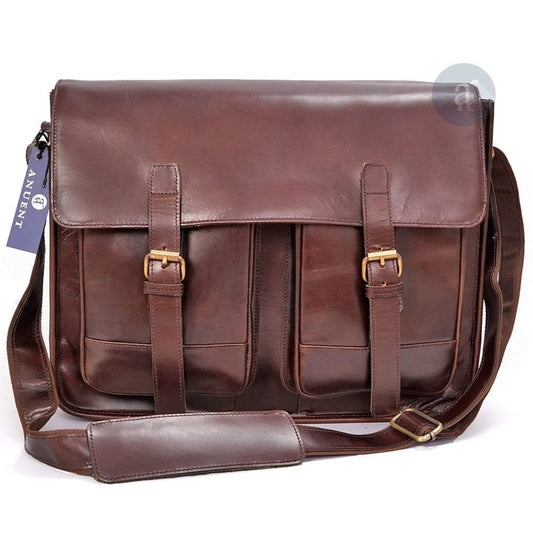
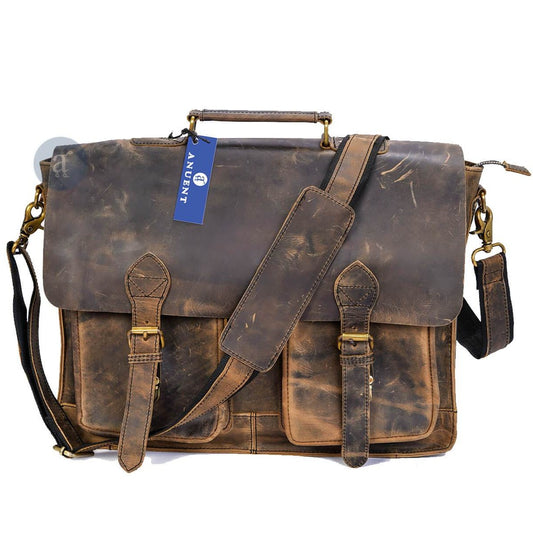
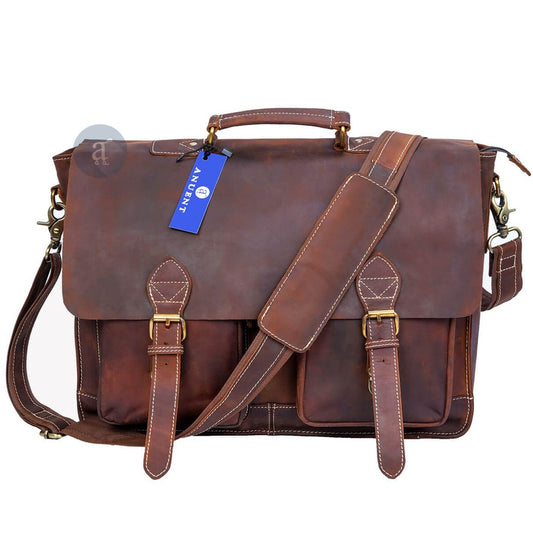
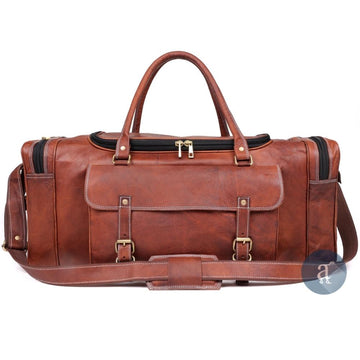
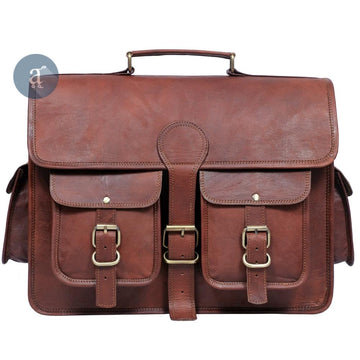
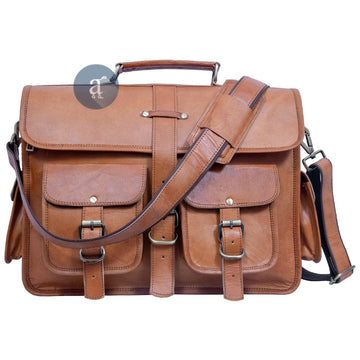
Anuent briefcases are expertly crafted from top-grain buffalo leather with brass hardware and padded laptop compartments. Every briefcase ships free to the USA, UK, and Canada with complimentary monogramming.
Why the Briefcase Keeps Coming Back
The leather briefcase has been declared obsolete multiple times and has returned to relevance every time.
In the early 2010s, the rise of tech startup culture and the casualization of workplace dress codes pushed the briefcase to the margins.
Backpacks and messenger bags dominated, and carrying a briefcase felt like an unnecessarily formal choice in offices where jeans and trainers were standard.
By the mid-2020s, the pendulum swung back.
Professionals in their 20s and 30s, many of whom were never brought up in a briefcase culture, began choosing leather briefcases as a deliberate act of differentiation.
In offices full of identical nylon backpacks, a leather briefcase stands out.
It communicates that the person carrying it has made a considered choice about their professional presentation, which is itself a statement of intent and seriousness.
The hybrid work era accelerated this trend. Professionals who only go to the office two or three days a week want those in-person days to count.
The briefcase became part of a more intentional approach to professional appearance on the days that matter most: client meetings, presentations, and team collaboration days.
The durability of the briefcase's cultural relevance comes from the fact that its core symbolic value, visible preparation, and professional seriousness, never stops being valued.
Workplace dress codes change, but the human tendency to assess competence based on visible signals does not.
The Briefcase as a Personal Statement
Beyond its cultural and professional symbolism, a leather briefcase communicates something about its owner as an individual.
The color of the briefcase signals formality. A black briefcase communicates traditional corporate authority.
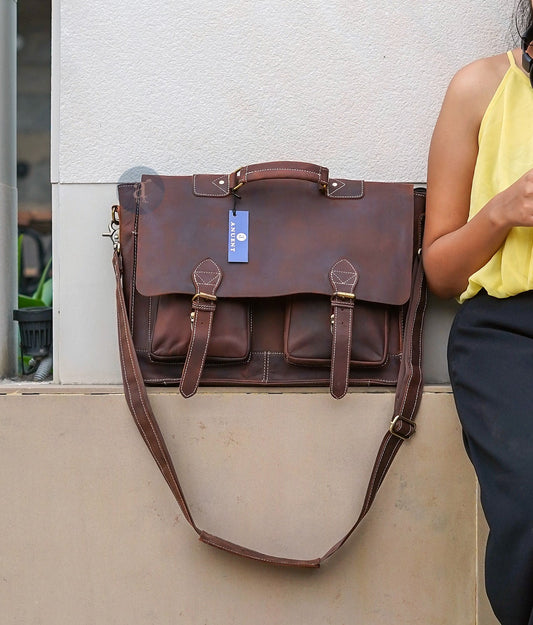
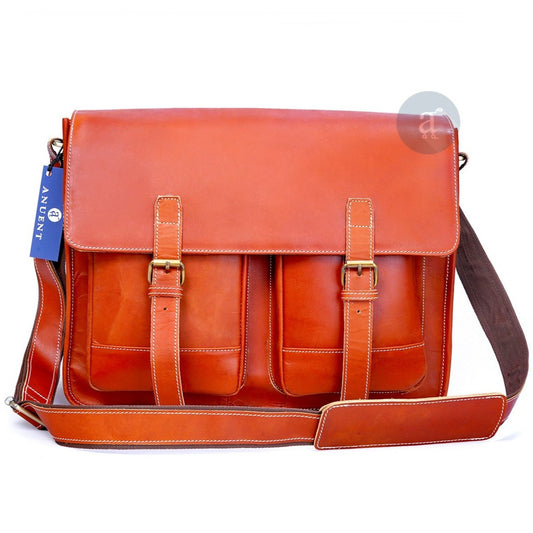
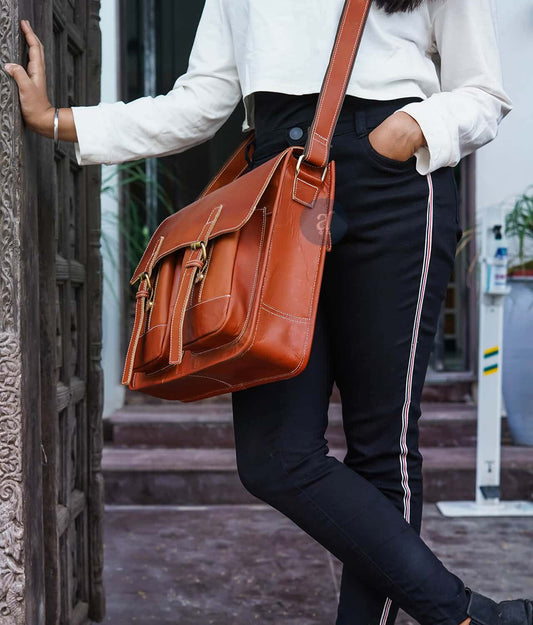
A brown briefcase, particularly one in a warm tan or cognac tone, conveys approachability and personal style within a professional framework.
A darker brown sits between the two: formal enough for finance but warm enough for creative industries.
The condition of the briefcase communicates values.
A well-maintained older briefcase with visible patina signals that the owner values quality, takes care of their possessions, and has been in their profession long enough to accumulate a piece that has aged well.
A new briefcase in pristine condition communicates fresh ambition and investment in a new chapter.
The style communicates workplace awareness.
A traditional flap-closure briefcase suits law, finance, and formal corporate environments.
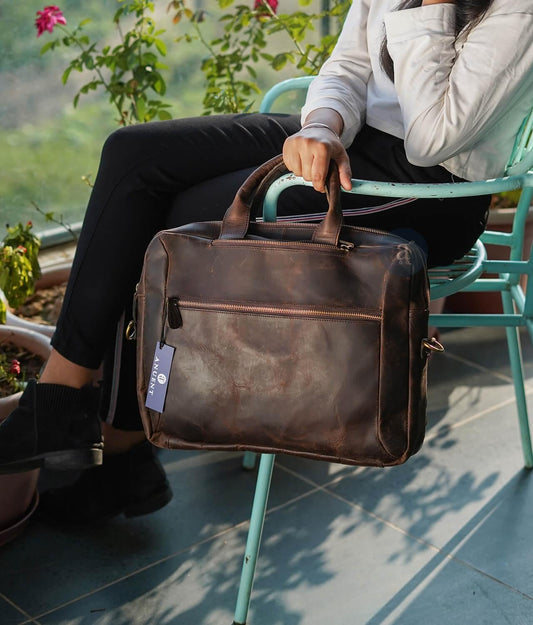
A zip-top design suits faster-paced roles in consulting, sales, and technology.
A convertible briefcase that transforms into a backpack suits professionals who commute actively and need versatility without sacrificing appearance.
For guidance on choosing the right size leather briefcase for your daily carry needs, our sizing guide covers the full range from slim document cases to full-size laptop briefcases.
How Briefcase Design Has Evolved

The leather briefcase has undergone significant physical evolution while retaining its core symbolic identity.
The earliest briefcases in the 1800s were rigid, flat, and single-compartment, designed exclusively to carry flat documents.
They opened from the top or front and had minimal internal organization.
By the mid-20th century, multiple compartments, organizational pockets, and reinforced frames became standard.
The hard-sided attaché case, with its symmetrical shape and combination locks, became the prestige format for executives and diplomats.
The introduction of laptop computers in the 1990s forced the most significant design change since the briefcase's invention.
Cases needed padded compartments, and the transition from rigid to semi-structured designs accelerated.
Soft-sided briefcases made from supple leather, often with detachable shoulder straps, became the practical choice for professionals who needed to carry technology along with documents.
Modern briefcases from brands like Anuent combine the traditional structured silhouette with contemporary features: padded compartments that fit laptops up to 18 inches, brass hardware built for decades of daily use, and convertible designs that shift between briefcase, backpack, and shoulder bag formats.
The external appearance projects timeless authority while the interior accommodates a modern professional's full digital and physical toolkit.
For a full overview of how long these pieces are designed to perform, our guide on the lifespan of a leather briefcase covers what affects longevity and how to extend it.
Maintaining the Briefcase's Appearance Over Time
A leather briefcase that develops a rich patina with age communicates something powerful: that its owner has been in their profession long enough and cares enough about their tools to maintain them properly over the years of use.
Top-grain and vegetable-tanned leather briefcases develop this patina naturally through handling and exposure to light.
The surface darkens and becomes more lustrous over time, giving the case a character that cannot be replicated artificially.
This is one of the reasons leather briefcases hold their symbolic value: they visibly reward long-term ownership.
Basic care is straightforward.
Wiping the case down with a dry cloth after use, conditioning the leather every two to three months, and storing it upright when not in use will keep a quality leather briefcase looking distinguished for a decade or more.
For detailed maintenance advice, our guide on repairing and restoring leather briefcases covers everything from scratch removal to hardware replacement.
Frequently Asked Questions
What does a briefcase symbolize?
A briefcase symbolizes professional preparation, organization, authority, and serious intent.
It communicates that the person carrying it has given thought to how they present themselves and that they are equipped for the work at hand.
This symbolism has remained consistent across cultures and centuries, from 19th century law offices to modern corporate boardrooms.
Why is the image of a man with a briefcase so iconic?
The image is iconic because it compresses multiple professional signals into a single visual: competence, readiness, upward ambition, and respect for the work environment.
The silhouette of a suited figure carrying a briefcase has been reinforced through decades of corporate culture, film, advertising, and popular media until it became a universally understood shorthand for "professional at work."
Do professionals still carry briefcases in 2026?
Yes. Briefcases declined during the casual-dress startup era of the 2010s but have experienced a significant revival.
Younger professionals are choosing them as a deliberate signal of professional seriousness in workplaces dominated by backpacks.
In law, finance, and executive roles, the briefcase never left.
Our detailed article on whether professionals still use briefcases covers the full trend with industry-specific data.
What is the cultural significance of briefcases in Japan?
In Japan, briefcases carry cultural significance rooted in the values of diligence, respect for work, and attention to professional presentation.
Japanese professional culture places a high value on visible signals of seriousness, and a well-maintained briefcase communicates these qualities.
The tradition connects to childhood through the randoseru, a rigid leather backpack carried by Japanese schoolchildren for six years, which establishes an early association between structured leather cases and personal responsibility.
What does the briefcase represent in movies?
In film, the briefcase functions as a visual shorthand for power, mystery, and high stakes.
It almost always contains something important: money, secrets, weapons, or something the audience is never shown (as in Pulp Fiction).
The briefcase works as a storytelling device because audiences already understand its symbolic weight from professional culture, so filmmakers can use it to signal significance without needing to explain it.
How has the briefcase changed over time?
The briefcase evolved from a flat, single-compartment legal document carrier in the 1800s to a multi-compartment, technology-ready professional tool.
Key transitions include the hard-sided attaché case of the mid-20th century, the soft-sided leather briefcase of the 1990s designed to accommodate laptops, and modern convertible designs that function as a briefcase, backpack, and shoulder bag.
Throughout every design change, the external silhouette and symbolic associations have remained remarkably stable.
What is the best leather for a briefcase that lasts?
Top-grain leather and vegetable-tanned leather produce the most durable and visually rewarding briefcases over time.
Both develop a natural patina with use that deepens the color and gives the case character.
Buffalo leather is particularly well-suited for briefcases because of its thick, durable grain structure and natural resistance to surface scratching.
Anuent briefcases use top-grain buffalo leather and genuine goat leather with brass hardware designed for decades of daily professional use.
Are leather briefcases appropriate for women in professional settings?
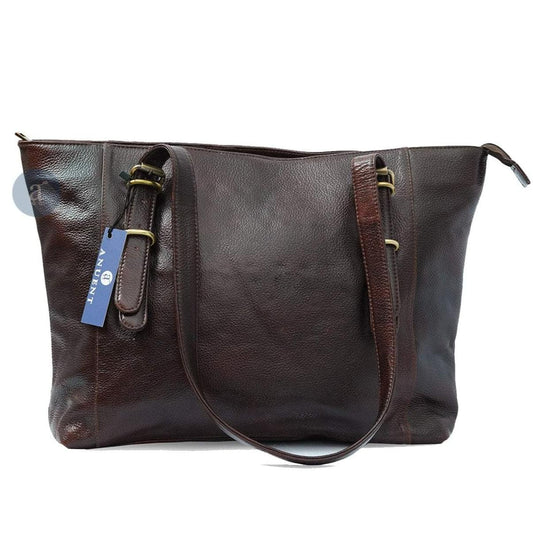
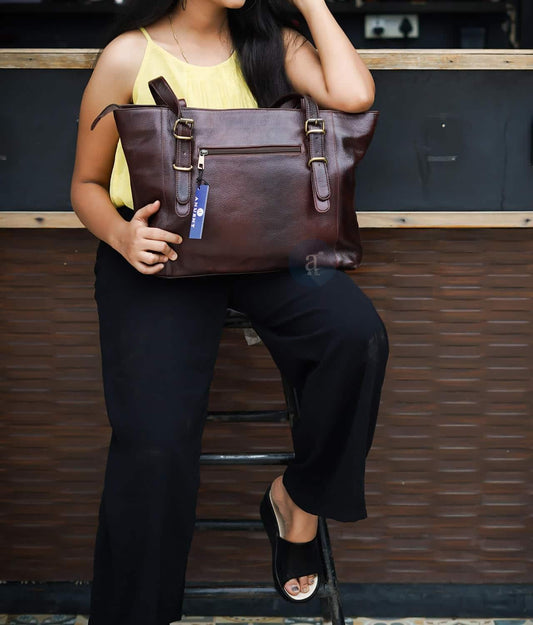
Absolutely. Leather briefcases are increasingly popular among women in law, finance, consulting, and executive roles.
The symbolic weight of the briefcase, projecting authority, organization, and professional seriousness, applies regardless of gender.
Modern briefcase designs include slimmer profiles, longer shoulder straps, and laptop-compatible interiors that suit any professional's daily carry needs.
Our women's guide to selecting a leather briefcase covers style, size, and feature considerations in detail.
The Briefcase That Speaks Before You Do
Anuent leather briefcases are expertly crafted from top-grain buffalo leather with brass fittings, padded laptop compartments up to 18 inches, and free monogramming on every order. Prices from $69.99 with free shipping to the USA, UK, and Canada.
Expertly crafted leather briefcases