
Last Updated: March 2026
- Yes, professionals still use briefcases: Law, finance, consulting, corporate management, and sales all see consistent briefcase use in 2026. The bag has not gone away. It has evolved.
- The briefcase is having a revival: Younger professionals in their 20s and 30s are increasingly choosing leather briefcases as a deliberate personal branding choice, not out of tradition but out of intent.
- The traditional hard case is largely gone: Modern briefcases are slim, lightweight, laptop-ready, and often convertible. The design has changed significantly while the function and status have remained.
- The hybrid workplace changed the rules: Professionals now need a bag that works in a glass-walled boardroom and a coffee shop on the same day. The leather briefcase handles this better than a nylon backpack.
- Alternatives have a place too: Leather messenger bags, laptop bags, and backpacks now handle much of what briefcases once did. Choosing the right one depends on your profession, workplace culture, and daily carry needs.
WHAT YOU NEED TO KNOW
- The briefcase never fully disappeared: It declined in casual workplaces during the 2010s as office culture became less formal and backpacks became socially acceptable for professionals. It never left traditional fields like law, finance, and consulting.
- The briefcase is actively growing again: The shift toward hybrid working, increased focus on personal branding, and a reaction against the sea of identical nylon backpacks have driven measurable renewed interest in leather briefcases among professionals at all career stages.
- What you carry signals something: In client-facing, formal, or high-stakes professional environments, the bag you carry is part of how you are perceived before you speak. A well-chosen briefcase communicates organisation, authority, and professionalism in a way a casual bag does not.
- Modern briefcases are nothing like the old ones: Contemporary leather briefcases are slim, lightweight, have dedicated laptop and tablet compartments, and many convert between briefcase and shoulder carry. The rigid boxy design is a relic.
- The choice is not briefcase vs backpack: Many professionals own and use both, choosing based on the day and context. A briefcase for client days, a leather backpack or messenger bag for internal office days is a common and practical approach.
The briefcase has been declared dead many times over the past two decades.
Every time, it has proven the declaration premature.
In 2026, not only are briefcases still in use across a wide range of professional fields, but they are measurably growing in popularity again, particularly among younger professionals who are choosing them deliberately rather than out of habit.
This article looks at who still uses briefcases, why they use them, how the design has evolved to fit modern professional life, and how leather briefcases compare to the alternatives that have grown alongside them.
Who Still Uses Briefcases in 2026?
Briefcase use is concentrated in industries and roles where professional appearance, document handling, and client credibility are central to the work.
Lawyers and Legal Professionals
Legal professionals are the most consistent briefcase users of any profession.
The nature of legal work involves transporting documents, case files, contracts, and laptops between offices, meetings, and courtrooms.
A structured briefcase organises these materials efficiently and projects the professionalism and authority that the legal environment demands.
The visual signal of a well-made leather briefcase also serves a functional purpose in client relationships: it communicates that the person carrying it is organised, prepared, and serious.
Finance and Banking Professionals
Investment bankers, financial advisors, accountants, and wealth managers regularly carry briefcases.
These professionals work in environments where trust is built through every visible signal, from the quality of the suit to the quality of the bag.
A leather briefcase in a client meeting or a bank boardroom reinforces the impression of competence and attention to detail that these roles require.
The ample organisation offered by a well-designed briefcase also addresses the practical need to carry contracts, financial documents, a laptop, and presentation materials in a single organised bag.
Corporate Executives and Senior Managers
Corporate executives and senior managers frequently move between meetings, presentations, and business travel.
A leather briefcase complements formal and business-casual attire equally and provides the structure needed to keep materials organised across a heavy-meeting day.
At senior levels, the briefcase functions as part of the professional uniform, a consistent signal of seniority and intentionality.
Management Consultants and Business Advisors
Consultants present their work to clients across multiple organisations and industries.
They regularly carry laptops, presentation materials, reports, and tablets to client sites.
A briefcase handles this mixed load in a way that projects professionalism to every client they visit, regardless of that client's industry or formality level.
Medical and Healthcare Professionals
Some doctors, pharmacists, and medical representatives carry briefcases, particularly those in client-facing or administrative roles who regularly transport documentation, research materials, and devices between sites.
Sales Professionals
Senior sales professionals and business development managers frequently use briefcases when meeting clients.
In sales, the first impression carries enormous weight, and a structured leather briefcase communicates preparedness and professionalism in a way that a casual bag does not.
Why Professionals Still Choose Briefcases
Professional Image and First Impressions
In any client-facing or formal professional environment, what you carry is part of the impression you make before you say a word.
A well-made leather briefcase communicates authority, organisation, and attention to detail.
These are qualities that professionals in law, finance, consulting, and sales actively want to project.
An 82 percent majority of executives in one survey reported feeling more confident when carrying a briefcase to meetings.
The bag functions as a professional tool in the same way a quality suit does; it signals intent.
Organisation for Document-Heavy Work
Not every professional has gone fully paperless.
Lawyers carry case files.
Accountants carry contracts and reports.
Consultants carry presentations and research.
A briefcase is designed specifically to organise and protect these flat document loads in a way that a backpack or messenger bag does not.
Multiple compartments, file sections, and structured panels make a briefcase the most practical bag for professionals who regularly carry physical documentation alongside a laptop.
The Hybrid Workplace Has Made Briefcases More Relevant
The shift to hybrid working, where professionals split their time between the office, client sites, and remote locations, has created a specific need that the leather briefcase fills better than most alternatives.
On a day that moves from a home office to a coffee shop to a client boardroom, the bag you carry needs to work in all three environments.
A nylon backpack looks out of place in a boardroom.
A rigid traditional briefcase looks impractical in a coffee shop.
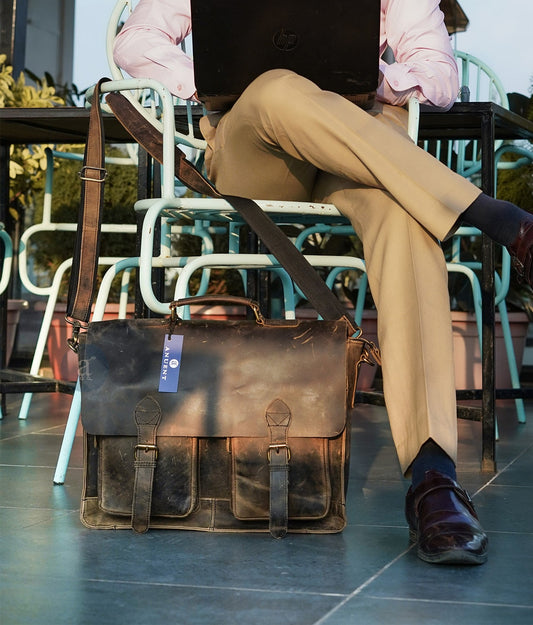
A modern slim leather briefcase with a shoulder strap works across all three, carrying a laptop, essentials, and documents without looking like either a student bag or an outdated corporate relic.
Personal Branding Among Younger Professionals
One of the more significant recent shifts is the adoption of leather briefcases by professionals in their 20s and 30s who were not brought up in a briefcase culture.
This generation is choosing briefcases as a deliberate signal of professionalism and personal differentiation.
In offices full of identical nylon backpacks, a leather briefcase stands out.
It communicates that the person carrying it has made a considered choice about how they present themselves professionally, which is itself a signal of seniority and intent at any career stage.
EXPERTLY CRAFTED FOR PROFESSIONAL USE
Leather Briefcases Built for the Modern Workplace
Slim, laptop-ready, and crafted from genuine leather designed to age well. Free shipping to USA, UK, and Canada. Free monogramming on every order.
How the Briefcase Has Evolved
The traditional hard-sided briefcase with two rigid clasps is largely a relic of the mid-20th century corporate world.
Very few professionals carry this style today, and those who do are typically making a deliberate statement through an heirloom or vintage piece.
The modern briefcase looks and functions very differently.
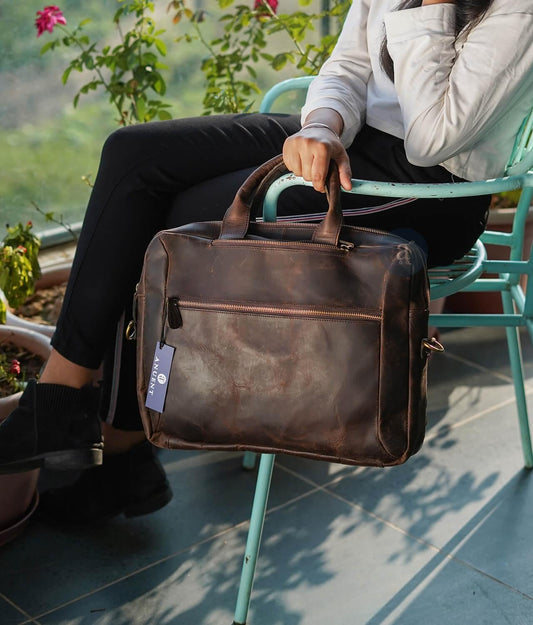
Slim Laptop Briefcases
The most widely used contemporary briefcase style is the slim laptop briefcase.
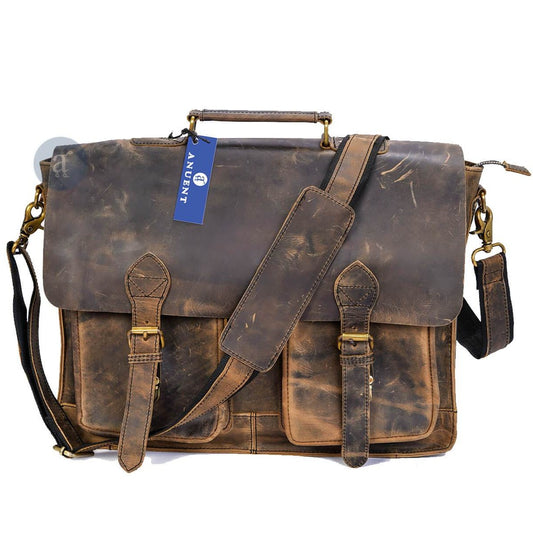
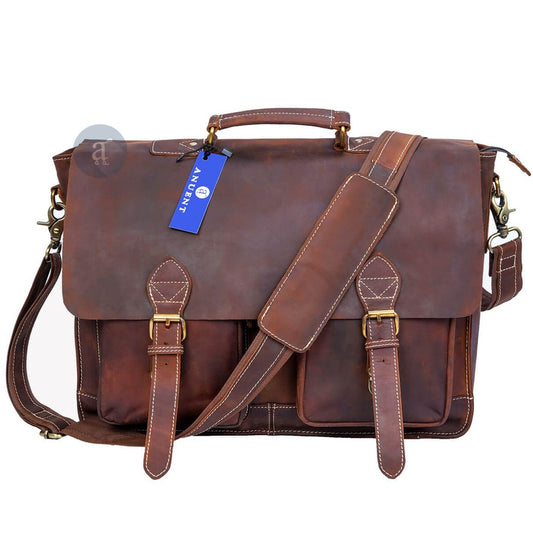
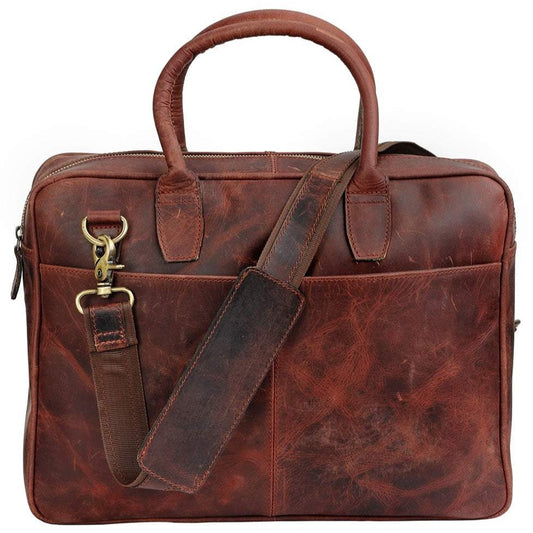
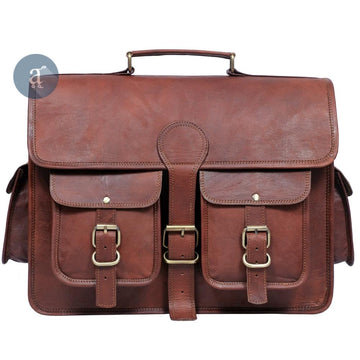
These are structured but lightweight, typically 14 to 16 inches wide, with a dedicated padded laptop sleeve, a main compartment for documents and essentials, and a top handle supplemented by a detachable shoulder strap.
They are thin enough to look deliberate rather than bulky, and carry enough for a full working day without becoming heavy.
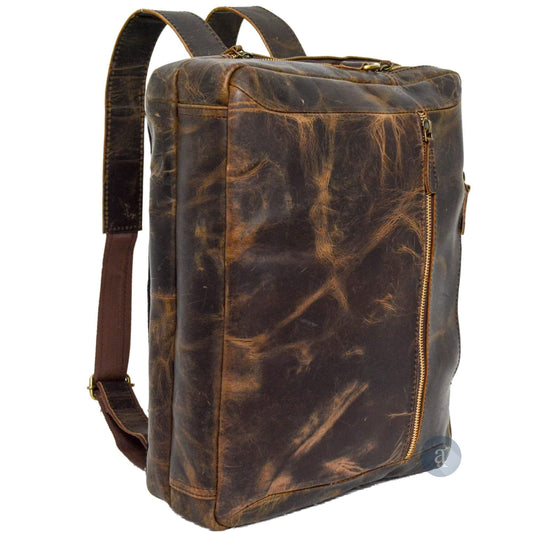
Convertible Briefcase Backpacks
The convertible briefcase backpack is arguably the most popular professional bag style of the 2020s.
It functions as a traditional briefcase with a top handle and structured front, but has concealed backpack straps that allow it to be worn as a backpack for commuting or travel.
This design directly addresses the core limitation of the traditional briefcase, which is that carrying it by hand for long periods is uncomfortable.
The convertible style gives professionals the visual authority of a briefcase in meetings with the ergonomic comfort of a backpack on the commute.
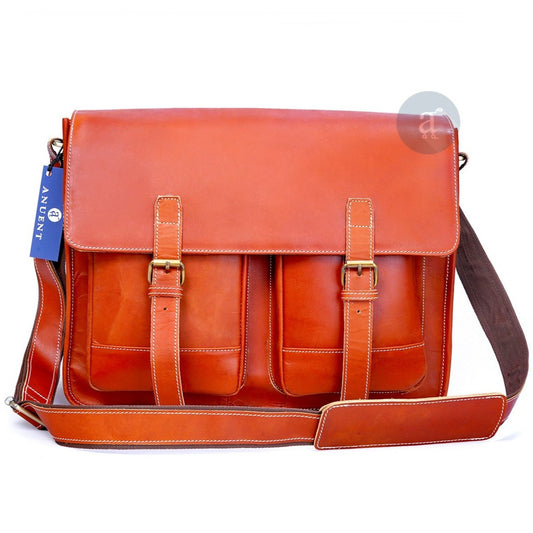
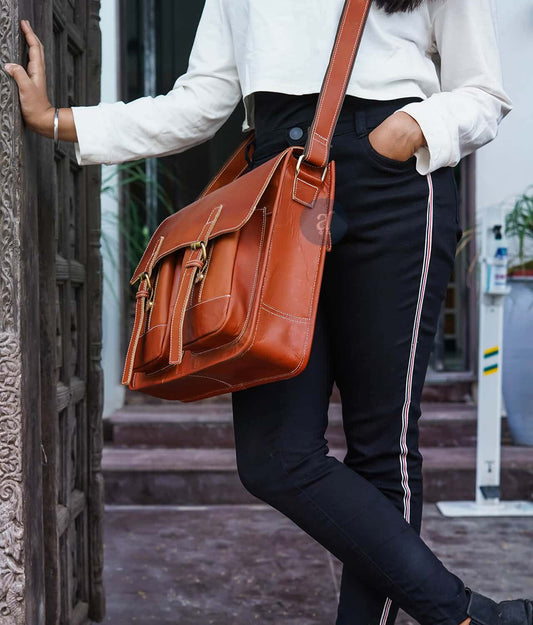
Structured Messenger-Style Briefcases
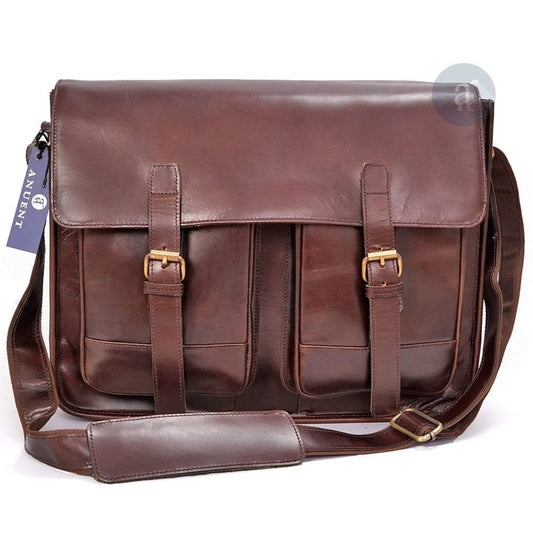
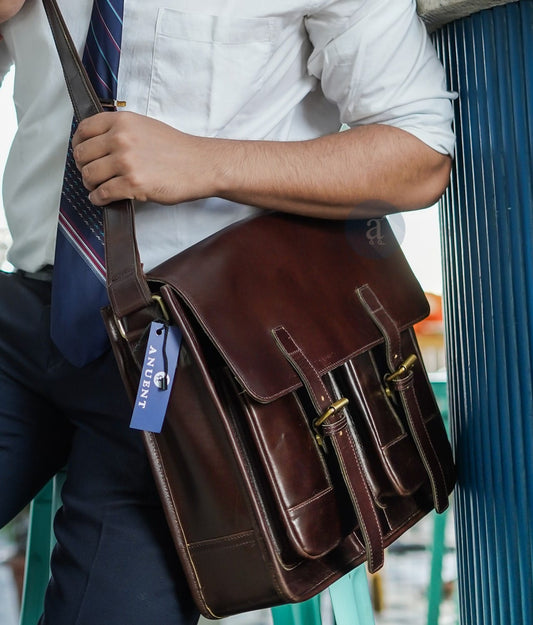
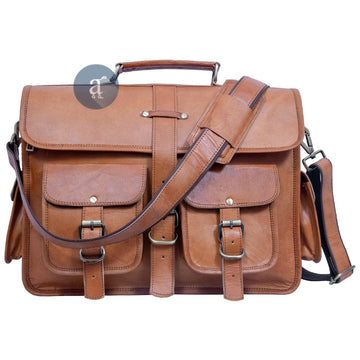
Some professionals prefer a crossbody briefcase style that combines the structured organisation of a traditional briefcase with the hands-free comfort of a messenger bag.
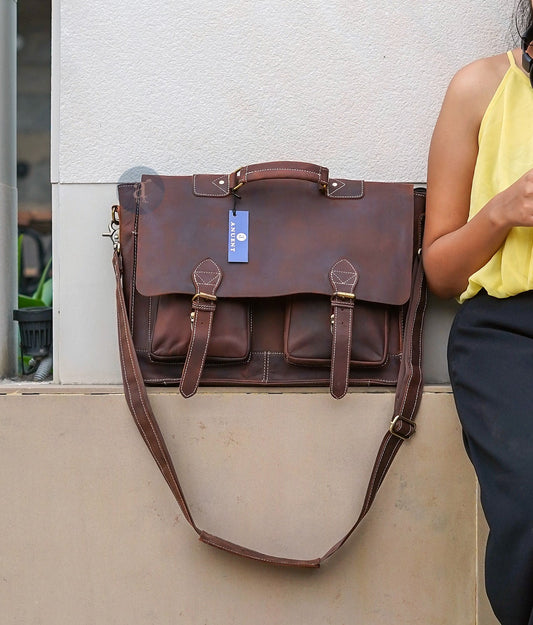
These typically have a top handle, a long shoulder strap, and a structured rectangular profile that reads as professional in formal settings.
They suit professionals in creative or casual industries who want the visual signal of a quality leather bag without the formality of a traditional briefcase carry.
For a full overview of all the current styles available, the guide to styles and types of leather briefcases covers each format with guidance on which suits which workplace and professional context.
Briefcase vs Messenger Bag vs Backpack: Choosing the Right Professional Bag
The practical question for most professionals is not whether briefcases are still relevant but which type of professional bag best suits their specific role, workplace culture, and daily carry needs.
The three main options each have distinct strengths.
| Factor | Leather Briefcase | Leather Messenger Bag | Leather Backpack |
|---|---|---|---|
| Formality level | Highest | Mid to high | Mid (smart casual) |
| Carry comfort | Lower for long carries | Good for daily commute | Best for heavy loads |
| Document organisation | Best | Good | Adequate |
| Professional signal | Authority and formality | Polished and practical | Modern professional |
| Best for | Client meetings, court, formal presentations | Daily office commute, smart casual environments | Heavy tech carry, travel, casual offices |
For professionals in formal industries, the briefcase remains the strongest choice for client-facing days.
For daily commuting in more casual environments, leather messenger bags for professionals offer a practical balance of quality appearance and ergonomic comfort.
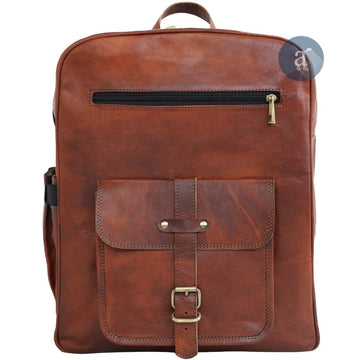
For those carrying heavy tech equipment or who work in casual offices, leather backpacks for professional use provide the most comfortable all-day carry in a quality leather format.
Many professionals find that owning a leather briefcase for formal days and a leather messenger bag or backpack for internal office days covers every professional context without compromise.

How to Choose a Leather Briefcase for Professional Use
If you are considering a leather briefcase, three decisions determine whether you get the right one: size, style, and leather grade.
Size
Briefcase size should match what you actually carry, not what you think you might carry.
A slim briefcase carrying a 15-inch laptop, a notebook, and daily essentials is more practical and looks more intentional than an oversized case that shifts and sags.
Most professionals are well served by a standard briefcase that fits a laptop up to 15 inches, a documents section, and a front organisational pocket.
The detailed guide on how to choose the right briefcase size covers the full size range with guidance on what each format suits in terms of daily carry volume and profession.
Style
The right style depends on your workplace culture.
A traditional structured briefcase with a top handle is appropriate for law, finance, and formal corporate environments.
A convertible briefcase backpack suits professionals who commute long distances or travel frequently and want the flexibility of both carry modes.
A slim laptop briefcase with a shoulder strap suits professionals in mixed formal and casual environments who want the briefcase look with everyday wearability.
Leather Grade
For a professional bag that signals quality, genuine leather is a minimum standard, and top-grain or full-grain is the better investment.
A leather briefcase is a visible professional tool that will be seen in every meeting and client interaction.
Bonded leather or heavily coated genuine leather may look acceptable when new, but deteriorates visibly under the regular use a professional bag receives.
For detailed guidance across all considerations, the leather briefcase buying guide covers quality markers, construction details, and what to look for in each price range.
Frequently Asked Questions
Do professionals still use briefcases?
Yes.
Briefcases remain widely used in law, finance, consulting, corporate management, medicine, and sales.
The modern briefcase has evolved significantly beyond the rigid hard-case design of the past, now encompassing slim laptop briefcases, convertible briefcase backpacks, and structured messenger-style cases.
Briefcases are also experiencing a measurable revival among younger professionals who view them as a deliberate personal branding choice.
Are briefcases out of style?
No.
In 2025 and 2026, briefcases are experiencing a genuine revival rather than a decline.
The hybrid workplace has created renewed demand for bags that signal professionalism in meetings and client settings while remaining practical for commuting and travel.
Modern leather briefcases designed with laptop compartments, shoulder straps, and lighter construction have made the briefcase relevant to a wider range of professionals than the traditional rigid design ever was.
Which professions still use briefcases the most?
Lawyers, investment bankers, financial advisors, corporate executives, management consultants, doctors, and sales professionals are among the most consistent briefcase users.
These professions share two characteristics: they frequently carry important documents or materials, and they operate in environments where professional appearance directly affects credibility and trust.
What is replacing the traditional briefcase?
In casual and hybrid workplace settings, leather messenger bags, leather laptop bags, and leather backpacks have taken on much of the role previously held by the traditional briefcase.
These alternatives offer the same quality and professional appearance as a briefcase while providing more ergonomic carrying comfort and greater versatility across formal and informal settings.
Many professionals now own both a briefcase for client-facing days and a messenger bag or backpack for internal office days.
Is a leather briefcase worth buying in 2026?
Yes, particularly for professionals in client-facing, formal, or high-stakes workplace environments.
A well-made leather briefcase is a long-term investment: a genuine leather piece maintained correctly can last decades.
It also serves as a visible signal of professionalism and attention to detail in contexts where first impressions carry real weight.
The modern slim leather briefcase or convertible style is a more practical investment than the traditional hard case because it adapts to both formal and everyday professional use.
What is the difference between a briefcase and a messenger bag?
A briefcase is typically a structured bag carried by a top handle, with a flat rectangular form designed for documents and a laptop.
A messenger bag is a soft bag worn across the body on a long shoulder strap, with a flap opening rather than a zip-top.
Messenger bags are less formal in appearance and more ergonomic for long carry periods.
Both are widely used in professional settings, though briefcases carry more formal authority in traditional workplaces.
How do you choose between a briefcase, messenger bag, and backpack for work?
Choose a briefcase if you regularly attend formal client meetings, court hearings, or high-stakes presentations where a professional image directly matters.
Choose a messenger bag if you commute frequently, prefer crossbody carry, and work in a smart casual or creative professional environment.
Choose a backpack if you carry heavy tech equipment, travel frequently, or work in a company where casual dress is the norm.
Many professionals use more than one type depending on the day and context.
What size briefcase should a professional use?
The right briefcase size depends on what you carry daily.
A slim briefcase works for professionals who carry a laptop and minimal documents.
A standard briefcase suits those who carry a laptop, documents, and everyday essentials.
A large briefcase is appropriate for lawyers and consultants who regularly transport multiple files, a laptop, and tablets.
As a general rule, a briefcase should be large enough to carry your essentials comfortably without being so large that it looks disproportionate to your frame or your actual daily load.
BUILT FOR THE PROFESSIONAL
Leather Bags That Work in Every Professional Context
From slim leather briefcases to structured messenger bags and laptop bags, every Anuent piece is expertly crafted from genuine leather for professionals who value quality and lasting appearance. Free shipping to USA, UK, and Canada. Free monogramming on every order.