
Last Updated: April 2026
- Bag width is the key measurement: a bag that extends beyond your shoulder line visually widens your frame, regardless of how light it is.
- Petite frames benefit from structured, smaller bags: a compact crossbody or sling keeps proportion balanced without overwhelming a smaller build.
- Tall frames can carry larger totes and long-strap bags: longer torsos create more visual real estate for bigger bags to sit naturally.
- Strap length changes everything: where a bag hangs on your body affects your visual silhouette as much as the bag's size does.
- Soft vs structured leather matters: a soft unstructured bag spreads wider when loaded, so what looks right on the shelf may not look right on your shoulder.
WHAT YOU NEED TO KNOW
- Proportion is about visual balance, not weight: a heavy bag on a tall frame reads smaller than a lighter bag on a petite frame because proportion is relative to body scale.
- The three measurements that matter are bag width, bag drop length, and strap length: getting all three right for your frame means the bag looks intentional rather than accidental.
- Leather type affects how a bag sits: top-grain buffalo leather holds its shape under load, while softer goat leather relaxes and widens, which affects how it reads against your frame.
- Carry position matters as much as bag size: the same bag worn under the arm reads wider than when worn crossbody at the hip, which is a longer and leaner line.
- Reddit communities consistently flag two mistakes: buying a bag that fits well empty but overwhelms the frame when loaded, and buying by volume without checking external width.
- There is no universal rule by clothing size: a size 14 woman at 5'2" has different proportional needs than a size 14 woman at 5'10", and the same applies to men.
Picking a leather bag is rarely just about what fits inside it.
Reddit communities like r/femalefashionadvice and r/ManyBaggers return to the same frustration again and again: buyers choose a bag based on capacity, color, or price, and then find that it looks wrong once they are actually wearing it.
The problem is almost always proportion.
A bag that is too wide for your frame pushes outward beyond your shoulder line and reads as visually bulky regardless of its weight.
A bag with the wrong strap length hangs in a dead spot that neither flatters your hip nor your waist.
A soft leather bag that looks compact on the shelf spreads several inches wider once it is loaded.
This guide covers the specific measurements, leather types, and carry positions that work for different frame types, along with the common mistakes that make even quality bags look awkward.
If you want to understand which leather handbag for women or men actually fits your build, the guidance below comes directly from how experienced bag buyers think about this problem.
Why Body Proportion Matters More Than Bag Size
Most people think about bag size in terms of liters or inches of interior depth.
Experienced bag buyers think about it in terms of how the bag's external width compares to the width of their shoulders.
The shoulder line is the visual anchor.
When a bag extends beyond it, the eye reads that extra width as body width, not bag width.
This is why the same bag can look balanced on one person and overwhelming on another, even if their clothing sizes are identical.
Height plays a separate role.
A longer torso means more visual space between the shoulder and the hip for a bag to hang without hitting an awkward midpoint.
Shorter frames have less of that space, which is why a mid-length strap that sits perfectly on a tall person often lands at an unflattering position on someone five inches shorter.
Understanding these two variables, shoulder width and torso length, is the starting point for choosing a bag that looks intentional on your body.
The Three Measurements That Actually Matter
Before reading any frame-specific advice, it helps to understand the three measurements that determine whether a bag works proportionally.
Bag width is the horizontal span of the bag at its widest point. This is the measurement most buyers overlook because product listings lead with height and depth.A bag that is 14 inches wide will extend noticeably beyond the shoulder line on a person with a narrow frame, regardless of how tall or short it is.
Bag drop length is the distance from the top of the handle to the top of the bag. For top-handle and tote styles, this determines how far the bag hangs when carried by hand. A short drop keeps the bag high and close to the body. A long drop means the bag hangs lower, which can visually shorten the leg line on smaller frames.
Strap length on a crossbody or messenger bag determines where the bag body sits on your torso. Most straps are adjustable, but the useful range matters. A strap that only shortens to 48 inches will still sit at mid-thigh on a 5'3" frame, which is a less flattering carry position than hip or waist height.
Check all three before buying, not just the listed dimensions, which often omit bag width entirely.
Petite Frames: What Works and What Overwhelms
A petite frame, loosely defined as under 5'4" with narrower shoulders, needs bags that stay within the shoulder line and hang at hip height or above.
The styles that work consistently well are compact crossbody bags, structured small totes, and sling bags.
These sit close to the body, do not extend beyond the shoulder, and their strap positions can be adjusted to land at the right height.
A genuine soft leather crossbody bag in a compact size is the most versatile option for a smaller frame because it leaves the shoulder free and the bag's body sits at the narrowest part of the hip.
The styles that consistently overwhelm petite frames are oversized totes, wide structured briefcases, and any bag with a handle drop longer than 8 inches.
These styles read as proportionally large because they compete with the frame rather than working within it.
Two specific things to check when buying for a petite frame:
- Measure the bag's width and compare it to your shoulder width. The bag should stay within that measurement or extend by no more than an inch on each side.
- Load the bag before judging proportion. A soft leather bag that looks compact and empty can spread 2 to 3 inches wider when full. Top-grain buffalo leather bags hold their shape better under load than softer goat leather styles, which is worth considering if you carry a lot.
One anchor from r/femalefashionadvice that appears repeatedly: structured bags read smaller than soft bags at the same stated dimensions because their shape stays consistent.
This matters when shopping online, where you cannot load the bag before buying.
Tall Frames: Using Your Proportional Advantage
Taller frames, loosely 5'8" and above, with broader shoulders, have proportional room to carry larger bags without the bag dominating the silhouette.
Large structured totes, messenger bags, and briefcase-style bags all work well because the longer torso gives the bag somewhere to sit without hitting a visual dead zone.
A large leather tote bag that reads as oversized on a petite frame can look intentional and balanced on a taller frame with a broader shoulder line.
Strap length is less of a constraint but still matters. A crossbody strap that hits at hip height on a tall frame can look relaxed and deliberate.
The same strap on a shorter frame hangs at mid-thigh, which reads as too low.
The one mistake that taller frames make more often than petite ones: choosing bags that are proportionally too small.
A compact mini crossbody on a tall frame with broad shoulders reads as accessory-sized rather than functional, which can look unintentional.
If you are tall, lean toward medium and large sizes rather than miniature styles unless the intent is specifically decorative.
Curvy and Plus-Size Frames: The Real Considerations
The advice in most bag guides for curvy and plus-size frames centers on avoiding certain styles, which is less useful than understanding why proportion works the way it does.
The principle is the same as for any other frame: the bag should not extend significantly beyond the shoulder line, and the carry position should complement rather than cut across the widest point of your body.
Where curvy frames specifically benefit from careful thinking is in strap placement.
A crossbody strap that runs diagonally across the chest draws the eye across the body.
Adjusting the strap so the bag sits lower, at the hip rather than across the chest, changes the line completely.
A leather sling bag for women worn at the hip rather than high on the back is a cleaner line for this reason.
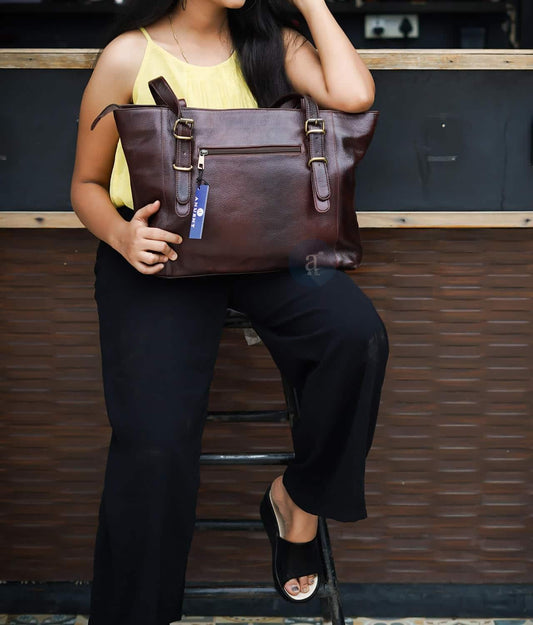
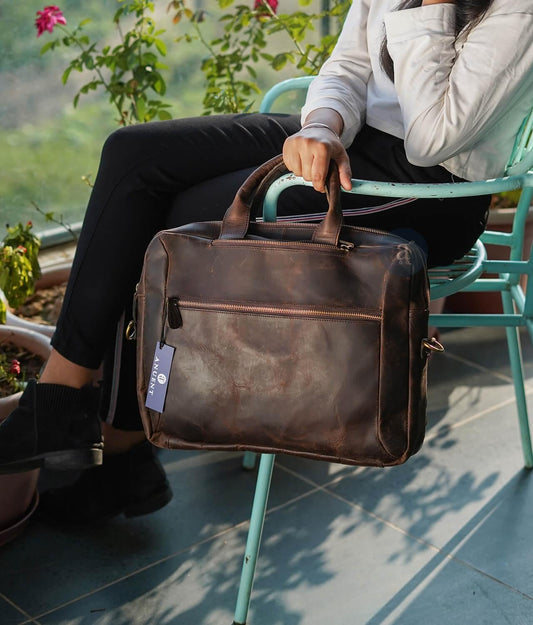
Top-handle totes carried by hand rather than on the shoulder keep the bag close to the body and avoid the shoulder-line extension problem.
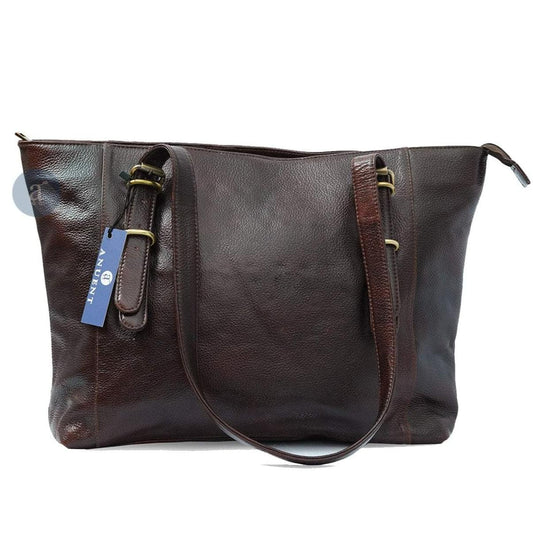
For everyday carry, a structured tote with short handles that keeps the bag at hip level is one of the most flattering options across frame types.
The r/femalefashionadvice community also notes that hardware placement affects visual weight.
Bags with heavy brass hardware at the top add visual mass to the shoulder area.
Cleaner bag tops with minimal hardware read as lighter even if the bag is the same physical size.
How Leather Type Affects How a Bag Sits on Your Body
Most proportion guides treat all leather bags the same.
They are not the same because different leather types behave differently under load, and that behavior changes how the bag reads against your frame.
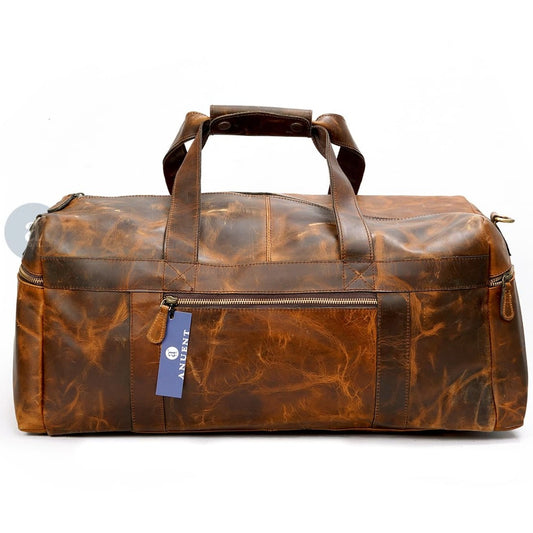
Top-grain buffalo leather is the stiffest and most shape-retentive of the leathers Anuent uses.
A bag made from top-grain buffalo leather will hold its stated dimensions fairly accurately when loaded.
The width you measure on the product listing is close to the width it will have on your shoulder with your daily items inside.
Goat leather is softer and more supple.
It relaxes under load, which means the bag spreads and conforms to the weight inside.
This gives a softer, more casual look, but it also means the stated bag width is a minimum, not a fixed measurement.
A goat leather bag that is 11 inches wide when empty may read as 13 to 14 inches wide when fully loaded.
For petite frames, choosing between the two, top-grain buffalo leather is the safer choice for predictable proportion.
For taller frames who prefer a relaxed aesthetic, goat leather's softening with wear gives a lived-in character that suits a looser carry style.
You can read more about the practical differences in how leather bag weight and structure affect daily carry.
Carry Position: The Variable That Most Guides Ignore
The same bag can look balanced or overwhelming depending entirely on how and where you carry it.
Under-arm carry is the widest visual position because the bag body sits at shoulder level, adding width to the broadest part of your upper body.
This works for tall frames with broad shoulders where the extra width is proportional.
On narrow or petite frames, under-arm carry makes most bags read as too large.
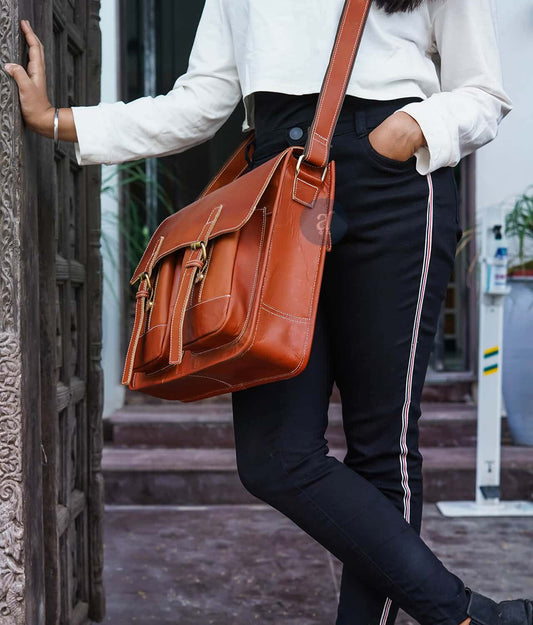
Hip carry, with a crossbody or sling strap adjusted so the bag sits at the hip, is consistently the most flattering carry position across frame types.
The bag sits at one of the narrower parts of most bodies, the strap creates a diagonal line that adds visual height, and the bag's body does not interrupt the shoulder line.
This is why the r/femalefashionadvice community defaults to crossbody recommendations for everyday carry, regardless of frame type.
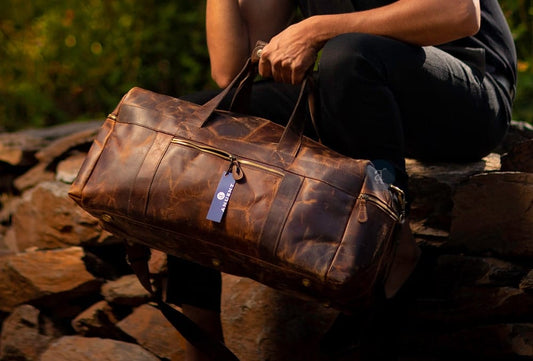
Hand carries with a short handle keep the bag close and low, which reads as contained and intentional.
The bag does not swing or splay, and it stays within the body's silhouette rather than extending beyond it.
Backpack carry distributes weight symmetrically and removes the shoulder-line issue entirely.
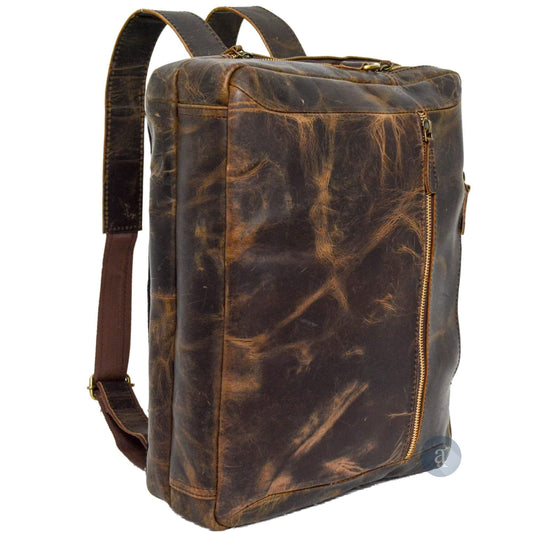
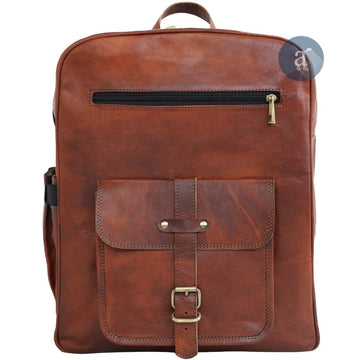
A well-fitted minimalist leather backpack sits against the back and adds no visible width to the front silhouette.
For people who find crossbody carry uncomfortable over long periods, a structured leather backpack is the most frame-neutral option available.
FIND YOUR FIT
Leather Bags Sized and Structured for Real Carry
Every Anuent bag lists exact external dimensions so you can check width, height, and strap length before buying. Free shipping to the USA, UK, and Canada. Free monogramming on every order.
Men's Frames: Where the Same Rules Apply Differently
Proportion advice for men's bag choices follows the same underlying logic but with different reference points.
Shoulder width is still the key anchor.
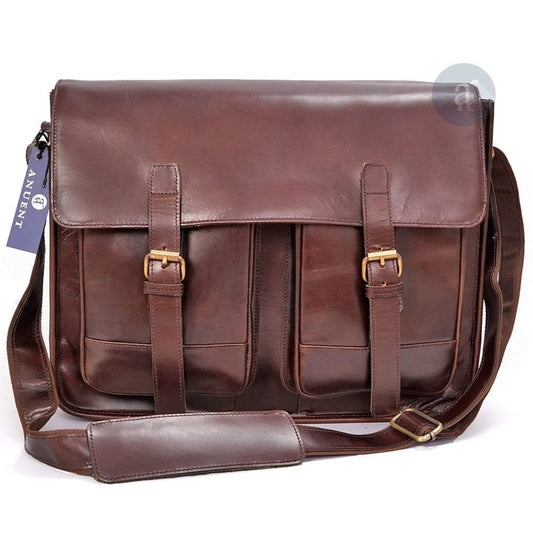
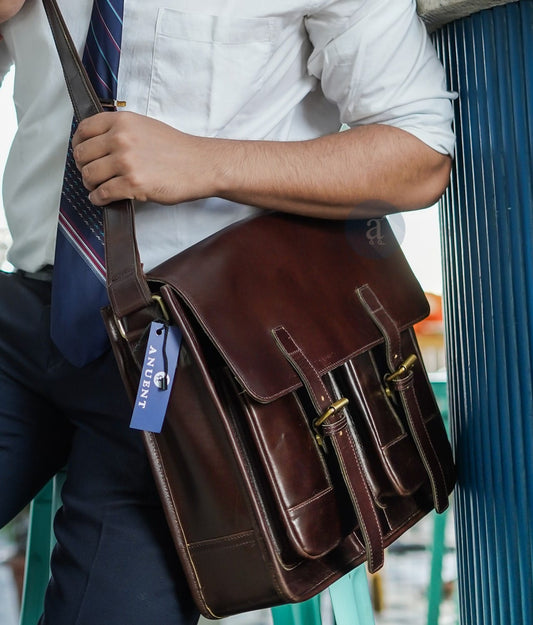
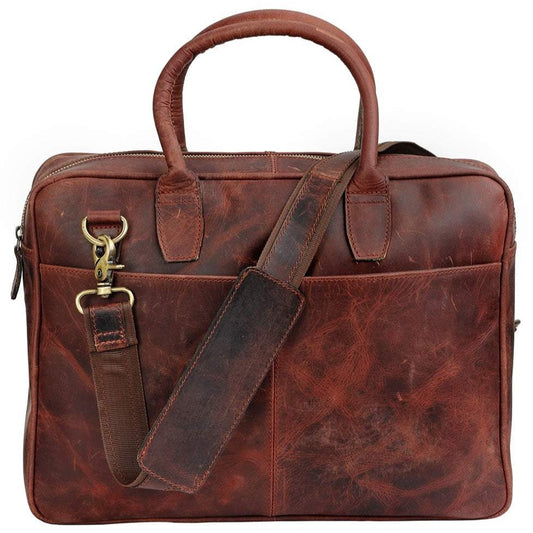
A messenger bag or briefcase that extends beyond the shoulder line on a lean frame reads as too large in exactly the same way it does on a petite female frame.
The difference is that men's bag styles tend toward wider, flatter shapes, which means the external width issue appears more often.
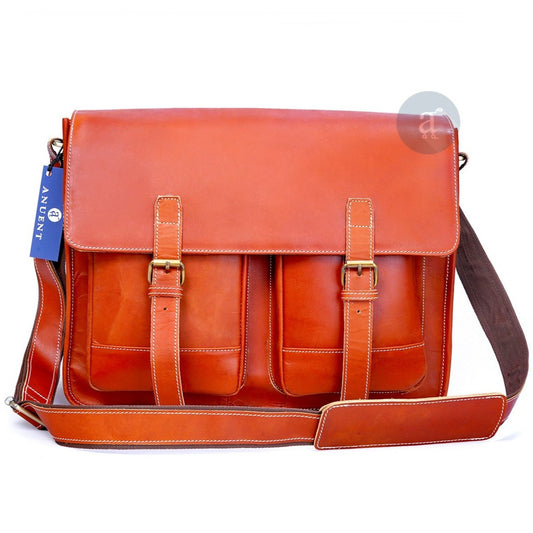
For lean or narrow-shouldered men, compact messenger bags and slim briefcases in the 13 to 14 inch width range are the most proportional option.
A wide 16-inch briefcase on a narrow frame adds visual mass to the shoulder and upper arm area that works against the silhouette.
For broader-shouldered or larger frames, the proportional logic inverts: a small compact bag can read as an accessory rather than a functional item, and medium to large messenger bags or structured totes sit more naturally against a larger frame.
Backpack carry is the most forgiving option for men's frames across the board because the symmetrical carry position removes the lateral width issue.
A structured leather backpack with a width that stays within the back panel reads cleanly at any shoulder width.
The r/malefashionadvice community consistently recommends backpacks for men who find messenger bags and briefcases difficult to proportion correctly.

How to Test Proportion Before You Buy Online
Testing a leather bag's proportion before buying it in person is straightforward.
Testing it online requires a different approach.
The most reliable method is to cut a piece of cardboard to the bag's stated external width and hold it against your body at the carry position you intend to use.
This sounds overly simple, but it gives an accurate, immediate sense of whether the bag's width stays within your shoulder line or extends beyond it.
The second method is to check the model's dimensions in the product photography.
If the brand lists the model's height, you can calculate the bag's proportion against a body you can see.
Anuent lists exact external measurements on every product page so you can make this comparison directly.
The third method, which the BIFL leather bag checklist covers in detail, is to check reviews specifically for comments about proportion and carry position rather than just durability.
Buyers who mention the bag's fit on their frame give you real-world proportion data that product photography cannot.
One thing to check that most buyers skip: load the bag in the store with a similar weight to your daily carry and check the width again.
As discussed above, soft leather bags spread under load.
The version you see on the shelf is the narrowest it will ever be.
Common Mistakes by Frame Type
After reviewing hundreds of posts across r/femalefashionadvice, r/ManyBaggers, and r/handbags, the same proportion of mistakes appears repeatedly, organized by frame type.
- Petite frames: Buying a bag based on interior capacity rather than external width. A bag that holds everything you need but extends two inches past your shoulder on each side will never look balanced, no matter how well it is made.
- Tall frames: Choosing bags that are too small because they look good in product photography, which is shot at a fixed scale. A bag that looks generous in a flat-lay photograph may read as accessory-sized against a taller frame.
- Curvy frames: Wearing a crossbody strap at chest height rather than adjusting it to hip height. The diagonal strap line at hip carry is more flattering than the horizontal line a high-hung crossbody creates across the chest.
- All frames: Not accounting for how leather type affects shape under load. Understanding types of leather explained by grain and tanning method gives you a clearer sense of how stiff or supple a bag will be in use, not just on the shelf.

The Short Version by Frame
If you want a direct answer by frame type without the full detail above, here is the short version.
Petite frames do best with compact crossbody bags, structured slings, and small totes with short handles.
External width under 12 inches.
Strap adjusted to hip height. Structured leather is preferred for shape retention.
Tall frames can carry larger totes, messenger bags, and briefcases in the 14 to 16 inch width range without the bag overwhelming the silhouette.
Longer strap drops work. Both structured and relaxed leather styles suit a taller frame.
Curvy and plus-size frames benefit most from hip carry, hand carries with a short tote handle, and backpack styles.
Avoid under-arm carry if the bag extends past the shoulder.
Adjust crossbody straps to hang at the hip rather than across the chest.
Men's narrow frames follow the same logic as petite frames for width.
Men's broader frames can carry larger messenger and briefcase styles.
Backpack carry is the most frame-neutral option for men of any build.
For a color and style perspective to pair with your proportional choice, the leather bag color selection guide covers which tones suit different skin tones and wardrobe palettes.
Proportion and color together are how you get a bag that feels genuinely right rather than just functional.
The genuine leather purse for women collection covers the widest range of carry styles across tote, crossbody, sling, and shoulder formats, if you want to compare silhouettes side by side.
The principles of visual proportion used in fashion are the same ones applied in architecture and design: the eye reads scale relative to its surroundings, not in absolute terms.
A bag is not big or small in isolation.
It is big or small relative to the frame it sits on.
Getting that relationship right is the difference between a bag that looks like it belongs and one that just holds your things.
BUILT FOR YOUR CARRY
Leather Bags With Exact Dimensions Listed — So You Buy Right First Time
Every Anuent bag is expertly crafted from top-grain buffalo leather, goat leather, and vegetable-tanned leather. External width, height, strap length, and drop all listed on every product page. Free shipping to the USA, UK, and Canada.
FAQ
What size leather bag is best for a petite frame?
For petite frames under 5'4", the best leather bag width is under 12 inches at the widest point.
A compact crossbody, structured small tote, or sling bag in the 10 to 12 inch width range stays within the shoulder line and avoids the visual bulk that wider bags create on smaller frames.
Structured leather holds its stated dimensions better than soft leather when loaded, which makes it the more predictable choice for smaller builds buying online.
Can a tall woman carry a large leather tote without it looking awkward?
Yes, and in most cases, a larger tote suits a tall frame better than a compact bag does.
A longer torso and broader shoulder line create proportional room for larger bags to sit without dominating the silhouette.
A bag that reads as oversized on a 5'3" frame often looks balanced and intentional on a 5'9" frame.
The key check for tall frames is that the bag's width still stays within the shoulder line, even if the bag is large in height and depth.
What is the most flattering carry position for a crossbody bag?
Hip carry, with the bag body sitting at hip height rather than high on the chest or across the torso, is the most consistently flattering position across frame types.
The diagonal strap line adds visual height, the bag sits at one of the narrower parts of most bodies, and it does not interrupt the shoulder line.
Adjust the strap so the base of the bag sits at hip bone level for the best result.
Do leather bags look bigger in person than in product photos?
Often, yes, because product photography is shot at a fixed scale that does not account for how the bag relates to a human body.
A bag photographed flat or on a minimal background reads as a given size relative to the frame of the image. On a body, it reads relative to shoulder width, torso length, and hip width.
The most reliable way to calibrate is to cut cardboard to the bag's stated width and hold it at the carry position before ordering, or to check reviewer photos that show the bag being worn rather than displayed flat.
Does leather type affect how a bag fits a specific frame?
Yes, because different leather types behave differently under load, and that behavior changes the bag's effective dimensions when you are actually carrying it.
Top-grain buffalo leather holds its shape and stays close to its stated width when loaded.
Goat leather is softer and relaxes under weight, spreading wider than its empty dimensions suggest.
For petite frames where keeping the bag within the shoulder line is a priority, top-grain buffalo leather is the more predictable choice.
For taller frames who prefer a relaxed aesthetic, goat leather's natural softening suits a looser carry style.
Is a leather backpack a good option if I struggle to proportion crossbody bags?
Yes, and it is arguably the most frame-neutral carry option available.
A leather backpack distributes weight symmetrically across both shoulders and adds no visible width to the front silhouette.
It does not extend beyond the shoulder line the way a side-carry bag can, and the carry position does not change with strap adjustment.
For men and women of any frame who find crossbody or shoulder carry difficult to proportion, a structured leather backpack removes most of the proportion variables entirely.
What leather bag styles should curvy frames avoid?
Rather than listing styles to avoid, the more useful approach is to understand which carry positions work best, then apply that to any style.
Under-arm carry at shoulder height adds visual width to the broadest part of the upper body, which tends not to flatter curvy frames.
The same bag worn crossbody at hip height changes the line completely.
Adjusting strap length so the bag sits lower and using hand carry for tote styles are two practical changes that work across bag styles without requiring you to avoid entire categories.