
Last Updated: March 2026
- Three tests identify most fakes immediately: Smell (real leather is earthy and organic; fake leather smells chemical or plastic), surface texture (real leather has natural variation; fake leather has perfect repeating grain), and edge inspection (real leather shows fibrous texture at cut edges; fake leather shows smooth plastic or fabric backing).
- The label is a starting point, not a guarantee: "Genuine leather" is actually the lowest grade of real leather. Look for "full-grain" or "top-grain" for quality leather. Labels saying "man-made material," "leatherette," or "PU leather" confirm synthetic material.
- Price is a reliable signal: Good, genuine leather bags carry meaningful manufacturing costs that are always reflected in price. A bag claiming to be real leather at an implausibly low price is almost always synthetic or the lowest-grade processed leather.
- Fake leather starts failing fast: PU and PVC leather typically begin peeling and delaminating at flex points within one to three years of daily use. Real leather develops a patina and improves over the same period.
- "Genuine leather" is not a quality term: Both full-grain and top-grain are technically genuine leather, but are far superior in quality and durability. A product labeled only "genuine leather" without further specification is typically the lowest processing tier.
WHAT YOU NEED TO KNOW
- Manufacturers of fake leather are improving: High-quality PU leather can look almost identical to genuine leather when new, particularly in product photographs. Visual inspection alone is no longer reliable. The smell test, edge inspection, and water absorption test are more reliable than appearance.
- Fake leather fails in predictable ways: The polyurethane coating on fake leather separates from the fabric backing under repeated flexing. It begins at high-stress points, handles, strap attachments, and base corners, and spreads rapidly. Once it starts peeling, it cannot be repaired meaningfully.
- There is a spectrum of quality within real leather: Not all real leather is equal. Full-grain leather is the strongest and most durable. Top-grain is of excellent quality. Genuine leather (the grade) is the weakest real leather and is often heavily processed to resemble higher grades. Bonded leather contains leather scraps but is functionally closer to synthetic leather in durability.
- Marketing language is deliberately misleading: Phrases like "leather-look," "quality leather," "premium leatherette," and even "luxury faux leather" are designed to create an impression of quality without making a genuine leather claim. Read labels precisely.
- Eight tests are enough to identify any fake bag: You do not need specialist equipment or extensive experience. The eight tests in this guide work in-store and at home and cover every common method of faking leather quality.
Synthetic leather has improved significantly in recent years.
A well-made PU leather bag photographed under good lighting and sold in a professional retail environment can be difficult to distinguish from genuine leather on appearance alone.
The problem is not what it looks like when new.
The problem is what it looks like after six months of daily use, when the polyurethane coating begins to separate from the backing fabric at the points of highest mechanical stress.
This guide covers eight reliable tests for identifying fake leather before buying, tests that work in-store, online, and on bags you already own, along with the labeling language used to mislead buyers and a clear explanation of what the quality grades actually mean.
Test 1: The Smell Test (Most Reliable)
The smell test is the fastest, most reliable, and most difficult to fake of all identification methods.
Real leather has a distinctive, earthy, organic smell that comes from the natural oils in the animal hide and the tanning process.
People describe it variously as: a library smell, a saddle shop, warm earth, or a complex musty-sweet combination.
Whatever the specific description, it is unmistakably organic and natural.
Fake leather smells chemical, plastic, or synthetic.
It often smells like new car interior, plastic packaging, glue, or a sharp synthetic odor that fades within days.
Some manufacturers spray artificial leather scent onto synthetic products to mimic the real smell, but this fades very quickly and never fully replicates the complexity of genuine leather.
If in a shop, hold the bag close to your face and smell the surface, particularly near the interior or at a fold in the material where the scent is most concentrated.
If shopping online, smell the bag as soon as it arrives before any other test.
Test 2: Surface Texture Inspection
Real leather comes from animal hide.
The surface reflects the natural structure of the hide pores, subtle grain variation, slight imperfections, and occasional natural marks from the animal's life.
No two panels of genuine leather are identical. The texture is consistent in character but not in exact pattern.
Fake leather is manufactured from a base material (typically polyurethane or PVC coated onto fabric) with a grain pattern stamped or embossed onto the surface.
This pattern repeats.
Look at a large panel of the bag surface and scan for repeating texture units, the same grain cell shape appearing at regular intervals across the surface like a wallpaper tile.
On genuine leather, the grain is unique and non-repeating across the surface.
On synthetic leather, the pattern repeats, often becoming visible once you know to look for it.
Also look for "too perfect" surface appearance: a flawless, completely uniform surface with no natural variation is a signal of heavy processing or synthetic construction.
Test 3: Edge Inspection
The edge of a leather product where the material has been cut is one of the most reliable authentication points.
Real leather, when cut, exposes the natural fiber structure of the hide at the edge.
This appears as a slightly rough, fibrous, felt-like texture at the cut edge, similar to the texture of animal skin viewed from the side.
Fake leather has a smooth, plastic, or fabric-looking backing visible at the edge.
You can sometimes see the distinct layers: the polyurethane coating on top, a fabric or paper backing underneath, and occasionally a separation between the two layers visible from the side.
Check the strap ends, the interior edges of pockets, and any visible cut edges on the bag where the material is not folded and finished.
A bag where all edges are perfectly folded and finished with no exposed material deliberately conceals this test point, which is itself a signal worth noting.
Test 4: The Bend and Flex Test
Gently fold or press a section of the bag material and observe how it responds.
Real leather flexes naturally, develops small, organic wrinkles when bent, and returns to shape with a natural resilience when released.
The crease pattern when genuine leather is bent looks organic and irregular.
Fake leather behaves differently under bending.
PU leather tends to be stiffer and more resistant to natural flex.
When bent, it creases in a way that looks too clean or plastic-like.
It also tends to show white stress marks along the crease line if bent sharply, as the coating cracks slightly under the deformation.
Press the surface lightly with a finger and release.
Genuine leather leaves a slight, temporary impression that fades as the fibers return to position.
Fake leather typically springs back more rigidly, like plastic, without this natural impression behavior.
Test 5: The Water Drop Test
Genuine leather is a porous natural material.
When a small drop of water is placed on the surface, it absorbs into the fibers within several seconds to a minute, darkening the spot slightly before drying back to the original color.
Fake leather is made from sealed synthetic material that repels water.
A drop of water placed on PU or PVC leather beads up on the surface and does not absorb.
How to perform this test without risking visible damage:
- Find a truly hidden area of the bag, the underside of the base, inside a pocket, or under a strap.
- Place a single, small drop of water on the surface using a finger or dropper.
- Observe for over 15 to 30 seconds. Real leather absorbs the water, and the spot darkens temporarily. Fake leather repels water, and it stays beaded on the surface.
- Blot the area clean with a dry cloth after testing.
If testing in a shop, ask permission first or perform the test in the most hidden possible location.
Note: Some heavily treated or waxed genuine leather surfaces may initially repel water before eventually absorbing it. If in doubt, combine this test with the smell test and the edge inspection.

THE REAL THING
Genuine Leather Bags That Pass Every Test on This List
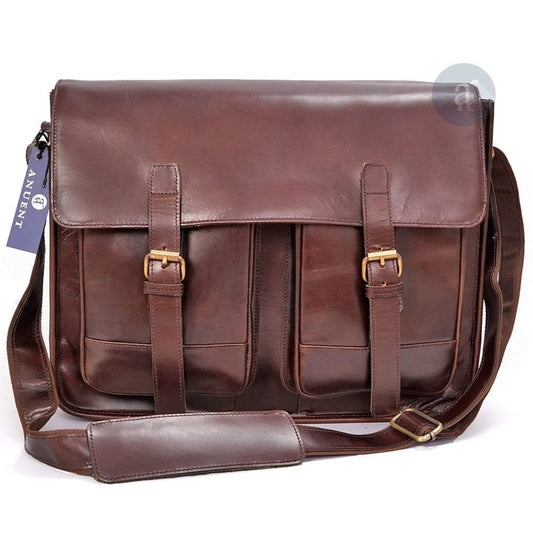
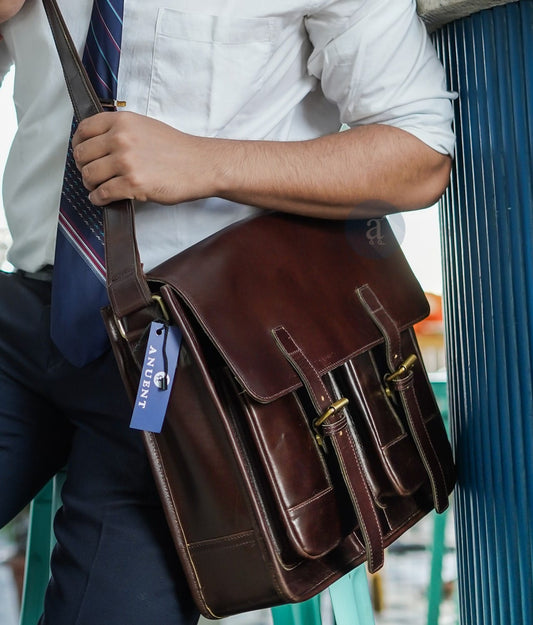
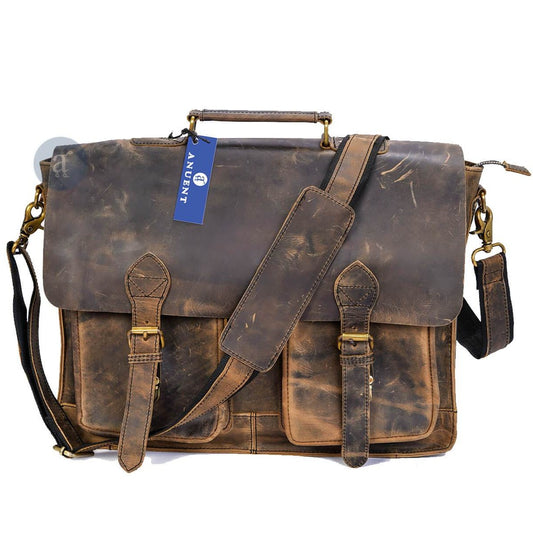
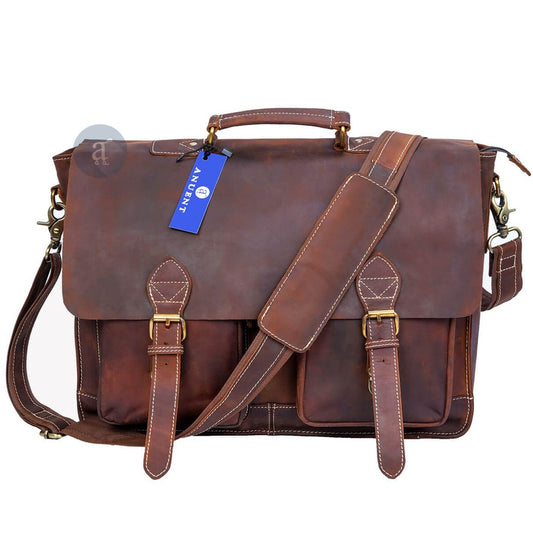
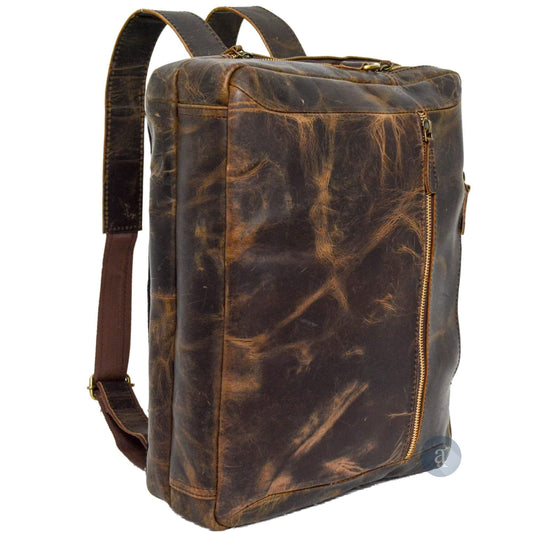
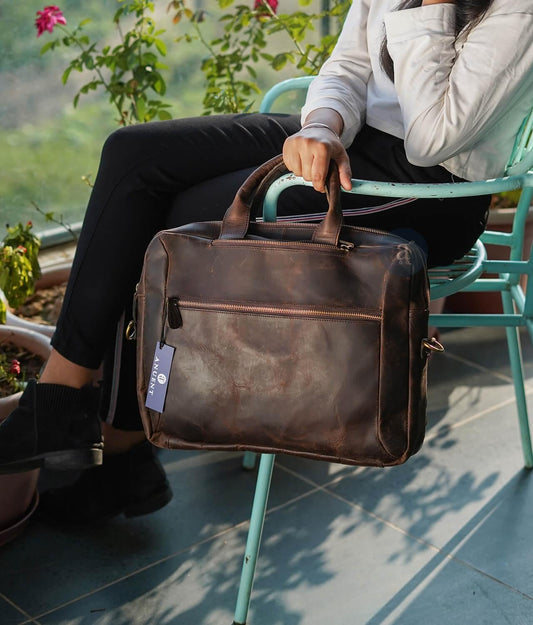
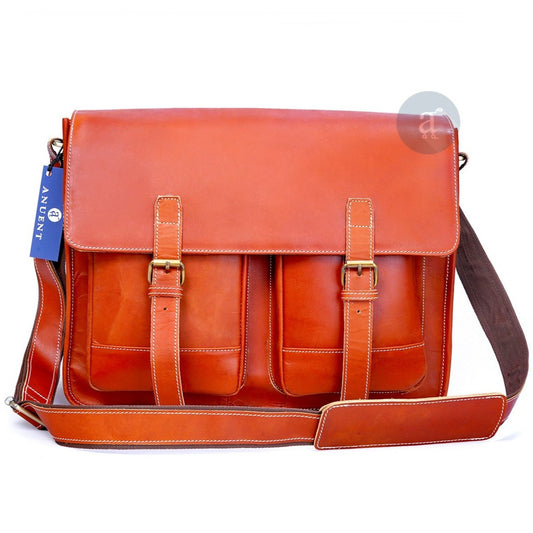
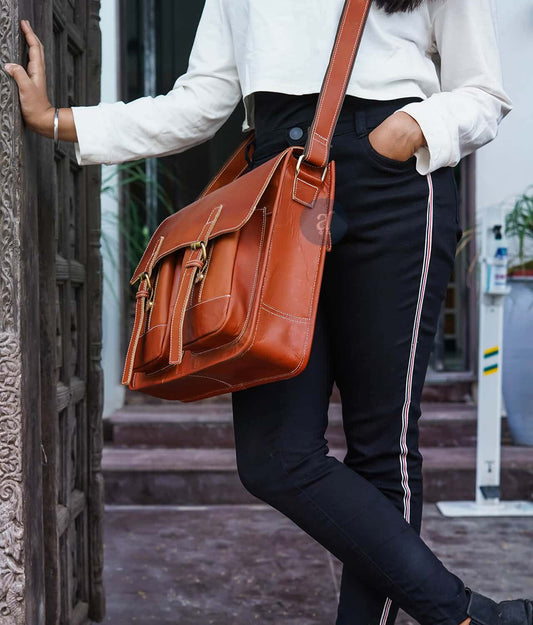
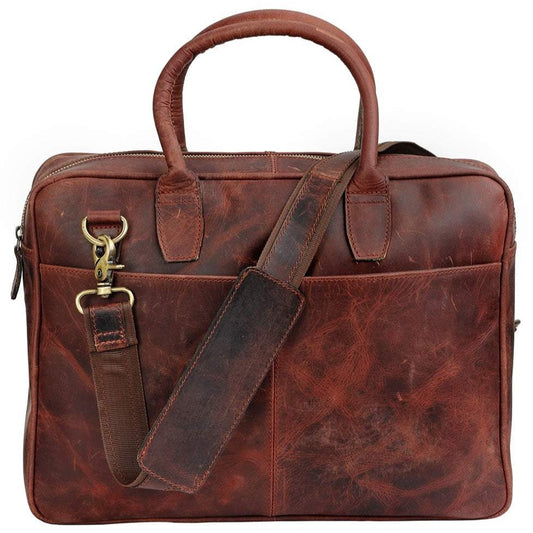
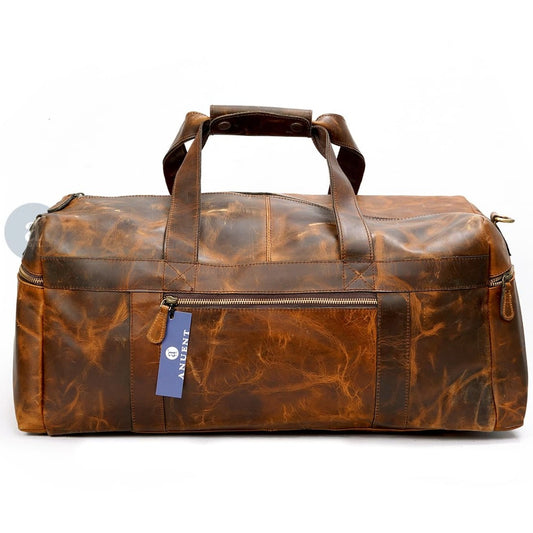
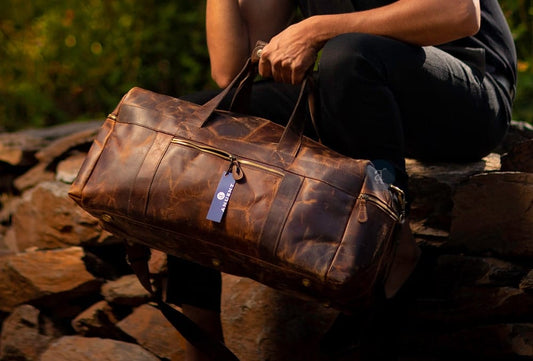
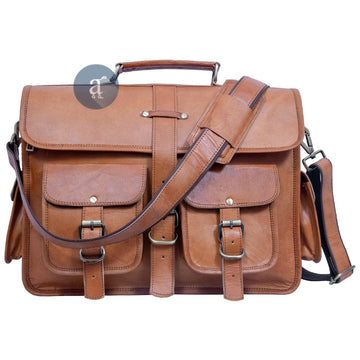
Every Anuent bag is crafted from genuine leather top-grain buffalo and goat leather that smells right, feels right, and develops character over years of use. Free shipping to USA, UK, and Canada. Free monogramming on every order.
Test 6: The Label Check
Checking the product label sounds obvious, but it is frequently misread because of confusing terminology.
Labels that confirm genuine leather:
- "Full-grain leather" highest quality grade
- "Top-grain leather" second-highest quality grade
- "Genuine leather", real leather, but the lowest grade (see the important note below)
- "100% leather" real leather, grade unspecified
- Country of tannery or leather origin stated a positive signal of traceability
Labels that confirm synthetic or low-quality material:
- "PU leather" or "polyurethane leather"
- "Faux leather" or "vegan leather"
- "Leatherette" or "pleather"
- "Man-made material"
- "Synthetic leather"
- "Bonded leather" contains leather scraps bonded with adhesive; it behaves more like synthetic leather in durability
- No material specified at all is a red flag; legitimate, genuine leather products always state this prominently
Important note on "genuine leather": In the leather industry, "genuine leather" is technically a grade label referring to the lowest quality of real leather made from the lower split layers left after full-grain and top-grain sections are cut away. A product labeled only as "genuine leather" is real leather, but it is the lowest tier, typically heavily processed and lasting only two to five years under daily use. For an explanation of what genuine leather actually means and how it compares to higher grades, that article covers the manufacturing process and practical performance differences.
Test 7: The Weight and Structure Test
Genuine leather has a characteristic weight and density that comes from its natural fiber structure.
Pick the bag up and assess its weight relative to its size.
A genuine leather bag of medium size will feel noticeably heavier than the same volume in PU leather because the leather material itself is denser than the polyurethane-coated fabric used in synthetic bags.
Press the sides of the bag gently.
Genuine leather, particularly structured bags, will feel firm and resilient.
It will maintain its shape under gentle pressure and return to it when released.
Fake leather bags, particularly cheaper ones, feel lighter, slightly hollow, and less structurally stable under gentle pressure.
Test 8: The Price Reality Test
Genuine leather requires significant material and production costs.
The hide must be sourced, processed, tanned, and cut by skilled workers.
The cost of producing a bag from genuine full-grain or top-grain leather is substantially higher than producing the same shape in PU leather.
These costs are always reflected in the retail price.
A bag claiming to be genuine leather at a price that seems significantly lower than comparable leather bags from other retailers is almost certainly synthetic, bonded leather, or the lowest grade of genuine leather heavily processed to look more expensive than it is.
This is not a definitive test on its own; expensive does not always mean genuine leather, but implausibly cheap leather claims should trigger additional testing with the more definitive methods above.
Understanding the Labels: What the Grade Names Actually Mean
One of the most effective ways to consistently identify quality leather is to understand what the grade names mean before shopping.
The guide that covers the difference between leather grades explains each tier with practical performance comparisons.
For a broader overview covering all leather types, including tanning methods, animal hides, and surface finishes, our full guide to leather types and grades gives a complete reference.
For the specific comparison between bonded leather, which is particularly common in budget bags marketed as leather and genuine leather grades, the article on how bonded leather differs from genuine covers its construction, failure patterns, and performance in detail.
How Fake Leather Fails Over Time
Knowing how fake leather fails helps confirm identification even after purchase.
PU leather fails in a predictable and distinctive pattern that genuine leather does not produce.
- Peeling and delamination: The polyurethane surface coating separates from the fabric backing. This typically begins at high-stress flex points, such as the handle attachment area, strap fold points, base corners, and zip pulls. Once it starts, it spreads rapidly and cannot be meaningfully repaired.
- Surface cracking: The PU coating develops a network of surface cracks under repeated flexing, particularly in cold conditions when the coating becomes more brittle. This appears as a craze pattern across the surface.
- Edge fraying: Unlike real leather edges, which remain stable, fake leather edges, where the coating meets the backing, often fray or separate, exposing the fabric layer underneath.
Genuine leather does not peel or delaminate.
It develops surface scratches and a patina, but its structural integrity remains intact for decades with proper care.
If a bag you already own is peeling, it is not genuine leather, regardless of what the label states.
For a more comprehensive set of tests with additional detail on each method, the companion article covering seven tests to tell if a leather bag is real goes deeper on each technique and covers online purchasing specifically.
Frequently Asked Questions
How can you tell if a leather bag is real or fake?
The fastest and most reliable combination: smell it (real leather has a distinctive earthy organic smell; fake leather smells chemical or plastic), examine the surface texture (real leather has natural variation and slight imperfections; fake leather has a perfectly uniform repeating grain pattern), and check the cut edges (real leather shows fibrous texture at cut edges; fake leather shows smooth plastic or fabric backing).
These three tests together identify the vast majority of fake leather bags quickly and without damage.
What does fake leather smell like?
Fake leather smells chemical, plastic, or synthetic.
Common descriptions include: a new car interior smell, plastic packaging, a sharp glue-like odor, or a chemical smell that fades quickly.
Some manufacturers spray an artificial leather scent onto synthetic products, but it fades within days and never fully replicates the complex, earthy, organic smell of real leather.
Does real leather absorb water?
Yes.
Real leather is a porous natural material and absorbs small amounts of water, darkening slightly at the absorption point before drying back to its original color.
Fake leather is sealed and repels water rather than absorbing it.
The water absorption test is a reliable indicator of authenticity when performed carefully on a hidden area.
Why is "genuine leather" not a quality guarantee?
In the leather industry, "genuine leather" is a grade label referring to the lowest quality of real leather, made from the lower split layers of the hide.
A product labeled "genuine leather" is real leather, but it is the lowest tier, typically lasting only two to five years under daily use.
Both full-grain and top-grain leather are also technically genuine leather, but are far superior in durability and character.
Can fake leather look exactly like real leather?
High-quality PU leather can look almost identical to real leather when new, particularly on smooth finished surfaces.
However, the smell test and the edge inspection test remain reliable even on the most convincing PU leather because the chemical smell and fabric or plastic backing cannot be replicated by the manufacturing process.
Is PU leather the same as fake leather?
Yes.
PU leather is a synthetic material made by coating a fabric backing with polyurethane.
It is not made from animal hide and is not genuine leather.
PU leather peels and cracks within one to three years of regular use because the polyurethane coating separates from the fabric backing under repeated flexing.
What label words indicate fake leather?
Labels using these terms confirm synthetic material: PU leather, vegan leather, faux leather, leatherette, pleather, man-made material, synthetic leather.
If a product label does not specify the material at all, treat this as a red flag; real leather is a selling point and would be prominently stated.
How long does fake leather last compared to real leather?
PU and PVC fake leather typically shows visible peeling, cracking, and surface delamination within one to three years of regular daily use.
Real leather from the top-grain grade upward, maintained with regular conditioning, typically lasts ten to twenty years or more and develops a richer appearance over time rather than deteriorating.
BUY THE REAL THING
Genuine Leather Bags That Improve With Every Year of Use
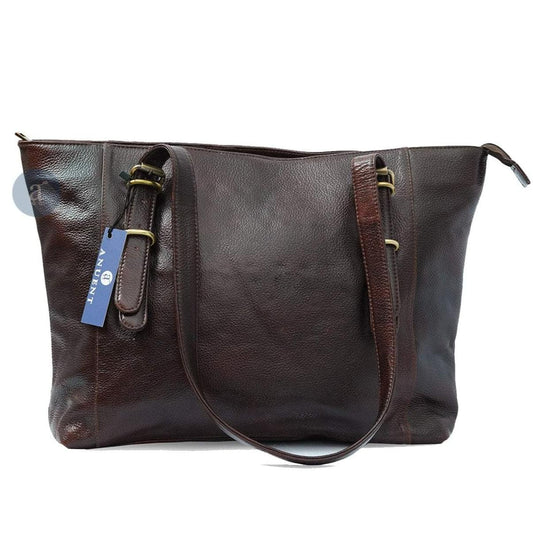
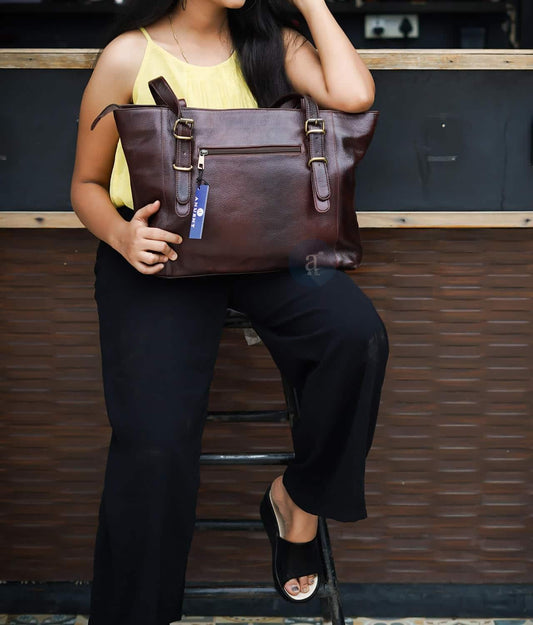
Every Anuent bag is expertly crafted from top-grain buffalo leather and goat leather, genuine leather that develops a patina, responds to conditioning, and lasts years, not months. Free shipping to the USA, UK, and Canada. Free monogramming on every order.