
Last Updated: May 2026
- Stitch count per inch is the first number to check: 8 to 10 stitches per inch is the quality benchmark for leather goods; fewer than 6 indicates a cost-reduced construction that will loosen under load.
- Thread tension tells you more than thread color: uneven tension creates loops on one side of the leather and pulled dimples on the other — both are signs of poor machine calibration or incorrect thread weight for the leather thickness.
- Attachment points are the highest-risk stitching locations: D-ring loops, handle bases, and strap anchors bear the most load and fail first when stitching quality is low.
- Saddle stitching outlasts machine stitching by years: saddle stitching uses two needles with independent thread paths, so one broken stitch does not cause the seam to run; machine stitching fails progressively once one stitch breaks.
- Polyester thread beats linen and cotton for longevity: waxed polyester thread resists moisture, UV degradation, and abrasion better than natural fiber threads, which is why it is the preferred choice for quality leather goods construction.
Leather gets most of the attention when buyers assess bag quality.
The stitching holding that leather together determines how long the bag actually lasts.
A bag made from excellent top-grain buffalo leather with poor stitching at its attachment points will fail before a bag made from adequate leather with excellent construction.
The seams are where stress concentrates, where load transfers from leather panel to hardware, and where the bag is asked to flex and recover thousands of times across years of daily carry.
Stitching quality is also the area where manufacturers most commonly reduce costs without immediate visual detection, because the difference between 6 stitches per inch and 10 stitches per inch is subtle to an untrained eye and only becomes obvious when a seam begins to open under load.
This guide covers what to look for at every stitching point on a leather bag, what specific signs indicate quality construction versus cost-cutting, and how to check stitching quality on bags you are buying online rather than in person.
If you want to know whether the top-grain leather bag or any other leather bag you are considering is built to last, the stitching check is where that answer lives.
Why Stitching Fails Before Leather Does
Leather and thread are fundamentally different materials under stress.
Leather stretches, flexes, and recovers across its fiber structure because it is a dense, interlocked biological material that distributes stress across many fibers simultaneously.
Thread is a single linear element under tension.
When a bag is carried, the load transfers through the strap, through the hardware, through the attachment point stitching, and into the main leather panel.
At each of those transfer points, the thread is bearing concentrated stress in a way that the leather itself is not.
A stitch that is too widely spaced concentrates more stress at each individual stitch point rather than distributing it across a denser field.
A thread that is the wrong weight for the leather thickness either cuts into the leather under load or pulls out of it, depending on whether it is too heavy or too light.
A thread end that is not properly finished will begin to fray at the first stress cycle and progressively unravel from that point.
None of these failures are visible when the bag is new and sitting on a shelf.
All of them are detectable before purchase if you know what to look for.
Stitch Count: The Baseline Quality Measurement
Stitch count, measured as stitches per inch along a seam, is the most objective quality measurement available without tools.
The industry benchmark for quality leather goods is 8 to 10 stitches per inch on main seams and 10 to 12 stitches per inch at stress concentration points like handle bases and strap anchors.
At this density, each stitch bears a manageable share of the seam's total load and the thread path through the leather is close enough that a single broken stitch does not immediately compromise the seam's integrity.
Fewer than 6 stitches per inch on a main seam is a clear indicator of cost-reduced construction.
At this spacing, each stitch bears significantly more load, the gaps between stitches are wide enough that a broken stitch creates an immediate weak point, and the seam has less resistance to the lateral movement that occurs when a bag is dropped or overloaded.
You do not need a ruler to assess stitch count.
Run your thumbnail along a seam and count the stitches over a 25mm span.
Quality construction will have 8 to 10 stitches in that distance.
Budget construction will have 4 to 6.
The difference is visible and tactile once you know what you are feeling for.
Thread Tension: What Even Stitching Actually Looks Like
Stitch count tells you how many stitches are present.
Thread tension tells you whether those stitches are correctly formed.
A correctly tensioned stitch has the thread lock point, the point where the top and bottom threads interlock, sitting exactly in the middle of the leather thickness.
From the top surface, you see a clean row of stitches with even spacing and consistent depth.
From the underside, you see an identical mirror image.
Both faces of the seam look the same because the interlocking point is centered.
Incorrect tension produces visible problems on one or both surfaces.
If the tension is too tight on the top thread, you will see the bottom thread being pulled upward to the surface, creating a looping or puckering effect on the underside of the seam.
If the tension is too loose, the top thread sags between stitch points rather than lying flat, creating a wavy appearance and a seam that catches on objects and abrades prematurely.
Puckering along a seam — where the leather bunches or wrinkles between stitches — indicates that the thread tension is higher than the leather can accommodate without distortion.
This is most visible on thinner leather panels and at curved sections of a bag, such as the base corners and the top edge of a flap.
Check both the exterior and interior of a seam before assessing tension quality.
Interior seams are where cost-cutting is most common because they are the least visible to a buyer at the point of purchase.
Saddle Stitching vs Machine Stitching
Saddle stitching and machine stitching are the two construction methods you will encounter on leather bags, and understanding the difference helps you assess both quality and failure risk.
Saddle stitching uses two needles simultaneously, one on each side of the leather, passing independent threads through the same holes in opposite directions.
The result is a stitch where each pass of thread is individually locked by the opposing thread passing through the same hole.
If one stitch breaks, the adjacent stitches remain independently locked and the seam does not run.
Saddle stitching is done by hand or on specialized machines and is slower and more expensive than standard machine stitching.
Its presence on a bag indicates a manufacturer who has prioritized seam durability over production speed.
Machine stitching uses a single looping thread mechanism where the top thread passes through the leather and loops around a bottom thread to form a lock stitch.
When correctly executed at the right stitch density with the right thread weight and proper tension, machine stitching is durable and entirely adequate for daily-use leather bags.
The vulnerability of machine stitching is that if a single stitch breaks, the looping mechanism means the seam can run progressively from that point in the same way a knit fabric runs when a thread is pulled.
This is why thread end finishing is critical on machine-stitched seams: a properly finished end locks the seam and prevents progressive unraveling even if a stitch is damaged.
Saddle stitching is a quality signal, but it is not the only one.
Well-executed machine stitching at 8 to 10 stitches per inch with correct tension and properly finished ends is genuinely durable.
Poorly executed saddle stitching with loose tension and unfinished ends is not.
Method matters less than execution.
The Attachment Points: Where Stitching Fails First
The highest-risk stitching locations on any leather bag are the attachment points: handle bases, D-ring loops, strap anchors, and any point where hardware is connected to the leather panel.
These areas bear the full weight of the bag and its contents every time the bag is carried.
On a quality bag, these points are constructed with additional reinforcement: a doubled or tripled leather layer behind the attachment, a backing plate or rivet through the full thickness, and stitching that is denser than the main body seams.
The stitching pattern at these points is also different.
Quality construction uses a box stitch, also called a box-X stitch, which creates a rectangular stitch pattern with an X across the center at attachment points.
This pattern distributes stress across eight stitch lines rather than one, which dramatically increases the load the attachment point can bear before failing.
Budget construction at attachment points often uses a simple bar-tack, a dense bundle of parallel stitches without the box pattern, or in lower-quality bags, simply continues the main seam stitching through the attachment point without any additional reinforcement.
The pull test is the most reliable in-person check: grip the handle or D-ring and pull firmly in the direction of normal carry load.
On a quality bag, nothing moves and no thread distortion is visible.
On a budget bag, you will see the stitching at the attachment base distort or feel flex at the connection point.
This check takes five seconds and identifies the highest failure-risk area on any bag before purchase.
For a wider look at what to check beyond stitching, the guide to how to spot a fake leather bag before you buy covers leather surface tests, lining quality, and hardware checks alongside stitching.
Thread Type and Color Matching
The thread used in a leather bag's construction affects durability independently of the stitching pattern and tension.
Waxed polyester thread is the preferred material for quality leather goods construction.
It is resistant to moisture, UV degradation, and abrasion, does not shrink or expand with temperature changes, and maintains consistent tension across the lifespan of the seam.
Linen thread, which has been the traditional choice for saddle stitching for centuries, is also durable when waxed but absorbs moisture over time and can weaken in consistently humid environments.
Cotton thread is the weakest of the three for leather bag construction and is almost always a sign of cost reduction when it appears on a bag intended for daily use.
You cannot identify thread material by visual inspection alone.
However, thread diameter relative to the leather thickness is readable.
Thread that looks thin relative to the weight of the leather panel it is stitching through is under-weight for the application and will concentrate stress rather than distributing it.
Thread that looks proportionate to the leather thickness and creates a slightly raised line along the seam is correctly weighted for the construction.
Color matching between thread and leather is also a quality signal, though a subtle one.
A contrasting thread color, such as white thread on dark leather, is a deliberate design choice in many quality bags and is not a quality concern.
Thread color that clearly does not match the leather and appears to be a generic off-the-shelf color rather than a matched choice suggests a manufacturer who did not invest in material coordination, which sometimes correlates with other construction shortcuts.
Interior Seams: The Hidden Quality Indicator
The interior of a leather bag reveals construction decisions that the exterior is designed to conceal.
Open the bag and look at the interior seams running along the base and sides.
On a quality bag, interior seams are finished with consistent stitching, the leather edges are turned and stitched or bound with a lining material, and there are no raw thread ends visible inside the bag.
On a budget bag, interior seams often have raw leather edges that are simply glued rather than stitched, visible thread ends that have been cut but not locked, and stitching that is visibly less dense than the exterior seams because the manufacturer assumed buyers would not check.
The base corners of a bag are particularly revealing.
This is a stress point where multiple panels meet and where cutting construction costs is easiest without immediate exterior visibility.
Quality corner construction involves reinforced seaming with extra stitch density at the corner itself.
Budget corner construction uses a single continuous seam with no additional reinforcement, which is the first point to open when the bag is dropped or overpacked.
Check the interior lining attachment as well.
A lining that is stitched to the leather rather than glued will outlast a glued lining by years.
The stitching holding the lining to the leather body should be consistent and even, not intermittent or puckered.
Checking Stitching Quality When Buying Online
In-person checks are the most reliable way to assess stitching quality, but most leather bag purchases happen online.
Several approaches help you read stitching quality from product photography and listing information.
Zoom into close-up product photography at every stitched seam you can find.
Look for even spacing between stitches, consistent thread lying flat against the leather surface, and no visible puckering or looping at seam edges.
If the product photography does not include close-up seam shots, that omission itself is information: quality manufacturers photograph their stitching because it is a selling point.
Check reviewer photographs, not just star ratings.
Buyers who photograph their bags often capture close-up detail shots that show real-world stitching quality under use conditions.
A bag that shows stitching separation at attachment points in reviewer photographs after six months is telling you something the product listing will not.
Look for specific stitching descriptions in the product listing.
A manufacturer who specifies saddle stitching, waxed thread, or stitches per inch in their product description is signaling that they consider their construction a differentiator.
A listing that describes the leather in detail but says nothing specific about construction method is not necessarily low quality, but it gives you less information to work with.
Read the returns and complaints section of reviews with stitching specifically in mind.
Words like seam, stitch, strap, handle, and came apart in negative reviews indicate stitching or attachment failure and are the most informative quality signals in user-generated content.
The full BIFL leather bag quality checklist covers the complete set of pre-purchase checks including stitching, hardware, leather grade, and lining quality together.
What Good Stitching Looks Like in Practice
Describing good stitching in abstract terms is less useful than knowing what to look for concretely.
Here is what quality construction looks like at each key location on a leather bag.
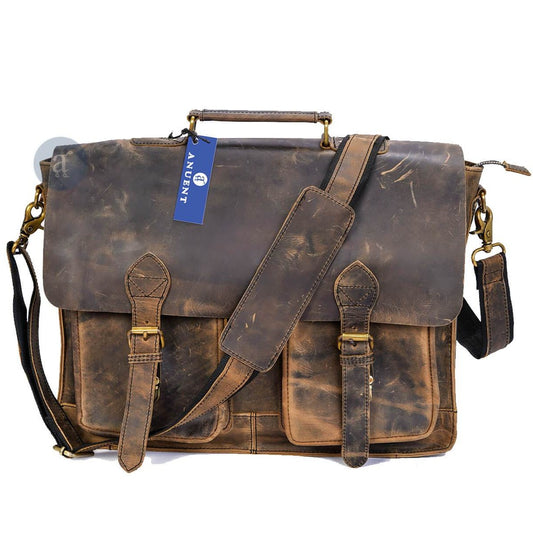
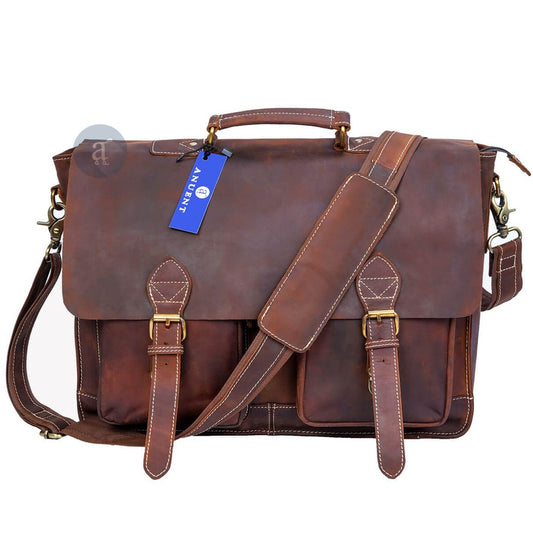
Main body seams: 8 to 10 stitches per inch, thread lying flat and consistent on both sides of the seam, no puckering between stitches, no visible thread ends, and matching tension between the interior and exterior face of the seam.
Handle bases: visibly denser stitching than the main body seams, a box-X stitch pattern if the handle is attached with a tab, and no movement or thread distortion when the handle is pulled firmly in the carry direction.
D-ring and strap anchor loops: the same box-X pattern or equivalent reinforcement, with a backing plate or doubled leather visible from the interior when the bag is open, and no flex at the attachment point under pull load.
Edge stitching along flaps and top panels: even, consistent spacing all the way around the perimeter with no skipped stitches at curves or corners, thread color consistent throughout, and clean finished ends at the start and termination points of each seam.
Interior corner seams: additional stitch density at the corner itself, no raw leather edges, and lining attachment that is stitched rather than glued.
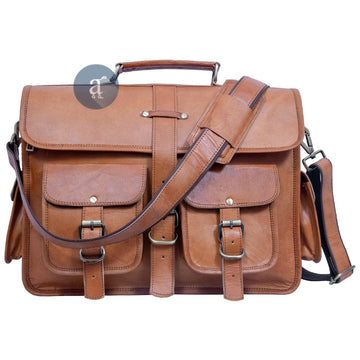
A leather briefcase for men or leather messenger bag for women that meets these criteria at every stitching location has been constructed to outlast years of daily use regardless of its price point.
A bag that fails even one of these checks at an attachment point is telling you where it will fail under load.
BUILT TO THE STITCH
Leather Bags Where the Construction Matches the Leather
Every Anuent bag is expertly crafted from top-grain buffalo leather, goat leather, and vegetable-tanned leather. Construction details listed on every product page. Free shipping to USA, UK, and Canada. Free monogramming on every order.
Common Stitching Failures and What Causes Them
Understanding why stitching fails helps you identify the early signs before a seam fully opens.
Seam separation at attachment points is the most common failure and is almost always caused by insufficient stitch density at the point of highest load concentration.
The thread does not break; the stitching pulls through the leather because each individual stitch is bearing too much load for the thread-to-leather ratio at that point.
Progressive unraveling from a broken stitch is specific to machine-stitched seams and occurs when a thread end is not properly finished.
Once one stitch breaks, the looping mechanism of the machine stitch means tension from adjacent stitches begins pulling the broken thread, which progressively unlocks neighboring stitches in both directions along the seam.
Thread discoloration and degradation before the leather shows wear indicates that the thread material is not appropriate for the use conditions.
Cotton thread in a bag that is regularly used in humid environments or carried in rain will degrade faster than the leather around it, creating a seam that looks visually intact but has lost structural strength.
Puckering that worsens over time indicates a tension problem that was present from new but becomes more pronounced as the leather softens during break-in and the thread tension becomes relatively tighter against the more flexible leather panel.
Understanding what the genuine leather grade actually means is one side of the quality picture, and understanding the construction that holds it together is the other.
For a complete view of how leather type interacts with construction method in determining bag longevity, the guide to types of leather used in backpacks covers how different hides behave under stitching stress across years of use.
The Pre-Purchase Stitching Checklist
The following checks cover the complete stitching assessment for any leather bag purchase, in person or online.
- Stitch count: run a thumbnail along the main body seam and count stitches over 25mm. Target 8 to 10. Fewer than 6 is a quality concern.
- Thread tension: check both sides of a seam. Both faces should look identical. Looping, puckering, or sagging on either side indicates a tension problem.
- Attachment point reinforcement: look for a box-X stitch pattern at handle bases and D-ring loops. Apply the pull test in the carry direction. No movement on a quality bag.
- Thread end finishing: look for raw cut ends at seam start and termination points. Quality finishing uses back-stitching, knotting, or heat sealing. Raw ends are a durability risk.
- Interior seams: open the bag and check the base and corner seams. Raw edges or glued rather than stitched lining attachment indicates a cost-reduced interior construction.
- Edge stitching consistency: check for skipped stitches at curves and corners. A skipped stitch at a high-stress curve is a failure point waiting to open.
- Thread weight: thread should look proportionate to the leather thickness. Thin thread on heavy leather is under-weight for the application.

Checking stitching quality takes less than two minutes in a store and can be done in under five minutes online using close-up photography and reviewer images.
It is the single most reliable predictor of whether a black leather backpack or any other leather bag you are considering will last two years of daily carry or ten.
The hardware quality check covered in the leather bag hardware guide completes the pre-purchase construction assessment alongside the stitching checks above.
The Leather and Hide Council of America publishes construction and quality standards for leather goods that give useful background on what industry-grade construction specifications look like for bags at different price points.
CONSTRUCTION THAT LASTS
Leather Bags Built for Years of Daily Carry
Every Anuent bag is expertly crafted from top-grain buffalo leather, goat leather, and vegetable-tanned leather. Construction specifications listed on every product page. Free shipping to USA, UK, and Canada.
FAQ
How many stitches per inch should a quality leather bag have?
A quality leather bag should have 8 to 10 stitches per inch on main body seams.
At stress concentration points like handle bases, D-ring loops, and strap anchors, 10 to 12 stitches per inch is the benchmark for durable construction.
Fewer than 6 stitches per inch on any main seam indicates a cost-reduced construction where each individual stitch bears more load than it should, increasing the likelihood of seam failure under sustained daily use.
What is saddle stitching and why does it matter on a leather bag?
Saddle stitching is a two-needle hand or machine technique where independent threads pass through the same holes from opposite sides of the leather.
Each stitch is independently locked by the opposing thread, which means a single broken stitch does not cause the seam to run progressively.
In contrast, standard machine stitching uses a looping mechanism where a broken stitch can cause adjacent stitches to progressively unlock.
Saddle stitching is the more durable construction method for this reason, though well-executed machine stitching with properly finished ends is also adequate for daily-use bags.
How can I check stitching quality when buying a leather bag online?
Zoom into close-up product photography at every seam visible in the listing images.
Look for even stitch spacing, thread lying flat on both sides of the seam, and no visible puckering or looping at seam edges.
Check reviewer photographs specifically for close-up bag detail shots, which often show real-world stitching quality after months of use.
Read negative reviews for words like seam, stitch, handle, and came apart, which indicate construction failure rather than leather quality failure.
A product listing that does not include any close-up seam photography is itself a quality signal worth noting.
What does poor thread tension look like on a leather bag?
Poor thread tension shows as looping or puckering on one face of a seam while the other face appears normal.
If you can see the bottom thread being pulled up to the top surface at regular intervals, the top thread tension is too tight.
If the top thread sags visibly between stitch points rather than lying flat against the leather, the tension is too loose.
Puckering along the leather panel between stitches, where the leather itself bunches or wrinkles, indicates tension that is too high for the leather thickness being stitched.
Why do leather bag attachment points fail before the main seams?
Attachment points, the stitched loops, tabs, and anchor points where handles, straps, and hardware connect to the leather panel, bear the full concentrated weight of the bag and its contents every time the bag is carried.
Main body seams distribute load across a longer seam line.
Attachment points concentrate the same load into a much smaller stitched area, which means each individual stitch at an attachment point is bearing significantly more stress than a stitch on a main body seam.
When stitch density at attachment points is not increased to compensate for this concentrated load, those points fail first under sustained carry.
What thread material is best for leather bag construction?
Waxed polyester thread is the most durable thread material for leather bag construction across most use conditions.
It resists moisture, UV degradation, and abrasion, does not shrink or expand significantly with temperature changes, and maintains consistent tension across the seam's lifespan.
Waxed linen thread is the traditional alternative and performs well in most conditions but absorbs moisture over time, which can weaken it in consistently humid environments.
Cotton thread is the weakest of the common options for daily-use bags and is almost always a cost-reduction choice rather than a performance one.
Can I repair a leather bag with poor stitching?
Yes, stitching failures are among the most repairable leather bag problems.
A leather repair specialist can re-stitch failed seams, reinforce attachment points, and replace thread ends that have begun to fray.
The cost of repair is typically modest relative to the cost of the bag, particularly if the leather itself is in good condition.
The more important question is whether a bag with poor stitching is worth repairing or whether the construction issues are widespread enough that one repaired seam will simply be followed by failures at adjacent points.
A bag with good leather and poor construction is generally worth repairing once at a specific failure point; a bag with both poor leather and poor construction is not.