
Last Updated: March 2026
- What calfskin leather is: Genuine leather sourced from calves under one year old. Younger hide means a finer grain, softer texture, and lighter weight than standard cowhide. It is 100% real leather, not synthetic.
- Why it costs more: Limited supply from young animals, lighter hides (4 to 7kg versus 14 to 25kg for adult cowhide), and a more labor-intensive tanning process to preserve the fine grain all drive the premium price.
- How long it lasts: With proper care, every 3 to 6 months, calfskin leather goods last decades. Its tightly packed fiber structure makes it more durable than lambskin while remaining significantly softer than standard cowhide.
- Who uses it: Every major luxury house, including Hermes, Chanel, and Louis Vuitton, uses calfskin for flagship handbags and accessories. The material's balance of softness, strength, and refinement is unmatched by any other leather type.
- Patina and aging: Calfskin develops one of the most refined patinas of any leather. The surface deepens in color and develops a warm, individual luster over years of use, making well-maintained pieces genuinely improve with age.
WHAT YOU NEED TO KNOW
- What it is: Calfskin leather comes from the hides of young domestic cattle, typically under one year old. The younger the animal, the tighter the fiber structure and the finer the resulting grain.
- Thickness: Calfskin is typically 0.8 to 1.2mm thick, making it noticeably lighter than standard cowhide, which ranges from 1.5 to 4mm or more. Despite its lighter weight, the dense fiber structure maintains strong durability.
- Tanning methods: Chrome tanning produces softer, more supple calfskin suited to bags and shoes. Vegetable tanning produces firmer leather with richer tones that develops deeper patina over time.
- Finish types: Full-grain calfskin preserves the natural surface for maximum durability and patina. Grained calfskin is embossed for extra scratch resistance. Box calf is polished to a high-gloss finish. Nappa calfskin is chrome-tanned to maximum softness.
- Care requirement: Condition every 3 to 6 months with a quality leather conditioner. Keep away from excess moisture and direct sunlight. Store in a dust bag in a cool, dry location when not in use.
- Price point: Premium to luxury. Higher upfront cost than standard cowhide or goatskin, but justified by decades of use and the quality of patina development over time.
Calfskin leather is the material behind some of the most iconic bags and accessories ever made.
If you have ever run your hand across a luxury handbag and felt something noticeably softer and more refined than regular leather, there is a good chance you were touching calfskin.
This guide explains exactly what it is, why it costs more, how it compares to other genuine leather bags and materials, and how to care for it properly.
What Is Calfskin Leather?
Calfskin leather is genuine leather derived from the hides of young calves, typically under one year of age.
The younger the animal, the finer the grain and the softer the resulting leather. Unlike standard cowhide, which comes from fully grown adult cattle and produces a thicker, more textured material, calfskin retains the tightly packed, fine fiber structure of a young hide.
This is what gives it its characteristic smooth texture, subtle sheen, and luxurious feel.
Calfskin is 100% real leather. It is not a synthetic material, not a blend, and not a processed or reconstituted product.
It sits at the top of the leather quality hierarchy, distinguished by its superior surface refinement and its lightweight feel relative to its strength.
To understand how calfskin fits within the broader grading system, our guide covering all leather types and how they compare gives you the full picture across every grade and material.
How Is Calfskin Leather Made?
The production of calfskin leather follows the same fundamental process as all genuine leather, but requires greater precision at every stage to preserve the delicate properties of the young hide.
There are four main stages:
- Sourcing and preparation: Hides from young calves are sourced, cleaned, and de-haired. Calfskin hides weigh between 4.3 and 6.8kg, significantly lighter than adult cowhide, which can weigh between 14 and 25kg. This difference in weight is one reason calfskin bags feel noticeably less heavy than bags made from standard cowhide of equivalent size.
- Tanning: The hides are treated to prevent decomposition and create a stable, durable material. Vegetable tanning uses natural tannins from bark, leaves, and flowers, producing firmer leather with rich earthy tones that develop a deep patina over time. Chrome tanning uses chromium salts, producing softer, more supple leather with greater flexibility, and is the more common method for calfskin bags and shoes. According to the Leather Panel, vegetable tanning remains the more environmentally considered method due to its use of natural inputs.
- Shaving and splitting: Precision machines shave the hide to a uniform thickness, typically 0.8 to 1.2mm for calfskin. Thinner than standard cowhide, but no less durable due to the tighter fiber density of young hide.
- Finishing: The leather is dyed, buffed, and treated with a surface finish. High-end calfskin uses aniline dyeing, a transparent dye that allows the natural grain to show through. Lower-grade calfskin uses opaque pigment coatings that create a more uniform appearance but conceal the natural texture entirely.
Types of Calfskin Leather
Calfskin leather is produced in several distinct finishes, each suited to different applications and care requirements:
- Full-grain calfskin: The highest quality. The outermost layer of the hide is preserved intact, showing the natural grain with minor imperfections. Most durable, develops the richest patina. Used by top-tier luxury brands for flagship products.
- Grained calfskin: The surface is embossed with a textured pattern, either natural-looking or geometric. The embossing hides minor scratches and signs of wear, making it a practical choice for everyday use bags and wallets.
- Box calf: Chrome-tanned and polished to a smooth, high-gloss finish with visible depth and sheen. The classic choice for formal dress shoes and structured handbags. Shows scuffs more readily but develops a particularly distinctive depth with age.
- Nappa calfskin: Chrome-tanned to maximum softness. Extremely supple and lightweight. Used for high-end gloves, softer bags, and garments where feel takes priority over structure.
- Saffiano calfskin: Cross-hatched texture applied through embossing under high pressure. Highly scratch-resistant and easy to clean. A signature finish most associated with Prada for structured bags.
Expertly Crafted Genuine Leather
Premium Leather Bags Built to Last a Lifetime
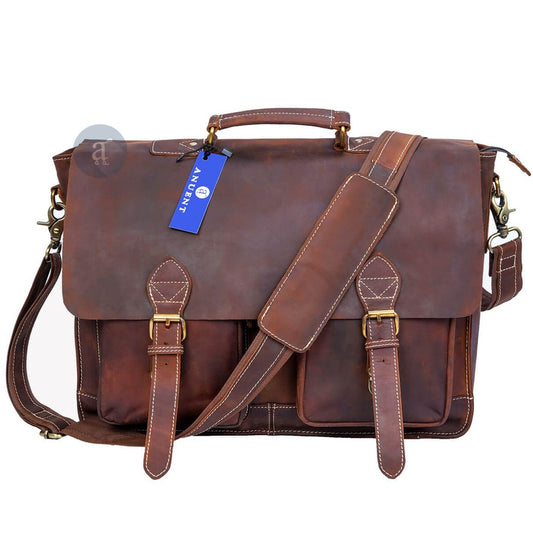
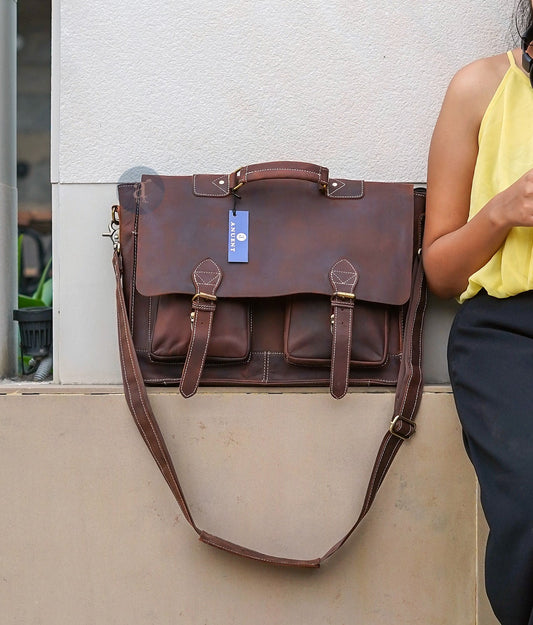
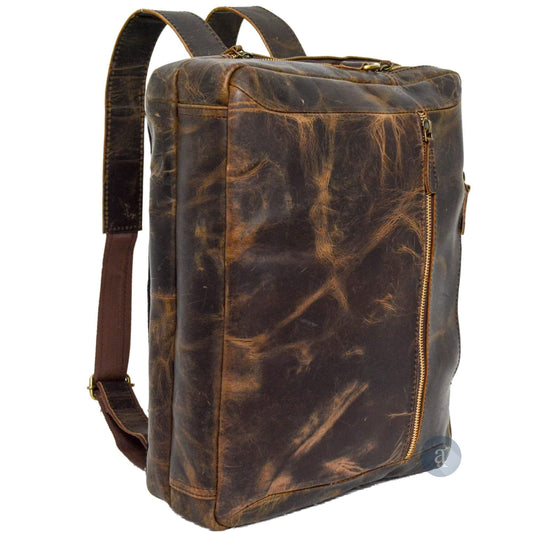
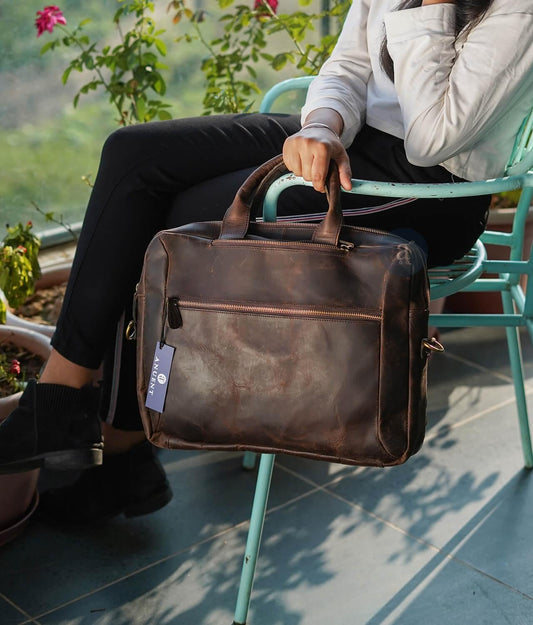
Anuent bags are crafted from top-grain buffalo leather and genuine goat leather. Real materials selected for durability, texture, and the ability to develop a beautiful patina over years of daily use. Free shipping to USA, UK and Canada.
Shop Genuine Leather Bags30-day money-back guarantee · Free monogramming on every order · 2,000+ verified reviews
Calfskin vs Cowhide, Goatskin, and Lambskin
Understanding where calfskin sits relative to other genuine leather types helps you make a more informed decision when choosing a bag.
The table below compares the four most common leather types used in bags and accessories.
| Property | Calfskin | Buffalo / Cowhide | Goatskin | Lambskin |
|---|---|---|---|---|
| Softness | Very high | Medium | Medium-high | Highest |
| Durability | High | Very high | High | Low to medium |
| Grain fineness | Very fine | Medium to coarse | Fine | Very fine |
| Weight | Light (0.8 to 1.2mm) | Heavy (1.5 to 4mm+) | Light to medium | Very light |
| Scratch resistance | Medium-high | High | High | Low |
| Patina development | Rich and elegant | Deep and rugged | Moderate | Minimal |
| Best use | Luxury bags, shoes, and wallets | Briefcases, work bags, travel | Crossbody bags, everyday bags | Soft bags, gloves, linings |
| Price point | Premium | Mid-range | Mid-range | Premium |
For shoppers weighing up a leather laptop bag or a structured work bag, buffalo and top-grain cowhide offer a stronger choice for high-load daily use.
For lighter everyday carry bags, crossbody bags, and anything where feel and refinement matter as much as durability, calfskin and goatskin are the preferred choices.
Is Calfskin Leather Durable?
Yes. Calfskin leather is genuinely durable despite its delicate appearance.
The tightly packed fiber structure of young calf hide makes it more resistant to tearing and abrasion than its soft feel suggests.
It is significantly more durable than lambskin, which sacrifices strength for softness, and holds its shape better than goatskin in structured applications like handbags and leather briefcases.
The key distinction is that calfskin's durability is balanced with refinement.
Thicker leathers like top-grain buffalo hide will outlast calfskin in heavy-use workwear applications.
But for accessories used in professional and social settings, calfskin delivers decades of use when properly maintained.
Our detailed comparison of full-grain vs top-grain vs genuine leather explains exactly how each grade performs under real-world daily use conditions.
Why Do Luxury Brands Use Calfskin Leather?
Calfskin has been the material of choice for the world's most prestigious leather goods houses for over a century.
The reasons are specific and practical, not merely traditional:
- Surface uniformity: The fine, tight grain accepts dye and finishing treatments more evenly than adult cowhide, producing the consistent polished appearance that luxury products require.
- Structural precision: Calfskin's suppleness allows it to be cut, stitched, and formed into precise shapes without the material distorting. This is critical for structured bags where clean lines and sharp edges define the product.
- Hardware compatibility: Calfskin bonds more securely around metal hardware, including clasps, zippers, and D-rings, than softer leathers like lambskin, which can tear at stress points under regular use.
- Patina quality: As calfskin ages, the patina it develops has a particular depth and warmth that is visually distinct from aged cowhide. More refined, less rugged. This is the defining characteristic of leather goods designed to be heirloom quality.
The global leather goods market is growing at a 4.30% compound annual growth rate through 2024 to 2029, according to Mordor Intelligence, driven substantially by demand for premium calfskin products across North America, Europe, and Asia.
The material's combination of luxury aesthetics with genuine functional durability continues to make it the benchmark for quality in the leather goods industry.
How to Care for Calfskin Leather
Calfskin leather rewards attentive care with exceptional longevity.
The key requirements are moisture management, regular conditioning, and correct storage:
- Keep away from excess moisture: Calfskin is not naturally waterproof. If it gets wet, blot gently with a soft dry cloth and allow to air-dry at room temperature. Never use a hairdryer or place near a heat source. Heat causes the hide to stiffen and crack.
- Condition every 3 to 6 months: Apply a quality leather conditioner with a soft cloth, work in gently, and allow to absorb fully before use. Regular conditioning is the single most effective care step for extending the life of any genuine leather product. Our full guide to how to properly moisturize and condition leather covers the best products and techniques in detail.
- Clean with a leather-specific cleaner: Remove surface dirt with a soft, slightly damp cloth. For deeper cleaning, use a pH-neutral leather cleaner only. Household soaps and detergents strip the natural oils from the hide and accelerate degradation.
- Store correctly: Keep calfskin products in a cool, dry place away from direct sunlight. Use a dust bag when storing. Stuff bags with tissue paper to maintain shape. Never store in plastic, as genuine leather needs to breathe.
- Apply protective spray: A leather protectant spray creates a barrier against minor water exposure and surface abrasions. Reapply every few months for consistent protection, particularly on bags carried in unpredictable weather.
For a complete step-by-step cleaning process for leather bags of all types, our article on cleaning a leather bag without damaging it covers every scenario, including stains, mold, and everyday surface dirt.
Shop Anuent
Looking for a Genuine Leather Bag Built for Daily Use?
Anuent bags are crafted from top-grain buffalo leather and genuine goat leather. No synthetic shortcuts. No PU coatings. Every bag is designed to be carried every day and to look better for it. Free shipping to USA, UK and Canada on every order.
Is Calfskin Leather Expensive?
Yes. Calfskin leather consistently commands a price premium over standard cowhide for three interconnected reasons.
First, supply is inherently limited: calves are a byproduct of the dairy and beef industries, and hides from young animals represent a much smaller proportion of total leather production than adult cowhide.
Second, calfskin hides are significantly lighter, meaning less finished leather per animal than an adult hide.
Third, the tanning and finishing process requires greater care to preserve the fine grain, adding to production costs.
The premium is justified over the long term.
A well-maintained calfskin bag purchased today can still be in active and attractive use for fifteen to twenty years.
The cost per year of use for a quality calfskin piece is often lower than repeatedly replacing cheaper leather goods that wear out within a few years.
Frequently Asked Questions About Calfskin Leather
Is calfskin leather real leather?
Yes. Calfskin is 100% genuine leather made from the hides of young calves.
It contains no synthetic materials and is not a processed or reconstituted product.
It is considered one of the highest quality grades of real leather available and is used by the world's leading luxury brands.
What is the difference between calfskin and cowhide leather?
Both are genuine leather from cattle, but from animals of different ages.
Calfskin comes from calves under one year old, producing a thinner (0.8 to 1.2mm), finer-grained, lighter material.
Cowhide comes from adult cattle and produces a thicker, heavier, more textured material that is more rugged but less refined. Calfskin is softer and more elegant.
Cowhide is tougher and better suited to heavy-load workwear applications.
Is calfskin leather waterproof?
No. Calfskin leather is not naturally waterproof, though it has some natural water resistance that can be enhanced with a leather protectant spray.
If it gets wet, blot immediately with a dry cloth and allow to air-dry naturally.
Never use heat to speed up drying, as this will cause the hide to stiffen and crack.
How long does calfskin leather last?
With proper care, calfskin leather products last decades.
The tight fiber structure of young hide makes it resilient despite its soft feel.
Regular conditioning every 3 to 6 months, correct storage away from sunlight and moisture, and gentle cleaning are the key factors.
Neglected calfskin dries out and cracks.
Well-maintained calfskin can be passed down as a family heirloom.
Does calfskin leather develop a patina?
Yes. The patina calfskin develops is considered particularly beautiful.
As the leather ages with use, the surface deepens in color and develops a subtle warm luster that reflects the unique history of that specific piece.
This patina cannot be replicated artificially and is one of the defining characteristics that distinguishes genuine calfskin from any synthetic alternative.
What is box calf leather?
Box calf is calfskin that has been chrome-tanned and polished to a smooth, high-gloss finish.
It is one of the most prestigious finishes in the leather world, traditionally used for formal dress shoes and structured handbags.
The polished surface develops a distinctive depth with age and is associated with classic luxury craftsmanship.
Why do luxury brands use calfskin instead of other leathers?
Calfskin offers a combination that no other leather type can match: fine grain that accepts dyeing and finishing uniformly, enough structural strength to hold hardware, precise stitching, and a patina development that improves beautifully with age.
Lambskin is softer but tears more easily at stress points.
Cowhide is more durable but lacks the refined surface. Calfskin sits precisely at the intersection of all three requirements.
The Bottom Line
Calfskin leather sits at the top of the genuine leather quality hierarchy for good reason.
Its combination of fine grain, softness, structural precision, and long-term durability with proper care makes it the benchmark material for luxury leather goods worldwide.
The higher upfront cost is justified by longevity. A well-maintained calfskin piece will outlast multiple generations of cheaper alternatives.
If you are investing in a genuine leather bag, the material it is made from is the single most important factor in how long it serves you.
Explore our full range of high quality genuine leather bags, browse our leather bags for women, or discover our collection of leather briefcases for men and women, all built from real leather designed to last for years of daily use.