
Last Updated: April 12, 2026
- Full-grain leather is the highest grade: it comes from the outermost layer of the hide with no sanding, buffing, or surface correction applied at any point in production.
- The natural grain surface is completely intact: every pore, growth line, and natural marking from the original animal hide is preserved and visible on the surface.
- It develops a patina over time: because the surface fibers are untouched and open, full-grain leather absorbs natural oils through handling and develops a deepening sheen that improves with age.
- It is the most durable leather available: the tight, intact fiber structure of the outer hide layer makes full-grain leather significantly stronger than top-grain, genuine, or bonded leather.
- It is not the same as top-grain: top-grain leather also comes from the outer hide layer, but the surface has been lightly sanded to remove imperfections. Full-grain has had no surface correction at all.
WHAT YOU NEED TO KNOW
- Full-grain is the apex of the leather grade hierarchy: it sits above top-grain, genuine, and bonded leather in terms of durability, breathability, and long-term character development.
- The untouched surface is what defines it: a hide becomes full-grain only when the outermost layer is used without any sanding, buffing, or embossing. The moment a brand corrects the surface, the leather becomes top-grain or corrected-grain.
- Full-grain leather is expensive for good reason: because imperfections cannot be hidden, manufacturers must select only the highest-quality panels from each hide, which drives up cost significantly.
- It requires attentive care to perform at its best: the open natural surface that gives full-grain leather its breathability and patina also makes it more vulnerable to staining than coated top-grain leather.
- The patina is the point: a full-grain leather bag used daily for ten years looks better than it did when new. This is the single characteristic that most clearly separates it from every other grade and from all synthetic materials.
- Not all premium leather is full-grain: top-grain leather is also used in high-quality bags and is an excellent, practical choice. Knowing the difference helps you evaluate what you are actually buying.
Of all the terms used to describe leather quality, full-grain is the one that matters most.
It is the grade that leather craftspeople and serious bag buyers refer to when they talk about leather that lasts a lifetime, develops character over decades, and becomes more valuable through use rather than despite it.
Understanding full-grain leather does not require a background in tanning or hide processing.
It comes down to one simple principle: the best leather is the one that has been touched least.
Full-grain leather is the outermost layer of the hide, used exactly as it came from the animal, with the natural grain surface completely intact and no sanding, buffing, or coating applied to alter it.
This guide explains precisely what full-grain leather is, how it is made, how it compares to top-grain and genuine leather, and what it means in practical terms when you are buying a bag.
If you want to understand why the leather grades and their differences matter for long-term value, this is the right starting point.
What Full-Grain Leather Actually Means
Full-grain leather gets its name from the fact that the complete, original grain of the hide is preserved.
The grain is the outermost surface of the corium, which is the thick central layer of the animal's skin used to make leather after the epidermis and subcutaneous fat layers are removed.
This grain layer contains the tightest, most densely interlocked collagen fibers in the entire hide.
When a hide is processed into full-grain leather, the hair is removed, and the hide goes directly into the tanning process.
Nothing is done to the grain surface itself.
No sandpaper is applied.
No buffing wheel is used.
No embossing press corrects the pattern.
The natural surface, including every growth line, pore, slight scar, and grain variation, is left exactly as it was on the living animal.
This is what makes full-grain leather both the most demanding grade to work with and the most rewarding to own.
Because the surface cannot be corrected, manufacturers must carefully select panels from hides that meet a high natural standard.
Poor-quality hides with heavy scarring cannot be used for full-grain products. They must either be corrected into top-grain or rejected entirely.
This selectivity is a significant driver of the grade's higher cost.
How Full-Grain Leather Is Made
The production of full-grain leather follows the same foundational stages as all leather manufacturing.
The raw hide is cleaned, soaked, and limed to remove the hair and epidermis.
It is then bated, which means it is treated with enzymes to relax the fiber structure, before entering the tanning process.
Tanning is the core chemical process that stabilizes the collagen fibers and prevents the hide from decomposing.
Two main tanning methods are used for full-grain leather.
Chrome tanning uses chromium salts and is faster.
It produces softer, more supple leather with good color consistency.
Vegetable tanning uses plant-based tannins from bark and other organic sources.
It is slower and produces firmer, denser leather that develops a more pronounced patina over time.
Vegetable-tanned full-grain leather is considered the gold standard of the craft, used in heritage saddlery, high-end luggage, and bags intended to last for generations.
After tanning, the hide is split into its upper and lower layers.
The upper layer, which is the full-grain portion, retains the natural grain surface.
At this point, a brand choosing to produce full-grain leather goods will apply only a minimal finish, typically a thin aniline dye that colors the leather while allowing the grain to remain completely visible and the leather to continue breathing naturally.
As The Tannery Row, a specialist leather trade supplier, explains in their grain guide, full-grain leather is defined by what is not done to it.
The outer surface has not been polished or corrected, and if you look closely at the leather, you can see the actual hair follicles of the original hide.
The Key Properties of Full-Grain Leather
Full-grain leather has a distinct set of characteristics that separate it from every other grade.
Understanding these properties helps explain both why it commands a higher price and why buyers who invest in it rarely regret the decision.
The fiber strength of full-grain leather is its defining structural property.
The grain layer contains the densest concentration of collagen fibers in the hide.
Because these fibers have not been sanded or disrupted in any way, they retain their full tensile strength.
Full-grain leather is measurably stronger than top-grain leather made from the same hide, and vastly stronger than genuine leather produced from the inner split.

Breathability sets full-grain leather apart from all coated and corrected grades.
Because no polymer coating has been applied to seal the surface, moisture vapor can pass through the leather in both directions.
This means full-grain leather bags and accessories regulate their internal environment naturally.
Products that rest against the body, such as backpack straps, briefcase handles, and wallet backs, feel more comfortable in full-grain leather than in coated leather over extended use.
The patina is the property that most captivates long-term leather owners.
As full-grain leather is handled, oils from the hands gradually penetrate the open surface fibers.
Over months and years, this creates a deepening sheen that is darker at the edges and contact points, and richer and more burnished across the main panels.
This patina is unique to each bag based on how it has been used.
A full-grain leather bag used daily for a decade typically looks considerably more beautiful than it did when new.
This quality is entirely absent from coated, corrected, and synthetic leathers.
Natural variation is an inherent characteristic of full-grain leather that buyers should understand before purchasing.
Because the surface has not been corrected, each hide shows its own pattern of grain, subtle color variation, and occasional natural marks.
These are not manufacturing defects.
There is evidence that the leather comes from a real animal, processed with minimal intervention.
Two bags made from the same batch of full-grain leather will never look identical.
Full-Grain Leather vs Top-Grain Leather
Full-grain and top-grain leather are often confused because both come from the outermost layer of the hide.
The distinction between them is what happens to the surface after tanning.
Full-grain leather, as described above, has no surface correction.
Top-grain leather has the outermost layer of the grain lightly sanded or buffed to remove imperfections. Scars, insect bites, and grain irregularities are smoothed away.
The result is a more uniform, aesthetically consistent surface that most consumers find easier to accept because it looks perfect and consistent from the start.

A finishing coat is then applied, which adds stain resistance and creates the smooth, clean appearance associated with high-quality bag leather.
The trade-off is measurable.
Sanding removes the tightest fiber layer, which slightly reduces tensile strength.
The finishing coat seals the surface, which reduces breathability.
Because the surface fibers are no longer fully open, top-grain leather does not develop the same depth of patina as full-grain, though it does age gracefully and will still outlast genuine leather by many years.
For most buyers shopping for a quality everyday bag at a reasonable price, top-grain leather from buffalo or goat hide is an excellent and practical choice.
It offers better stain resistance than full-grain leather, a more consistent initial appearance, and durability that far exceeds anything below it in the grade hierarchy.
Anuent uses top-grain buffalo and goat leather across its bag collection for precisely this reason.
It delivers the durability and character of real leather at a price that reflects what the material actually is.
You can read a full side-by-side breakdown in the guide to understanding top-grain leather and how it differs from the grades above and below it.
Full-Grain Leather vs Genuine Leather
This is the comparison that matters most for buyers trying to navigate mid-price leather products.
Genuine leather is real leather.
It is made from actual animal hide, not from synthetic materials.
But it is made from the inner split of the hide, after the top-grain layer has been removed.
The surface is sanded and coated with a polymer layer to create a uniform, usable finish.
The practical differences are significant.
Genuine leather is thinner, lighter, and more affordable than full-grain or top-grain leather.
Its polymer surface coating provides decent initial moisture resistance but reduces breathability to near zero.
It does not allow the natural patina development that characterizes the higher grades.
With regular care, a well-made, genuine leather bag will last five to ten years.
A comparable full-grain leather bag, under the same care, can last twenty to thirty years and will look better at the end of that period than it did at the start.
For a complete explanation of genuine leather and where it sits in the hierarchy, our guide on what genuine leather actually means covers the definition, the labeling requirements, and the key things to look for when buying.
Top-Grain Buffalo and Goat Leather. Expertly Crafted.
Anuent uses top-grain buffalo and goat leather across every bag. A grade that delivers the durability, breathability, and character of real leather at a price built for everyday life.
How to Identify Full-Grain Leather
Identifying full-grain leather in a shop or when examining a bag you already own involves looking for specific surface characteristics rather than relying on product labels alone.
The grain surface of genuine full-grain leather shows natural variation.
Look for slight inconsistencies in the grain pattern across the main panels.
You may notice areas where the grain is slightly tighter or looser, occasional faint marks where the original animal had a small scar, and subtle shading differences across the hide.
If the surface looks completely uniform and identical across every square inch, the leather has almost certainly been corrected.
The edge finishing on full-grain leather reveals structure.
Because full-grain leather is cut from a thick, dense hide, its edges can be burnished and finished naturally without being painted or covered.
Look for a clean, naturally burnished edge that shows consistent color and a slight sheen from edge treatment.
Coated lower-grade leathers often have painted edges that cover a less attractive internal structure.
The smell test remains reliable.
Full-grain leather with minimal surface coating has a clean, complex animal-hide smell.
The more heavily coated and processed a leather is, the more chemical or plastic notes enter the smell profile.
This is not a definitive test on its own, but it is useful alongside visual inspection.
The feel and flex tell the final story.
Press a small area of the surface with your thumb and release slowly.
Full-grain leather will wrinkle very slightly under pressure and recover fully, with the grain remaining clearly visible.
The surface should feel slightly warm to the touch and have a subtle give that is neither stiff nor spongy.
If you want to cross-reference these tests with a complete identification guide, our article on how to tell if a leather bag is real covers seven physical tests in detail.
How to Care for Full-Grain Leather
Full-grain leather's open surface is what gives it exceptional patina and breathability.
But it also means the leather is more vulnerable to staining than coated grades.
Good care habits protect the investment and allow the leather to develop its character at its best.
Conditioning is the single most important maintenance step for full-grain leather.
Because the surface is not sealed with a polymer coat, the natural oils that keep the collagen fibers supple can evaporate more readily, particularly in dry climates or during winter months with central heating.
Applying a quality beeswax or lanolin-based leather conditioner every two to three months keeps the fibers hydrated and maintains the leather's suppleness and strength.
Surface stains on full-grain leather should be addressed immediately.
Because the surface is porous, liquids can penetrate the fibers quickly.
Blotting, not rubbing, a spill immediately with a clean dry cloth removes most of the liquid before it can set.
Oil-based stains, such as food grease, can often be drawn out by applying a small amount of cornstarch, leaving it to absorb for several hours, and then brushing it away gently.
Storage matters more for full-grain leather than for coated grades.
Keep the bag in a breathable dust bag, not a plastic bag, in a cool, dry location away from direct sunlight and heat sources.
Maintain the bag's shape with a stuffing of tissue paper or a bag insert when it is not in use.
Our leather care guide covers conditioning schedules, stain removal by type, and long-term storage in full detail.
Is Full-Grain Leather Worth the Higher Price?
Whether full-grain leather is worth the price premium depends entirely on how you intend to use the bag and over what time horizon you are evaluating the purchase.
If you are buying a bag to use for one or two years before upgrading or replacing it, the extra cost of full-grain leather is hard to justify.
Top-grain or genuine leather will serve that purpose well at a lower initial outlay.
If you are buying a bag to use for ten or twenty years, full-grain leather almost always wins on a cost-per-year basis.
A bag that costs twice as much but lasts four times as long and looks better at year ten than it did at year one is a materially different value proposition.
Our cost per wear analysis for leather bags breaks this calculation down across different grades and price points with concrete numbers.
The emotional dimension matters too.
Full-grain leather bags develop a relationship with their owner over time that coated and synthetic materials simply cannot replicate.
The way the leather darkens at the handles, develops a sheen at the corners, and shows the specific pattern of your use is what separates an object from a possession.
For buyers who value this quality, the premium is not just justified. It is the entire point.
What Leather Does Anuent Use?
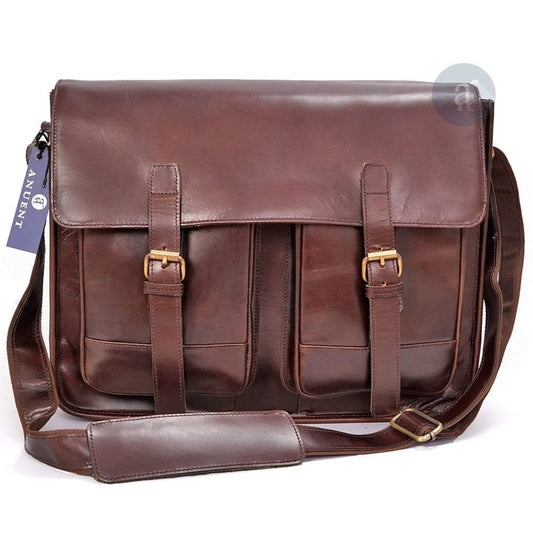
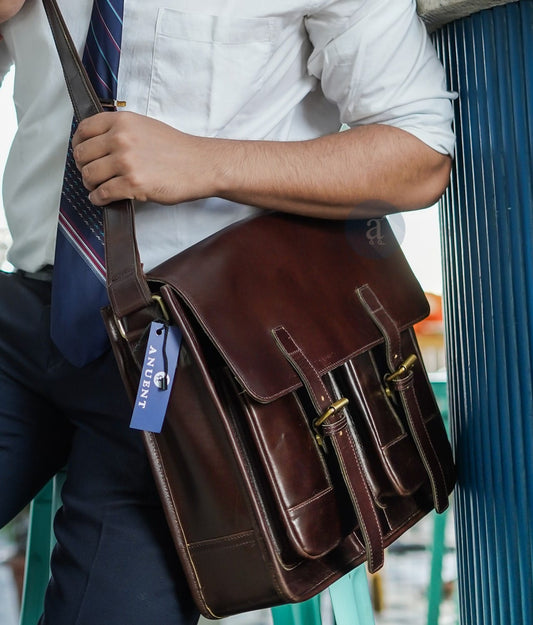
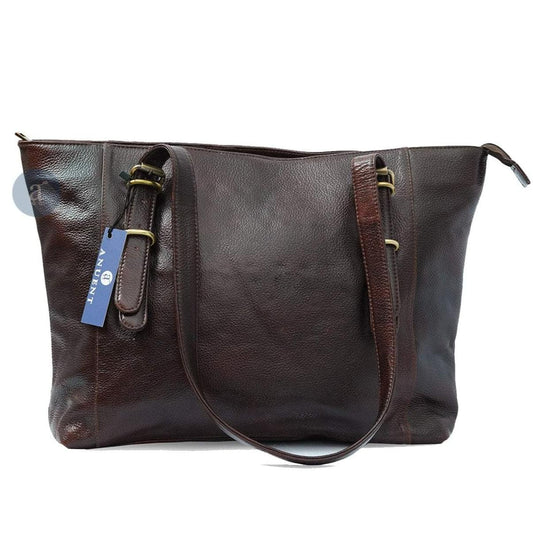
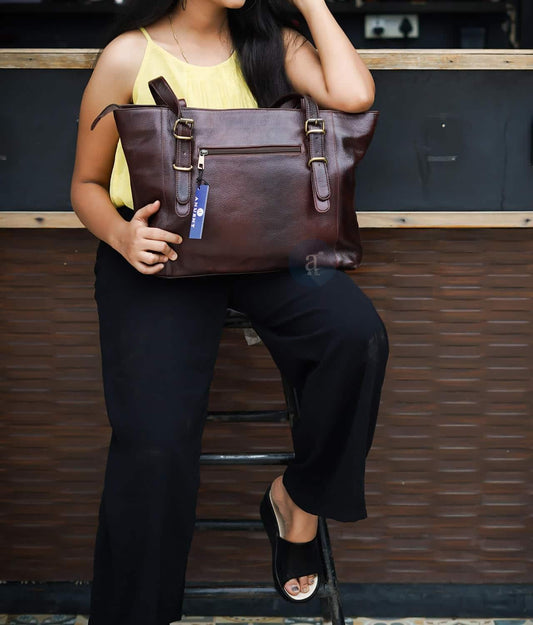
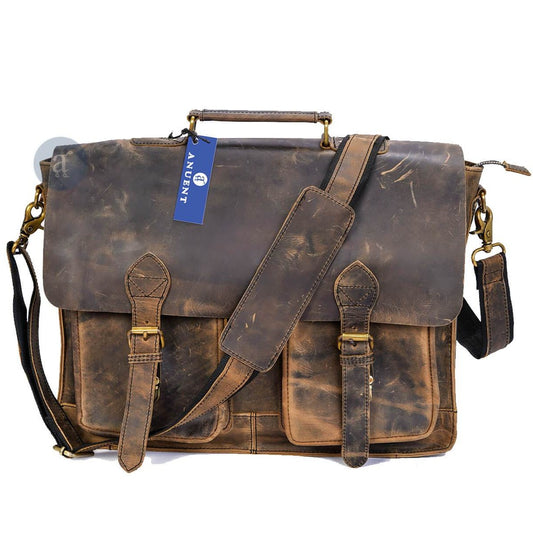
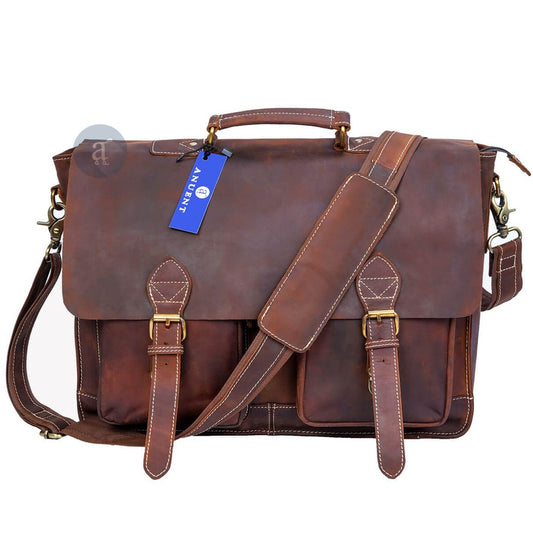
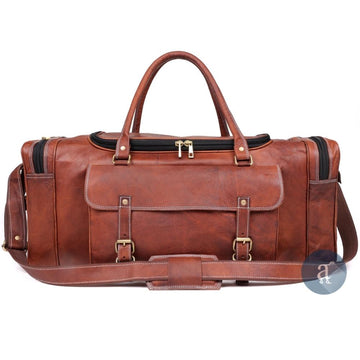
Anuent bags are made from top-grain buffalo leather and top-grain goat leather, not full-grain.
This is a deliberate choice that reflects the practical realities of making quality bags at a price point between $60 and $150.
Full-grain leather at that price point is extremely difficult to source without compromising on hide quality or construction.
The requirement to work only with blemish-free panels and the absence of any surface correction means that full-grain leather products are typically priced considerably higher than what Anuent's target customer is looking for.
Top-grain buffalo and goat leather sit just below full-grain in the grade hierarchy but offer a combination of durability, natural character, and workability that makes them the right material for everyday bags.
Buffalo hide, in particular, is dense, textured, and highly resistant to abrasion.
It develops its own character over time and outlasts genuine leather and all synthetic alternatives by a significant margin.
If you are comparing bags across this price range, the distinction between top-grain and genuine leather is a more meaningful indicator of quality than the full-grain label, which is rarely achievable at mid-market price points without some compromise elsewhere in the product.
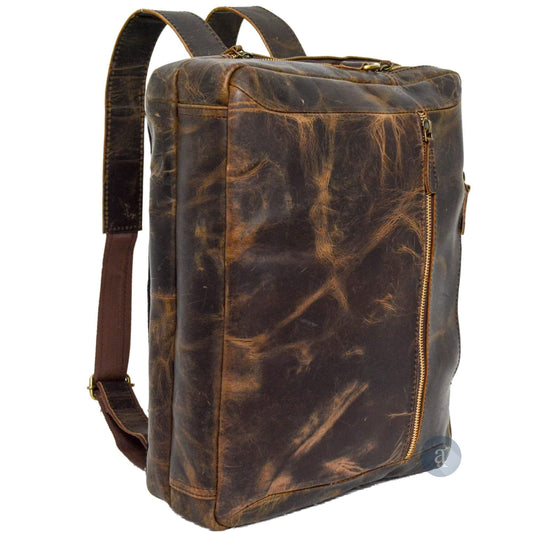
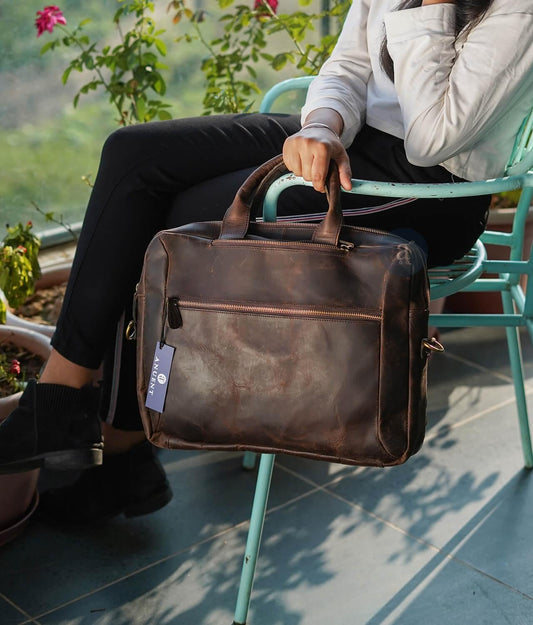
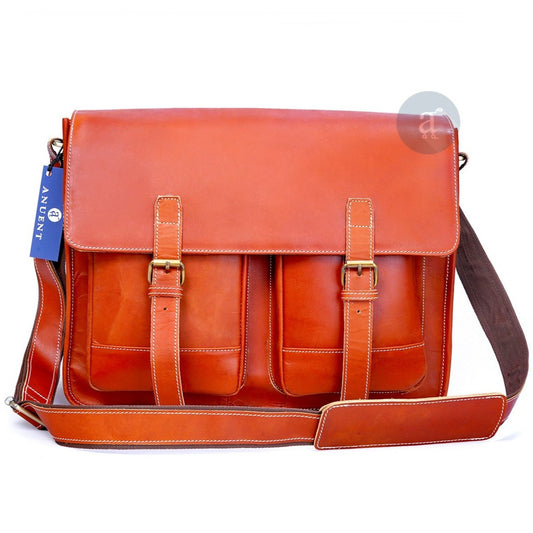
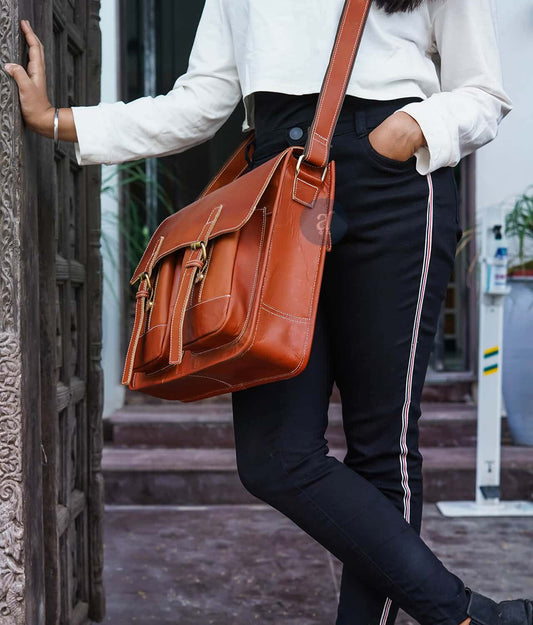
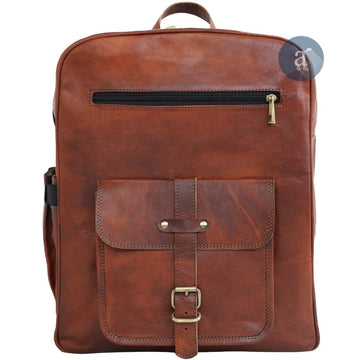
You can explore Anuent's top-grain bag range across the mens leather rucksack and backpack collection, the genuine leather tote bags, and the leather handbags for women.
Real Leather. Real Durability. Real Price.
Every Anuent bag is crafted from top-grain buffalo or goat leather, expertly crafted to outlast synthetics and deliver years of genuine leather character.
Shop Our Genuine Leather Bag CollectionFrequently Asked Questions
What makes leather "full-grain"?
Leather is called full-grain when the entire natural grain of the outermost hide layer is preserved without any sanding, buffing, or surface correction.
The hide goes from tanning directly to finishing with no alteration to the original grain surface.
This means all natural markings, pore structure, and grain variation remain visible and intact.
Is full-grain leather the best quality?
Yes, within the traditional leather grade hierarchy, full-grain is the highest quality.
It uses the strongest part of the hide with the least processing, which gives it the best combination of durability, breathability, and long-term character development.
The patina that full-grain leather develops over decades of use is not achievable with any other grade or material.
What is the difference between full-grain and top-grain leather?
Both come from the outer layer of the hide, but top-grain leather has the grain surface lightly sanded to remove imperfections, and a finishing coat is applied.
Full-grain leather has no surface correction at all.
Top-grain is slightly less strong and breathable but offers better stain resistance and a more uniform appearance.
Full-grain is stronger, more breathable, and develops a deeper patina, but requires more attentive care.
Does full-grain leather scratch easily?
Full-grain leather is susceptible to light surface scratches because the grain is unprotected by a polymer coating.
However, these scratches typically blend into the surface over time and become part of the patina rather than permanent damage.
Light buffing with a dry cloth often reduces the visibility of minor marks.
This characteristic is a feature of the grade rather than a weakness.
How long does full-grain leather last?
Full-grain leather with regular conditioning and proper storage can last twenty to thirty years or more.
This is significantly longer than top-grain leather, which typically lasts ten to twenty years, and genuine leather, which lasts five to ten years under comparable conditions.
The lifespan depends heavily on how consistently the leather is conditioned and how it is stored when not in use.
Why is full-grain leather more expensive?
Full-grain leather is more expensive because manufacturers must use only the highest-quality panels from each hide, as no surface correction is possible to hide imperfections.
This selectivity means a higher percentage of each hide is rejected or redirected to lower grades.
The extra cost is also reflected in the longer finishing times required for natural burnishing and aniline dyeing compared to faster coated finishing processes used for lower grades.
Is full-grain leather waterproof?
Full-grain leather is not waterproof.
Because the surface has minimal coating, it is actually more vulnerable to water penetration and staining than coated top-grain leather.
Light rain can be wiped away without damage, but prolonged water exposure will penetrate the fibers and can cause stiffening as the leather dries.
Applying a beeswax-based leather conditioner or waterproofing spray provides a useful protective layer for bags used in wet conditions.
Can you buy full-grain leather bags under $200?
It is very uncommon to find genuinely full-grain leather bags under $200 from reputable makers.
At that price point, the economics of sourcing blemish-free hide panels, processing them with minimal correction, and constructing the bag to the standard that full-grain leather deserves rarely add up without compromising somewhere, typically on the leather quality itself or on construction.
Most leather bags in the $60 to $150 range use top-grain or genuine leather, which is not a compromise. It is the right grade for the price and use case.