
Last Updated: March 2026
- Best leather for stiffening: Vegetable-tanned leather responds best. Chrome-tanned leather can be treated with water and wax, but should never be exposed to high heat.
- Safest method: Room-temperature water soaking for 10 minutes produces mild, even stiffening with zero risk of damage, the right starting point before trying heat or wax.
- Strongest result: Hot water hardening followed by beeswax sealing produces the firmest finish and adds water resistance, the best combination for bags and structural leather.
- Methods that damage leather: Hair dryers on dry leather, irons, vinegar, and rubbing alcohol do not stiffen leather; they dry it out and cause cracking. Avoid all of these.
- Always test first: Apply any method to a small hidden area before treating the full piece. Reactions vary between leather types and finishes.
WHAT YOU NEED TO KNOW
- Stiffening adds structure: The goal is rigidity, so leather holds a specific shape under weight and regular use, not simply drying it out.
- Water is the foundation: Every effective stiffening method begins with water. It penetrates the fiber structure and, as it evaporates, pulls the fibers tighter to produce natural hardening.
- Heat accelerates the process: Hot water or gentle oven heat produces faster, more pronounced stiffening than cold water alone, but increases crack risk if overdone.
- Wax locks in the result: Beeswax applied after water hardening fills the fiber gaps, seals the shape, and adds moisture resistance, making the combined method significantly more durable.
- Genuine leather only: These methods apply to genuine leather. Bonded leather, PU leather, and faux leather do not respond to water or wax hardening and can be permanently damaged.
- Condition after stiffening: Hardening depletes natural oils. Apply conditioner once the piece has fully dried to prevent surface cracking in the weeks following treatment.
Leather stiffening is one of the oldest leather-working techniques in existence, used for centuries to create armor, sheaths, bags, and structural goods that needed to hold their shape under load.
Today, it is equally useful for modern needs, restoring a collapsed leather bag, adding body to a floppy strap, reinforcing a bag base, or shaping a custom piece during crafting.
Whether you are working on a structured, genuine leather bag or a DIY project that needs a firm result, the right method depends on your leather type, how stiff you need it, and the tools you have available.
Why Does Leather Lose Its Stiffness?
Leather is a natural material composed of interwoven collagen fibers derived from animal hide.
When it is tanned and finished, those fibers retain moisture and natural oils that keep them flexible and strong.
Over time, heat exposure, low humidity, infrequent use, and improper storage deplete those oils and cause the fibers to contract and harden in an uncontrolled way or, in the case of bags, loosen and sag.
Vegetable-tanned leather, produced using natural plant tannins, retains its structure longer and responds well to reshaping techniques.
Chrome-tanned leather is softer and more pliable from the start and does not respond as dramatically to stiffening treatments.
Bags can also lose shape when the base or side panels are not supported during storage.
A bag left collapsed or folded under weight will gradually conform to that shape.
Learning how to store a leather backpack properly prevents most storage-related stiffening and sagging before it starts.
Before You Start: Safety and Preparation
A few precautions apply across all methods and are worth stating clearly before you begin.
- Wear gloves when handling hot water, wax, or chemical hardeners to protect your hands.
- Work in a ventilated space when using shellac or any alcohol-based solution, as fumes build up quickly in enclosed areas.
- Keep heat sources away from flammable materials. Beeswax and alcohol are both flammable and should never be near an open flame.
- Test on a scrap piece or hidden area first; every leather reacts differently, and a 5-minute test prevents irreversible mistakes on your main piece.
- Do not use these methods on bonded, PU, or faux leather; they will warp, crack, or delaminate under heat and moisture.
If you are unsure whether your leather is genuine, our guide on how to tell if a leather bag is real covers the burn test, water drop test, and surface texture indicators that distinguish genuine leather from synthetic alternatives.
Method 1: Room-Temperature Water Soaking
This is the safest method and the correct starting point for anyone new to leather stiffening.
It produces mild, even hardening with no risk of shrinkage or brittleness, and it works on all genuine leather types, including chrome-tanned.
What you need:
- Bowl or sink large enough for your leather piece
- Clean room-temperature water
- Dry cloth or towel
- Mold, board, or flat surface to shape the leather while damp
Steps:
- Submerge the leather fully in clean room-temperature water.
- Soak for 8 to 10 minutes. The leather will darken slightly as it absorbs water; this reverses as it dries.
- Remove and gently squeeze out excess moisture. Do not wring or twist, as this creates uneven stress marks in the fiber structure.
- Shape the leather immediately while it is still damp and pliable. Press a bag base flat against a rigid board, lay a strap straight, or form the piece around a mold.
- Allow to dry fully at room temperature away from direct sunlight or heat. Drying takes 12 to 24 hours depending on thickness and humidity.
Note: Do not rush drying with a hair dryer, uneven heat causes warping and surface cracking on damp leather. For stronger stiffening, proceed to Method 2.
Method 2: Hot Water Hardening (Cuir Bouilli)
Hot water hardening is the most traditional stiffening technique, used in leather craft for centuries.
It causes collagen fibers to contract rapidly under heat, producing a significantly denser, firmer structure as the leather cools.
This method is recommended for vegetable-tanned leather. Chrome-tanned leather should not be exposed to hot water the chemicals used in its tanning can release harmful compounds when heated.
What you need:
- Vegetable-tanned leather (this method is NOT for chrome-tanned leather)
- Pot or heat-resistant basin
- Thermometer
- Kitchen tongs
- Dry cloth
- Mold or flat surface for shaping
Steps:
- Heat water to 75 to 82 degrees Celsius (165 to 180 degrees Fahrenheit). Use a thermometer; do not guess. Do not bring to a full boil.
- Submerge the leather using tongs. It will darken and may curl slightly at the edges.
- Leave submerged for 30 seconds to 2 minutes depending on desired stiffness. Check every 30 seconds. The longer it stays in, the firmer the result.
- Remove carefully with tongs and allow excess water to drip off.
- Shape immediately while the leather is still warm, it sets into position as it cools.
- Air dry at room temperature for at least 24 hours before handling or loading.
Note: Temperatures above 90 degrees Celsius cause the leather to shrink unevenly and become brittle at the surface. Never guess the temperature; always use a thermometer.
ALREADY STRUCTURED FOR YOU
Genuine Leather Bags Built to Hold Their Shape
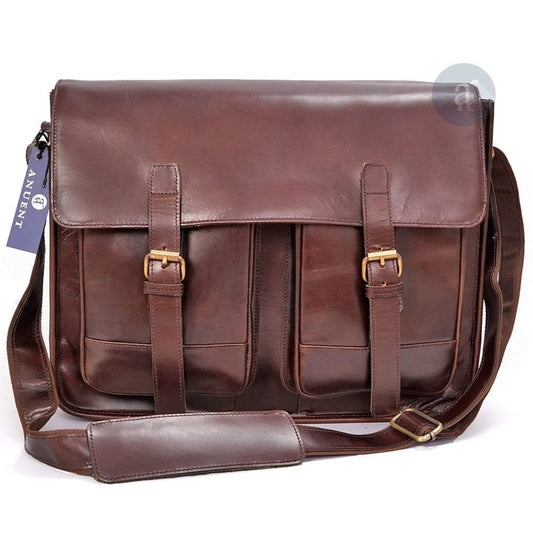
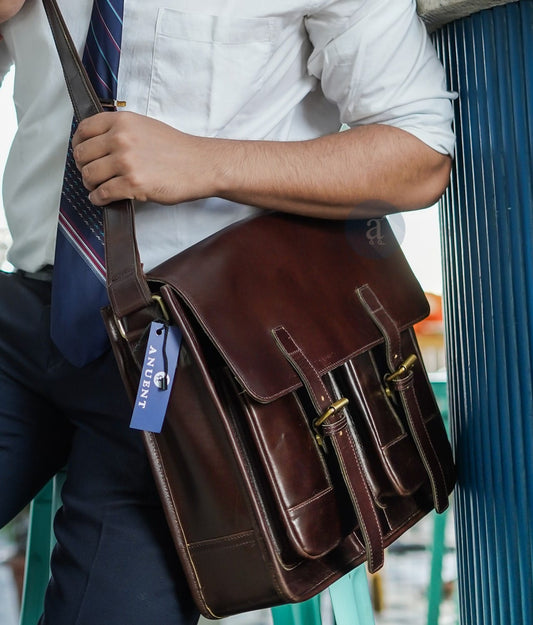
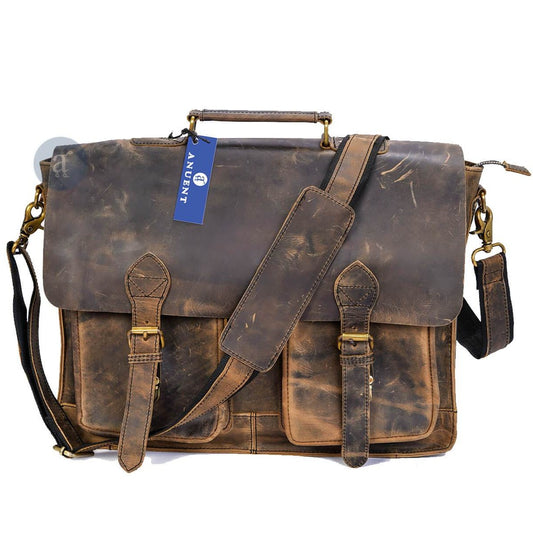
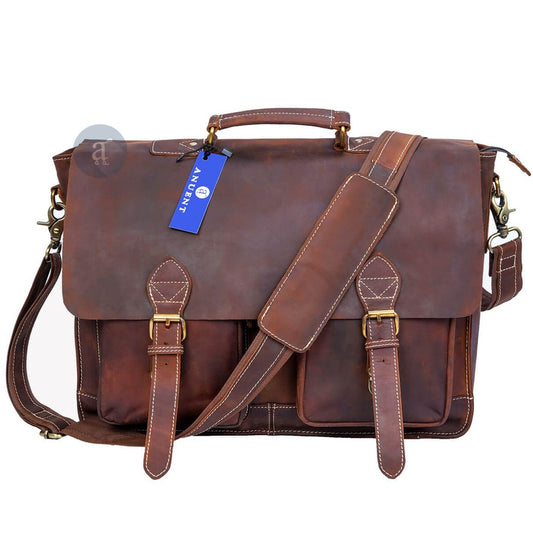
Anuent leather bags are constructed with reinforced bases and structured panels that maintain their form through years of daily use. Free shipping to USA, UK and Canada.
Shop Genuine Leather Bags30-day money-back guarantee · Free monogramming on every order · 2,000+ verified reviews
Method 3: Beeswax Hardening

Beeswax is the most durable leather stiffening treatment available for home use.
It penetrates the leather fibers, fills the gaps in the surface structure, and sets into a semi-rigid layer that holds shape while adding meaningful water resistance, making it ideal for bags and straps exposed to outdoor conditions.
What you need:
- Natural beeswax block or pellets (not paraffin)
- Double boiler or heat-safe bowl over a pot of simmering water
- Natural bristle paintbrush
- Hair dryer
- Clean dry cloth for buffing
Steps:
- Soak the leather in room-temperature water for 5 minutes first. This opens the pores and helps the beeswax absorb deeper into the fibers rather than sitting on the surface.
- Melt the beeswax in a double boiler keep the temperature below 65 degrees Celsius. Never melt wax directly over a burner or in a microwave, as uneven heat creates hot spots that scorch the wax.
- Apply the first coat using a natural bristle brush in thin, even strokes across the entire leather surface. Work quickly beeswax sets fast as it cools.
- Use a hair dryer on the lowest heat setting, held at least 20 centimetres from the surface, to help the wax absorb into the fibers rather than sitting on top. Move the dryer constantly never hold it in one position.
- Allow the first coat to cool fully, then apply a second coat using the same technique. Two coats produce firm stiffening for most leather types.
- For maximum rigidity, apply a third coat after the second has cooled. Three coats are recommended for pieces that need to hold a sharp structural shape under sustained load.
- Cool completely at room temperature, then buff off visible surface wax residue with a dry cloth to restore the leather's natural appearance.
Note: Paraffin wax can be used as a substitute but produces a less natural finish and does not absorb into the fibers as effectively as beeswax. For bags and straps, beeswax is significantly better.
Method 4: Oven Hardening
Oven hardening uses low sustained heat to accelerate water evaporation within damp leather, producing faster and more uniform stiffening than air drying alone.
This method is only suitable for vegetable-tanned leather and must not be used on chrome-tanned, bonded, or coated leather.
What you need:
- Vegetable-tanned leather, NOT chrome-tanned or coated leather
- Oven with accurate temperature control
- Flat metal baking sheet
- Silicone mat or parchment paper
- Oven thermometer (recommended oven dial readings are often inaccurate)
Steps:
- Soak the leather in room-temperature water for 10 minutes to fully dampen the piece before it goes in the oven.
- Preheat the oven to 50 to 60 degrees Celsius (120 to 140 degrees Fahrenheit). This is very low the oven should feel barely warm inside. Use an oven thermometer to verify.
- Shape the leather and place it on the lined baking sheet in the position you want it to hold.
- Leave in the oven for 10 to 20 minutes, checking every 5 minutes. Remove when the leather has stiffened noticeably but before the surface begins to lighten in colour, which signals it is drying too fast.
- Remove and allow to cool at room temperature, then assess the stiffness. If more rigidity is needed, return to the oven for a further 5 to 10 minutes.
- Apply leather conditioner once the piece has fully cooled to restore surface oils lost during heating.
Note: Never exceed 65 degrees Celsius inside the oven. Higher temperatures cause irreversible shrinkage and surface cracking. If your oven cannot reliably hold low temperatures, use Method 1 or Method 3 instead.
Method 5: Shellac Coating
Shellac is a natural resin dissolved in denatured alcohol.
Applied to leather, it forms a hard surface layer that dramatically increases rigidity without changing the leather's fiber structure, making it ideal for decorative pieces, small items like card holders and sheaths, and situations where you want to add stiffness without reshaping the piece.
Shellac is also the only stiffening method on this list that is fully reversible; it can be removed with denatured alcohol if needed.
What you need:
- Pre-mixed shellac solution, or shellac flakes plus denatured alcohol
- Natural bristle brush
- Gloves and eye protection
- Well-ventilated workspace away from open flames (alcohol is flammable)
- Dry cloth for light buffing
Steps:
- Prepare the shellac solution by dissolving shellac flakes in denatured alcohol according to the package instructions, or use a pre-mixed product directly.
- Clean the leather surface thoroughly with a dry cloth to remove all dust, oil, or conditioner residue. Any residue prevents proper adhesion.
- Apply the first coat using a brush in long strokes in one direction. Keep coats thin and even.
- Allow to dry for 20 to 30 minutes at room temperature before applying the next coat.
- Apply 2 to 4 coats total depending on desired stiffness. Two coats produce a moderate result with a light sheen. Three to four coats produce a hard, glossy finish.
Note: Work in a well-ventilated area and keep away from open flames. Denatured alcohol is highly flammable. If you need to reverse the treatment at any point, wipe the surface with denatured alcohol on a cloth to dissolve and remove the shellac.
Methods That Do Not Work And Why
Several widely shared methods for stiffening leather are ineffective or actively damaging.
- Hair dryer on dry leather: Removes surface moisture too fast, causing the outer fibers to crack while the inner structure remains unchanged. It dries, not stiffens.
- Iron directly on leather: Causes scorch marks and permanent surface damage at any setting. Never use an iron on leather without a thick protective cloth barrier.
- White vinegar soaking: Vinegar's acetic acid content discolors, dries, and weakens leather fibers without producing any structural stiffening. Avoid completely.
- Rubbing alcohol: Strips the surface finish and produces brittleness rather than controlled stiffness. It is not a stiffening agent.
- PVA glue (diluted): Works as a short-term surface hardener on small craft projects, but is not suitable for bags or wearable items. It yellows, cracks, and peels under flexion and moisture.
Tips for the Best Results
- Always test first on a scrap piece or hidden seam before applying any method to the full piece.
- Choose vegetable-tanned leather when you have the option; it responds best to every stiffening technique on this list.
- Combine methods for maximum stiffness, water hardening, followed by beeswax sealing, is the most durable combination available at home.
- Thicker leather needs more time, heavier leather requires longer soaking times, and additional wax or shellac coats to achieve the same stiffness level as thinner pieces.
- Shape while damp the window for shaping closes quickly once the leather begins to dry or cool. Have your mold or board ready before the leather comes out of the water or oven.
What to Do After Stiffening: Conditioning and Long-Term Care
Every stiffening method removes some natural oils from the leather as part of the hardening process.
Skipping conditioning afterward causes the surface to develop fine cracks within weeks, particularly in areas that flex during use.
Once the stiffened piece has dried completely and cooled to room temperature, apply a thin layer of quality leather conditioner to the entire surface.
Work the conditioner in using a soft cloth in circular motions, allow 30 minutes to absorb, then buff off any residue.
For beeswax-treated pieces, conditioning is less urgent immediately after treatment since the wax provides surface protection, but a light conditioning pass every three to four months remains good practice.
Understanding how to moisturize leather correctly after heat treatments prevents the surface cracking that can develop in the weeks following the repair.
For ongoing care that works alongside any stiffening treatment, our guide on how to care for leather covers the full maintenance routine across every leather product type.
SHOP ANUENT LEATHER BAGS
Structured, Well-Built Genuine Leather Bags From $69
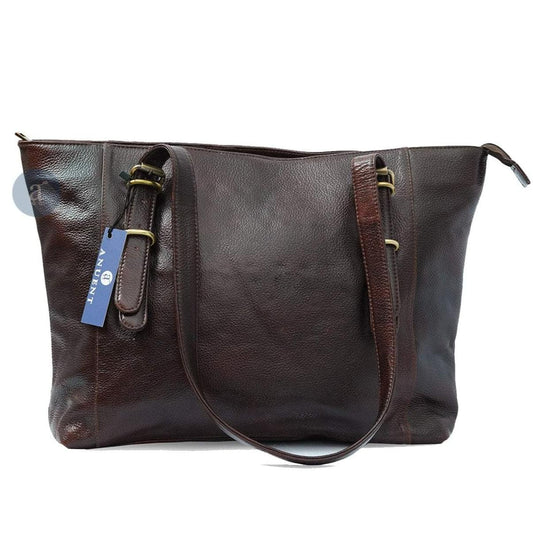
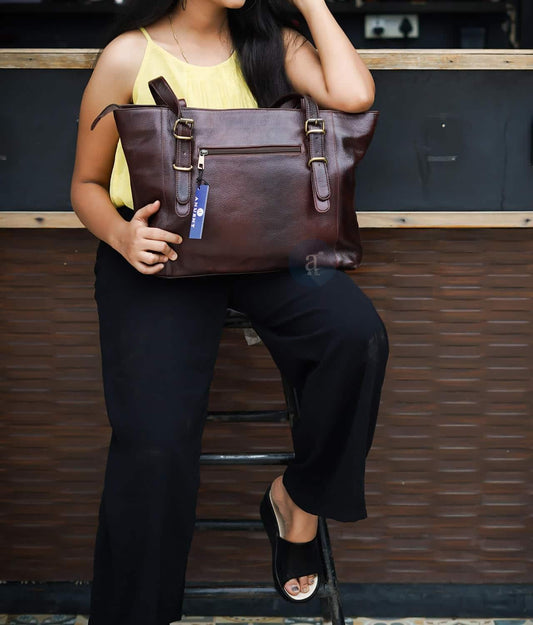
Anuent bags are built with reinforced bases, structured panels, and top-grain genuine leather that holds its shape without any home treatments needed. Free shipping to USA, UK and Canada. Free monogramming on every order.
Frequently Asked Questions
What is the best method to stiffen leather?
Hot water hardening followed by beeswax sealing produces the strongest, most durable result for most genuine leather pieces.
The water treatment contracts the fiber structure, and the beeswax seals it in place while adding water resistance.
For beginners, or where only a subtle increase in stiffness is needed, room-temperature water soaking alone is a safe and effective starting point.
Can you stiffen leather without heat?
Yes, room-temperature water soaking and shellac coating both produce genuine stiffening without heat.
Cold water soaking produces moderate results with zero risk of damage and is the right starting point for anyone unfamiliar with leather stiffening.
Shellac produces a harder surface finish and is the best no-heat option for small pieces or decorative items where reversibility matters.
Does hot water damage leather?
Used correctly at 75 to 82 degrees Celsius, hot water does not damage vegetable-tanned leather it is the mechanism behind traditional leather hardening used for centuries.
The risk of damage comes from temperatures above 90 degrees Celsius, soaking time that is too long, or applying this method to chrome-tanned leather, which should never be exposed to heat.
How do I stiffen a leather bag that has lost its shape?
Start with a room-temperature water soak to assess how the leather responds.
While damp, press the bag base flat against a rigid board and stuff the interior with newspaper or a bag shaper to restore panel structure as it dries.
If more stiffness is needed after drying, apply two coats of melted beeswax to the exterior panels.
For persistent shape loss, a professional leather restorer can apply commercial leather hardener to the interior lining for more precise structural reinforcement.
Which leather types should not be stiffened with heat?
Chrome-tanned leather should not be exposed to hot water or oven heat the chromium compounds used in its tanning can release harmful substances when heated.
Bonded leather, PU leather, and faux leather should not be treated with any water or heat stiffening method.
These materials do not respond to genuine leather techniques and will warp, separate, or crack.
Can I reverse leather stiffening if I overdo it?
Shellac is fully reversible using denatured alcohol. Apply it with a cloth, and the shellac dissolves cleanly.
Water hardening and beeswax treatments can be partially reversed by conditioning the leather heavily and working it manually while damp to restore some flexibility.
Oven hardening and hot water treatments are harder to reverse once the collagen fiber structure has contracted significantly under heat; full flexibility is difficult to restore.
This is why starting with milder methods and working upward incrementally is practical advice, not just caution.
How long does stiffened leather last?
Water hardening alone typically lasts several months to a year before the leather begins to soften again with regular use.
Beeswax treatment extends this significantly, often lasting two to three years before noticeable softening occurs.
Shellac lasts as long as the surface coating remains intact and can be reapplied whenever needed.
Regular conditioning between treatments preserves both stiffness and surface quality over the long term.
Should I condition leather after stiffening it?
Yes, without exception.
Every stiffening method depletes some of the natural oils in the leather that keep the surface supple and prevent cracking.
Apply conditioner once the piece has fully cooled and dried, allow it to absorb for 30 minutes, then buff off any excess.
Skipping this step risks surface cracking within a few weeks, particularly in areas that flex during normal use.
Leather stiffening is a practical, achievable process when you match the right method to your leather type and apply it methodically.
Start with the mildest method that fits your situation, test on a hidden area first, and condition thoroughly after treatment.
The combination of water hardening and beeswax sealing covers the vast majority of use cases, from restoring a collapsed bag to shaping a custom piece without specialist equipment.
For a complete home conditioning routine to use alongside any stiffening treatment, our guide on DIY leather conditioner in five easy steps gives you a reliable recipe using everyday ingredients.
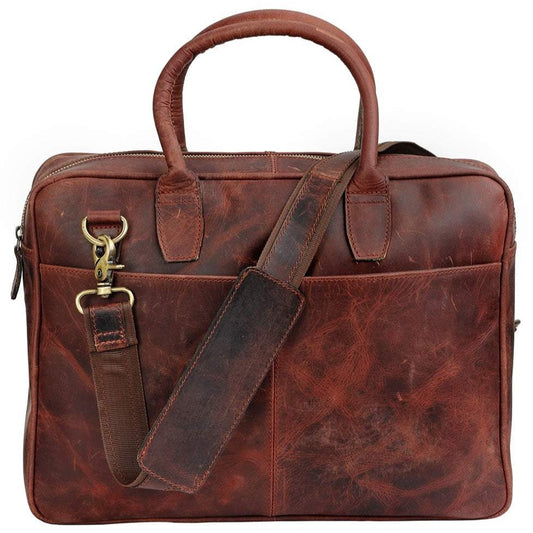
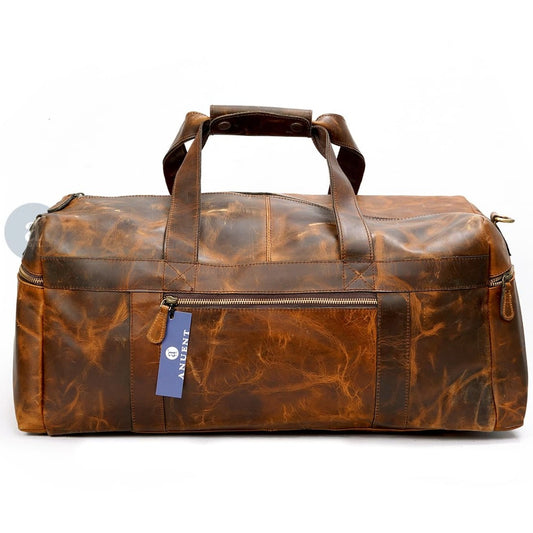
And if you are looking for a bag built to hold its shape from day one, our range of leather tote bags and leather briefcases is structured with reinforced panels that maintain their form through years of regular use.