
Last Updated: March 2026
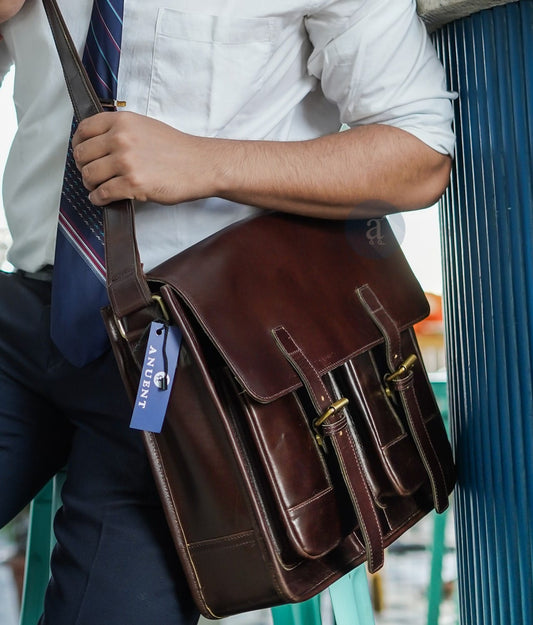
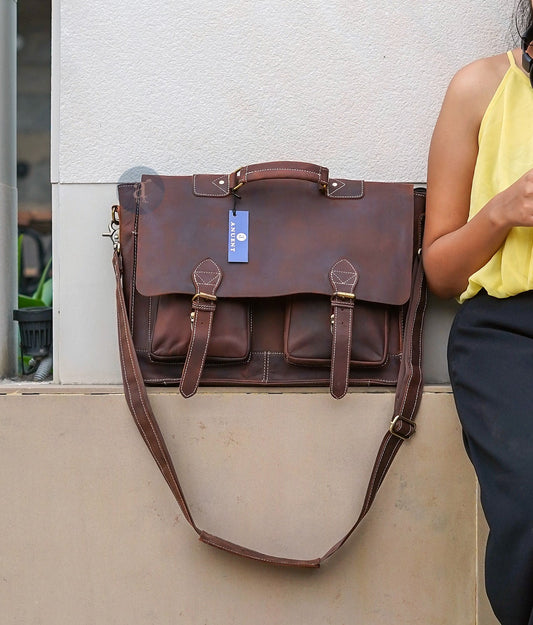
- Ideal position: For most people, a crossbody bag should sit at hip level or just above it. This distributes weight evenly, keeps the bag accessible, and creates the most balanced silhouette.
- Strap length by use: 20 inches for chest carry (travel and security), 22 to 26 inches for everyday hip carry, 26 to 30 inches for a relaxed low-hanging style.
- Which shoulder: Place the strap on the opposite shoulder to your dominant hand. Right-handed people wear it on the left shoulder, left-handed on the right, keeping the strong hand free.
- Four ways to wear it: Classic hip carry, front chest carry, back carry, and high chest carry each suits different occasions and activities.
- Most common mistake: Wearing the strap too long, so the bag swings and hangs past the hip. This strains the shoulder, looks unbalanced, and reduces security.
WHAT YOU NEED TO KNOW
- Adjustable straps are the key: Most genuine leather crossbody bags come with a fully adjustable strap. The way you wear the bag changes completely depending on strap length — take a minute to set it correctly before you leave the house.
- Position affects comfort and security equally: A bag sitting too low swings and strains the shoulder. A bag sitting too high feels restrictive. The right position reduces physical strain and makes theft significantly harder.
- Body type matters: Petite frames suit shorter straps and higher positioning. Taller frames can wear the bag lower without losing proportion. Curvy body types may need a longer strap to clear the widest part of the torso comfortably.
- Bag size should match your frame: A bag that is too large for your frame creates visual imbalance regardless of how you wear it. A medium crossbody works for most body types and occasions.
- Leather crossbody bags suit every occasion: From daily errands to business meetings to travel, a well-chosen genuine leather crossbody transitions across all settings — the key is adjusting position and strap length for each context.
A crossbody bag worn correctly becomes the most effortless accessory you own.
Worn incorrectly — strap too long, bag swinging at the wrong height, sitting at an awkward angle — it creates discomfort and undermines the look of any outfit.
The difference between the two is not the bag itself but how it is adjusted and positioned on your body.
This guide covers every aspect of wearing a crossbody bag well: the right strap length for your height and use case, the four main carrying positions and when to use each, which side to wear it on, how to match it to different outfits, and the most common mistakes that are easy to avoid once you know what they are.
What Is a Crossbody Bag?
A crossbody bag is a bag designed with a long adjustable strap worn diagonally across the torso, with the bag itself resting at the hip or side of the body opposite to the shoulder holding the strap.
Unlike a standard shoulder bag that rests on one shoulder, the crossbody strap distributes weight across the body rather than concentrating it at one point.
This makes it one of the most comfortable options for extended wear, particularly when carrying everyday essentials for a full day.
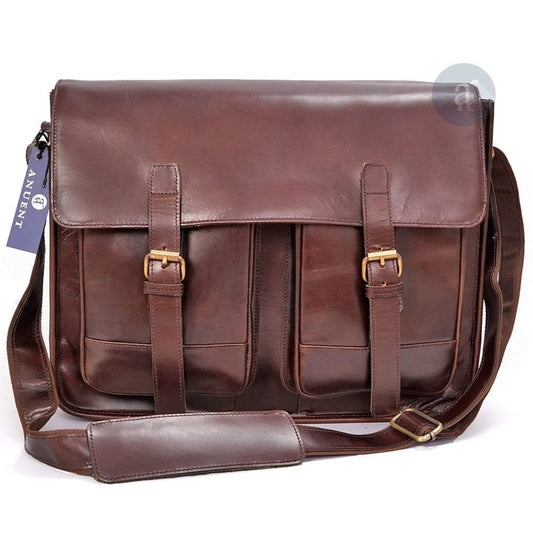
Crossbody bags come in a wide range of sizes and structures, from compact zip pouches to larger messenger-style bags.
For daily use, a medium-sized structured leather crossbody in the 8 to 10 inch range handles a phone, wallet, keys, and small essentials without becoming heavy or bulky.
If you are comparing different styles, the guide on different leather types and grades explains how the leather used affects the structure, weight, and break-in period of a bag — all of which affect how it wears on the body.
How to Adjust the Strap Correctly
The strap adjustment is the single most important step in wearing a crossbody bag well.
Most people skip this entirely and accept whatever length the bag arrives at, which is rarely the right fit.
Steps
- Empty the bag first. An empty bag sits slightly higher than a loaded one, so adjusting with contents already inside gives you a more accurate result.
- Stand in front of a full-length mirror. Drape the strap over one shoulder so it crosses diagonally across your torso.
- Adjust the strap using the buckle or slider until the base of the bag sits at hip level or just above it. This is the starting point — you can move from here once you know what position you want.
- Walk around and move naturally. The bag should stay reasonably close to your body without swinging. If it swings freely, the strap is too long.
- Load the bag with your usual essentials and re-check the position. Weight lowers the bag slightly, so you may need to tighten the strap a small amount after loading.
Strap Length Reference Guide
| Strap Drop | Bag Position | Best For |
|---|---|---|
| 14 to 18 inches | Upper chest/underarm | Petite frames, formal occasions |
| 20 inches | Mid chest/security position | Travel, crowded areas, festivals |
| 22 to 26 inches | Hip level (standard position) | Everyday use for most body types |
| 26 to 30 inches | Low hip / relaxed hang | Taller frames, casual styling |
The Four Main Carrying Positions

The same crossbody bag can be worn in four distinct positions, each suited to a different situation.
Understanding when to use each one makes the bag significantly more versatile than most people realise.
1. Classic Hip Carry
This is the default and most widely used position.
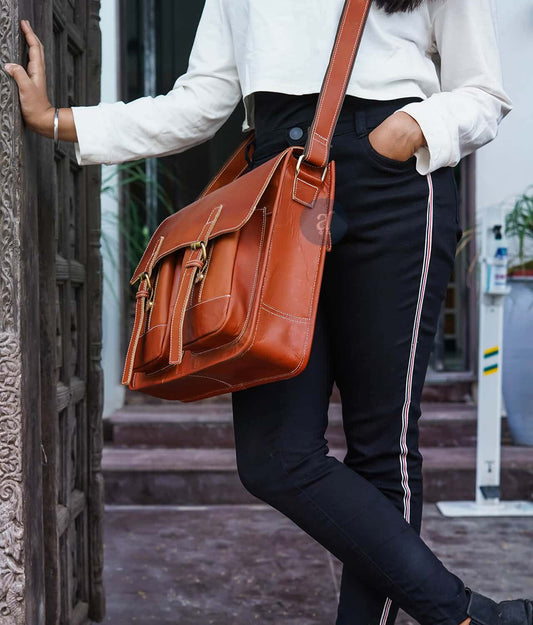
The strap rests on one shoulder and crosses the torso diagonally, with the bag sitting at hip level on the opposite side.
It keeps the bag in your line of sight, provides easy access to the contents, and works across every outfit from casual to business casual.
For right-handed people, placing the strap on the left shoulder means the bag sits on the right side, keeping the dominant hand free.
Left-handed people generally prefer the reverse.
2. Front Chest Carry
Shorten the strap until the bag sits centrally on the chest or slightly to one side.
This is the most secure carrying position: the bag is fully visible, directly in front of you, and difficult to access without your knowledge.
It is the preferred position for travel, airport navigation, public transport, and any crowded urban environment where security is a priority.
A strap drop of around 20 inches achieves this position for most people.
3. Back Carry
Start in the classic hip carry position, then slide the bag around your body so it rests on your lower back.
This position creates a relaxed, casual look and keeps the bag out of the way for active use, such as cycling or walking through narrow spaces.
It is less secure than front or hip carry since the bag is behind you and out of your line of sight, so it is better suited to low-risk environments rather than crowded city centres.
4. High Chest Carry
Shorten the strap significantly so the bag sits high on the chest, either centred or slightly to one side.
This is a fashion-forward position popular in street style and urban looks.
It works particularly well with smaller, structured bags and adds visual interest to simple outfits.
It also provides the highest level of security, keeping the bag extremely close to the body.
Pair this position with a tailored blazer, oversized coat, or layered outfit for the strongest visual effect.
Strap Adjustment by Body Type
The measurements above are starting points, not fixed rules.
Body type significantly affects how a given strap length translates to actual bag position.
- Petite frames: Shorten the strap so the bag sits just below the rib cage rather than at the hip. This stops the bag from appearing oversized or overwhelming the frame. Smaller to medium bag sizes also help maintain proportion.
- Tall frames: A longer strap drop of 26 to 30 inches keeps the bag from riding up on a longer torso. Taller people can carry larger crossbody bags comfortably without the size looking out of place.
- Curvy frames: Adjust the strap so it clears the widest part of the torso without pulling tight. A slightly longer strap than the standard 22 to 26 inch range often works better, and wider straps distribute weight more comfortably over longer wear.
- Athletic frames: Standard strap lengths generally work well. The key is choosing a bag size that balances the broader shoulder width — a medium bag sits proportionately without looking small.
If you are building out a leather bag wardrobe across different silhouettes, our leather bags for women collection includes crossbody, tote, and sling styles with adjustable straps designed to suit different body types.
EXPERTLY CRAFTED GENUINE LEATHER
Leather Crossbody Bags Built to Wear Every Day
Adjustable straps, genuine leather construction, and sizes for every body type. Free shipping to USA, UK, and Canada. Free monogramming on every order.
How to Wear a Crossbody Bag With Different Outfits
A genuine leather crossbody bag is one of the most versatile accessories because leather transitions across casual, professional, and formal contexts without requiring a bag change.
The outfit pairing principles below apply to leather crossbody bags specifically.
| Occasion | Outfit | Bag Style and Position |
|---|---|---|
| Casual daily | Jeans, t-shirt, trainers | Medium brown leather, hip carry at standard length |
| Business casual | Tailored trousers, blouse, loafers | Structured black leather, hip or slightly higher, shorter strap |
| Travel | Comfortable everyday clothing | Any leather crossbody, front chest carry at 20 inch drop |
| Evening out | Dress or smart separates | Small compact leather, high chest carry or carried as clutch |
| Weekend casual | Relaxed fit, layers | Tan or cognac leather, low hip carry with longer strap |
If you wear crossbody bags primarily for work or professional settings, the guide on styling a leather messenger bag covers the overlap between crossbody and messenger styles in professional contexts — including which bag structure works better for different office environments.
Common Mistakes to Avoid
Most crossbody bag problems come down to one of a small number of consistent errors.
- Strap too long: The most common mistake. When the strap is too long, the bag swings, hangs below the hip, strains the shoulder, and looks unbalanced on the body. Shorten the strap so the bag sits at hip level or above and stays reasonably close to the body when you walk.
- Overstuffing the bag: A crossbody bag that is too heavy pulls the strap down and concentrates all the weight on one shoulder. Only carry what you actually need. If the weight consistently becomes an issue, a wider padded strap distributes load more effectively.
- Wearing the bag behind you in crowded spaces: Back carry reduces your awareness of the bag and makes it easier for someone to access without your knowledge. In airports, transport hubs, and busy markets, switch to front chest carry.
- Ignoring proportion: A large crossbody bag on a petite frame or a very small bag on a tall frame both create visual imbalance. Match the bag size to your frame before thinking about position or strap length.
- Wrong shoulder placement: Wearing the bag on the same side as your dominant hand means you are reaching across your body to access it constantly. Reverse the shoulder and let the bag sit on the side closest to your working hand.
- Zippers facing outward: In any public environment, make sure zip fasteners face inward toward your body rather than outward. This simple adjustment significantly reduces the risk of opportunistic theft without changing how the bag looks.
If you prefer a hands-free option with a different carry style, the leather sling bag styles in our collection offer a single wide strap that sits across the back rather than diagonally across the chest, which some people find more comfortable for extended daily wear.
For occasions when you want more carry capacity than a crossbody provides, our full leather tote bag collection covers structured options that still work well for everyday and professional use.
Frequently Asked Questions
Where should a crossbody bag sit on your body?
A crossbody bag should sit at hip level or just above it for most people.
This position distributes weight comfortably, keeps the bag accessible, and creates a balanced silhouette.
Petite frames may prefer the bag slightly higher at the natural waist, while taller people can wear it at or just below hip level without losing proportion.
How long should a crossbody bag strap be?
For everyday hip carry, a strap drop of 22 to 26 inches works for most body types.
For travel and security, a shorter drop of around 20 inches brings the bag up to chest level.
For a relaxed, low-hanging style, 26 to 30 inches achieves that look.
Most genuine leather crossbody bags have fully adjustable straps that cover all of these ranges — take the time to set yours correctly before wearing.
Which shoulder do you wear a crossbody bag on?
The standard approach is to place the strap on the opposite shoulder to your dominant hand.
Right-handed people typically wear the strap on the left shoulder so the bag rests on the right side, keeping the strong hand free.
Left-handed people generally prefer the reverse.
Personal comfort and outfit balance matter more than any fixed rule, however — wear it on whichever side feels most natural for how you move through the day.
Can men wear crossbody bags?
Yes, and crossbody bags are a practical and well-established choice for men.
Structured leather styles that function like a compact messenger or sling bag integrate well with most outfits from casual to business casual.
Men typically wear the bag at hip level or slightly lower, and darker leather in black or dark brown works across the widest range of contexts.
You can explore what makes genuine leather different from synthetic alternatives if you are deciding on material for a men's crossbody bag.
What is the difference between a crossbody bag and a sling bag?
A crossbody bag has a long adjustable strap worn diagonally across the torso with the bag resting at the hip or side.
A sling bag typically has a single wide strap worn across the back, sitting on the lower back or beside the spine.
Both are hands-free designs but differ in how the weight is carried and where the bag sits on the body.
Crossbody bags generally offer easier access to contents; sling bags distribute weight more evenly across the back for longer carry periods.
How do you wear a crossbody bag for travel?
For travel, shorten the strap so the bag sits high on your chest rather than at your hip.
This keeps the bag visible and in front of you, reduces theft risk in crowded airports and public transport, and prevents the bag from swinging when you move quickly.
Make sure all zippers face inward toward your body rather than outward.
A strap drop of around 20 inches achieves the chest carry position for most people.
Can you wear a crossbody bag to a formal event?
Yes, with the right bag and adjustment.
For formal occasions, choose a compact structured leather crossbody in a neutral shade and shorten the strap so the bag sits higher on the torso.
This creates a cleaner, more intentional silhouette.
For the most formal settings, tuck the strap inside the bag and carry it as a clutch.
What size crossbody bag is best for everyday use?
For everyday use, a medium crossbody bag that fits your phone, wallet, keys, and a few small essentials is the most practical choice.
Bags that are too large become heavy over long wear and create a visual imbalance.
Bags that are too small limit functionality and require frequent digging to find items.
A medium structured leather crossbody in the 8 to 10 inch range covers most daily needs without adding unnecessary bulk.
FIND YOUR PERFECT CARRY
Genuine Leather Bags Designed for Every Way You Carry
From compact crossbody bags to structured messenger bags and leather totes, every Anuent piece is expertly crafted from genuine leather with adjustable straps built for all-day wear. Free shipping to USA, UK, and Canada. Free monogramming on every order.