
Last Updated: March 2026
- Three tests confirm real leather in under two minutes: Smell it (earthy and organic vs chemical and plastic), check the surface grain (natural variation vs uniform repeating pattern), and inspect a cut edge (fibrous texture vs smooth fabric or plastic backing).
- Real leather warms in your hand: Hold the bag for 20 seconds. Genuine leather is porous and warms to body temperature. Fake leather stays colder because the sealed polyurethane surface does not breathe.
- The "genuine leather" label is not a quality signal: It is the lowest grade of real leather. Look for "full-grain" or "top-grain" for quality leather. The absence of any material label at all is the biggest red flag of all.
- Real leather improves with age: It develops a patina, softens, and responds to conditioning. Fake leather cracks and peels at flex points within one to three years, and once it starts, it cannot be repaired.
- Online buyers have reliable signals too: Specific leather grade stated, product weight listed, seller transparency on tanning and sourcing, customer review photos showing natural grain, these all indicate genuine leather claims you can trust.
WHAT YOU NEED TO KNOW
- Up to 40 percent of bags labeled as leather contain synthetic materials: Some products are entirely PU leather. Others contain a small percentage of leather scraps bonded with adhesive. The label alone is not reliable proof of genuine leather content or quality.
- The most reliable tests do not require damaging the bag: The smell test, surface grain check, edge inspection, heat test, and water test all give strong indications of leather authenticity without cutting, burning, or risking any visible damage to the product.
- Real leather has a learning curve: The more genuine leather bags and products you handle, the more naturally the identification skills develop. The first few times you run these tests consciously will take a few minutes. With practice, the smell and feel test together take about ten seconds.
- The long-term tests are the most definitive: Patina development, response to conditioning, and how the bag ages over months of use are the definitive confirmation that a bag is genuine leather. No synthetic product replicates these characteristics.
- Buying online requires different signals: You cannot smell, touch, or bend a bag through a screen. Seven specific listing signals help assess genuine leather claims before purchasing online without access to physical testing.
Real leather has a distinctive earthy smell, natural grain variations, and rough fibrous edges.
Fake leather smells plastic, has perfectly uniform patterns, and shows smooth plastic-like edges at any cut surface.
The quickest in-store test: smell it, check the surface texture, and inspect any visible edge.
If all three are consistent with genuine leather, you are almost certainly holding the real thing.
This guide covers seven tests that work on any leather bag, whether you are examining one in a shop, verifying one you already own, or assessing a listing before buying online.
Understanding the Label Before You Start
Before running any physical test, the label provides your baseline context.
Reading it correctly is essential because one of the most common misconceptions in leather buying involves the term "genuine leather."
In the leather industry, "genuine leather" is a grade label, not a quality assurance.
It refers to the lowest quality of real leather made from the lower split layers of the hide left after full-grain and top-grain have been cut away.
A bag labeled "genuine leather" is real leather, but it is the lowest tier, heavily processed, and typically lasts only two to five years of daily use before showing significant wear.
The grade hierarchy, from highest to lowest quality:
- Full-grain leather: Outermost hide layer, unaltered. Strongest, most durable, and develops a rich patina. 20 to 30-plus years with proper care.
- Top-grain leather: Outer hide layer, sanded for uniformity. Excellent quality, still highly durable. 10 to 20 years with care.
- Genuine leather: Lower split layers, heavily processed. Lowest quality of real leather. 2 to 5 years typical lifespan under daily use.
- Bonded leather: Ground leather scraps bonded with adhesive. Contains minimal real leather content. Peels and delaminates within 1 to 3 years.
- PU leather / faux leather: No animal hide. Synthetic polyurethane coated onto fabric backing.
For a detailed breakdown of what each grade means for real-world bag performance, the grade-by-grade leather comparison covers lifespan, patina, and the practical differences you notice after months of use.
Understanding what the genuine leather grade actually means explains how this specific term became such an effective piece of marketing language despite indicating the lowest quality tier.
Test 1: The Smell Test
This is the single fastest and most reliable test available.
Real leather has a distinctive, earthy, organic smell produced by the natural oils in the animal hide and the tanning agents used during processing.
Vegetable-tanned leather smells warm and woody, with notes of bark and earth.
Chrome-tanned leather has a slightly sharper, more complex note but is still clearly organic and natural.
This organic complexity cannot be replicated synthetically at scale.
Fake leather smells chemical, plastic, or synthetic.
Common descriptions include: new car interior, plastic packaging, a sharp glue-like odor, or a fading chemical smell.
Some manufacturers apply artificial leather scent spray to new products, but this fades within days of unpacking.
How to perform this test: Hold the bag close to your face and smell the surface. For a more concentrated reading, smell near an interior seam, a fold in the material, or the flesh side of any exposed strap end; these areas carry the most concentrated scent.
If you are in a retail environment, do not hesitate to smell the bag. It is the fastest, most definitive test and requires no modification to the product.
Test 2: Surface Grain Inspection
Real leather comes from a natural animal hide, where no two areas of the hide surface are identical.
The grain pattern, the arrangement of pores, fibers, and surface texture, varies organically across the surface.
You may see slight variations in grain density, occasional subtle marks or scars from the animal's life, and areas where the texture is slightly coarser or smoother than surrounding sections.
None of these variations are flaws in quality leather. They are signs of genuine natural origin.
Fake leather has a surface grain pattern embossed or stamped onto a polyurethane coating.
This pattern repeats.
Scan a large panel of the bag's surface and look for a repeating unit the same cell or grain shape appearing at regular intervals like a wallpaper tile.
On genuine leather, this kind of repetition does not occur.
Also look for "too perfect" surface quality: a completely flawless, uniform surface with no natural variation across every panel is a signal of heavy processing or synthetic construction.

Test 3: The Edge and Back Inspection
Cut edges and the underside of leather are the most revealing physical authentication points because they expose the material's actual structure.
Cut edges: Where leather has been cut and left unfinished, the inside of a pocket, the ends of a strap, or base seam areas, real leather shows a slightly rough, fibrous, felt-like texture at the cut edge. This is the exposed cross-section of the natural hide fibers.
Fake leather shows a smooth, plastic edge or a clearly fabric-backed layer at the cut edge. You can often see two distinct layers: the PU coating on top and the woven or knitted fabric backing below.
The flesh side (back): The underside of genuine leather, the inner surface of any exposed strap, flap, or unlined section has a soft, slightly fuzzy napped texture similar to suede. The color is typically slightly different from the finished grain surface.
The back of fake leather looks like fabric or occasionally a paper-like material. It is clearly a different material from the top surface and looks nothing like natural hide.
If the bag is fully lined and all edges are finished, this test becomes harder to perform, but a bag where every single edge is concealed deserves additional scrutiny using the other tests.
Test 4: The Heat and Touch Test
Genuine leather is a natural, porous, breathable material that responds to body heat.
Hold a section of the bag firmly in your hand for 20 to 30 seconds.
Real leather warms up noticeably to body temperature because the porous structure allows heat transfer.
Fake leather, made from sealed polyurethane or PVC coated onto fabric, stays cooler for longer because the sealed surface does not breathe or transfer heat the same way.
Simultaneously, assess the texture through touch:
- Real leather feels soft yet firm, with a slightly grainy surface that is inconsistent rather than uniform. The grain reads as natural under the fingertips.
- Pressing gently with a finger leaves a slight, temporary impression that fades as the fibers spring back naturally. This is the leather's natural response to compression.
- Real leather flexes and folds without cracking or showing white stress marks at the fold line.
- Fake leather feels colder initially, is more uniform and plastic-like to the touch, and springs back more rigidly. Bending it sharply often produces faint white stress lines at the crease.
GENUINE LEATHER THAT PASSES EVERY TEST
Top-Grain Buffalo and Goat Leather Bags
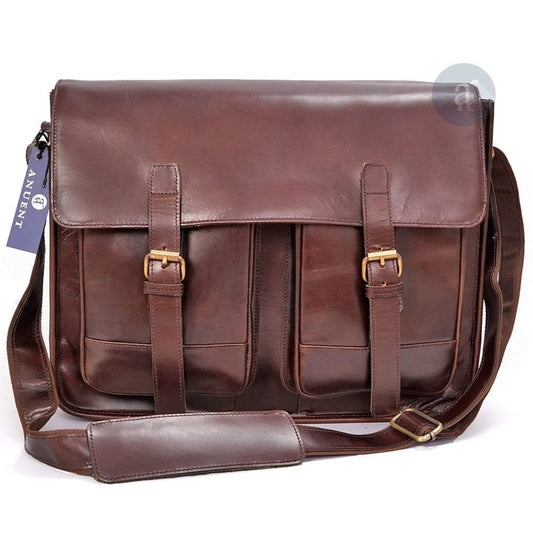
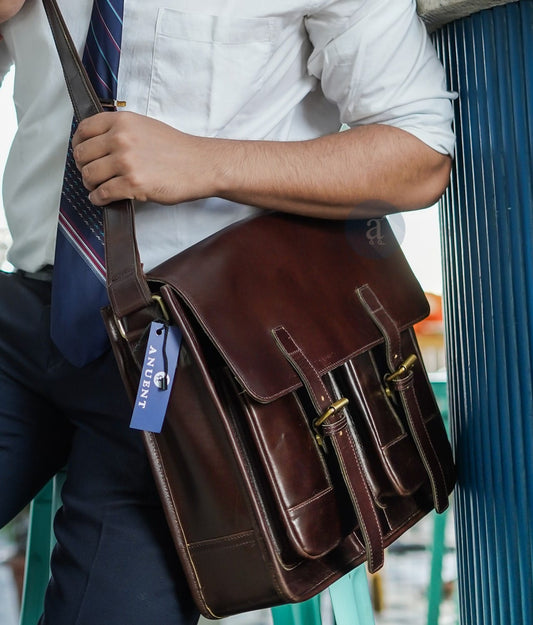
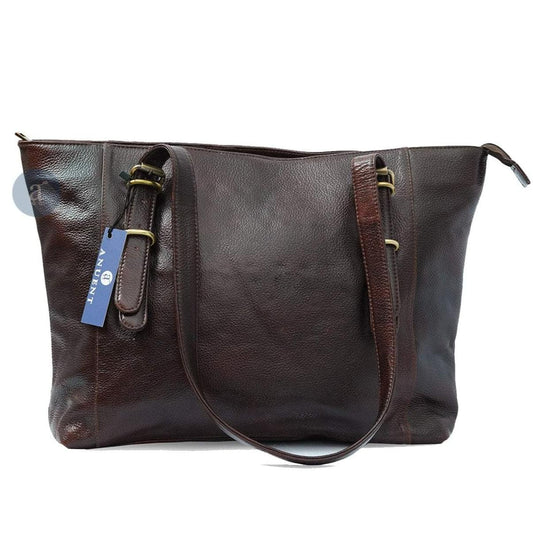
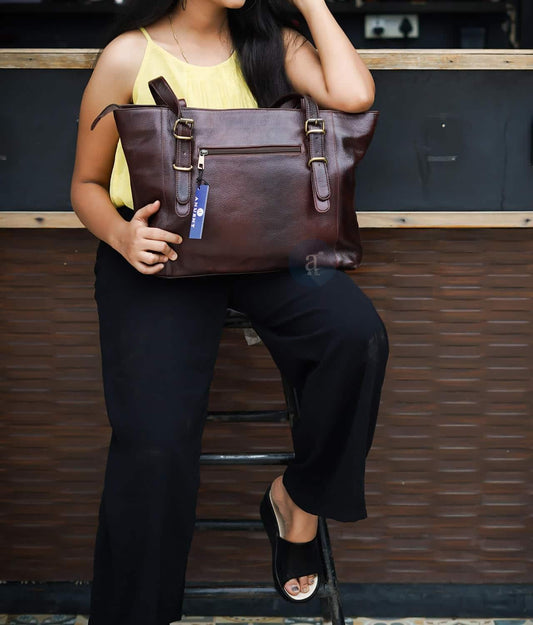
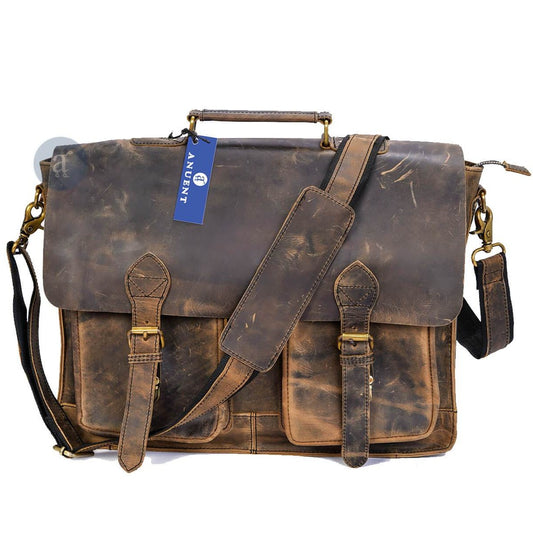
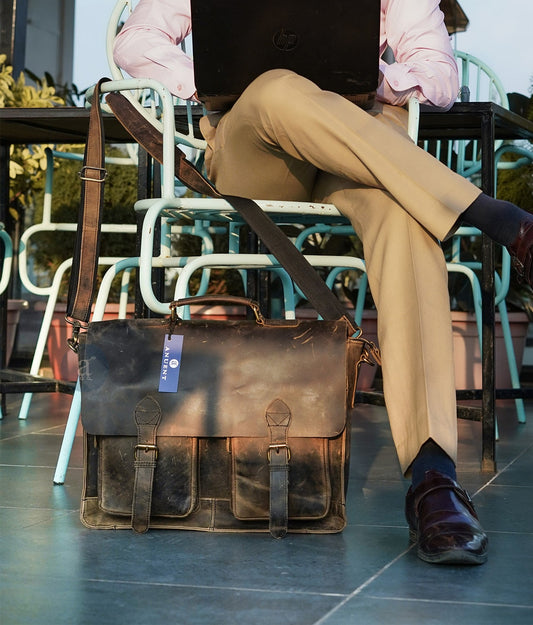
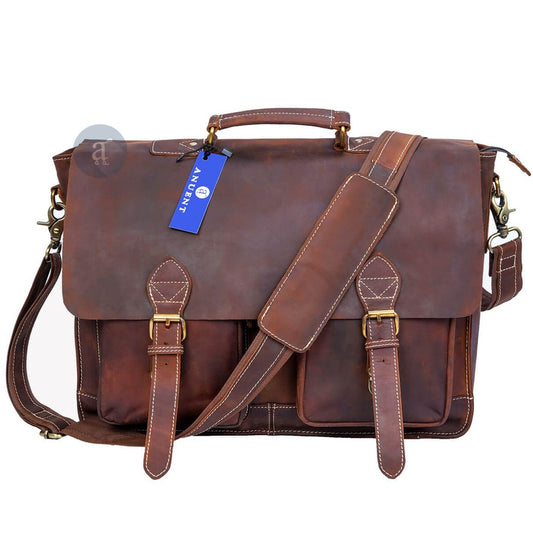
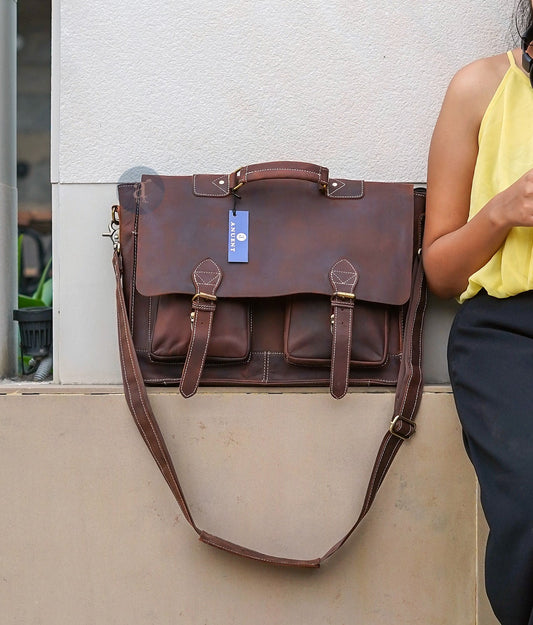
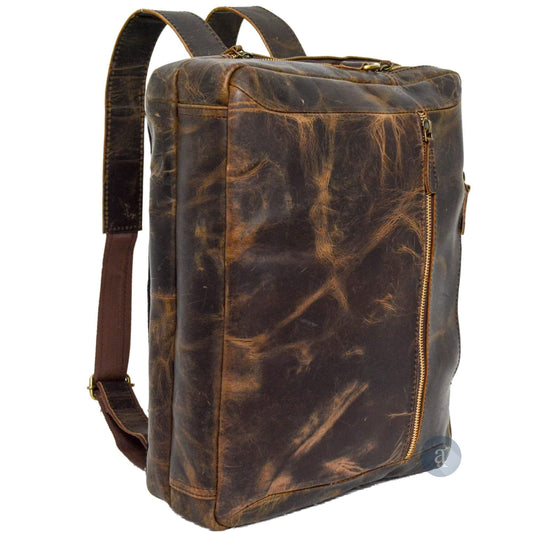
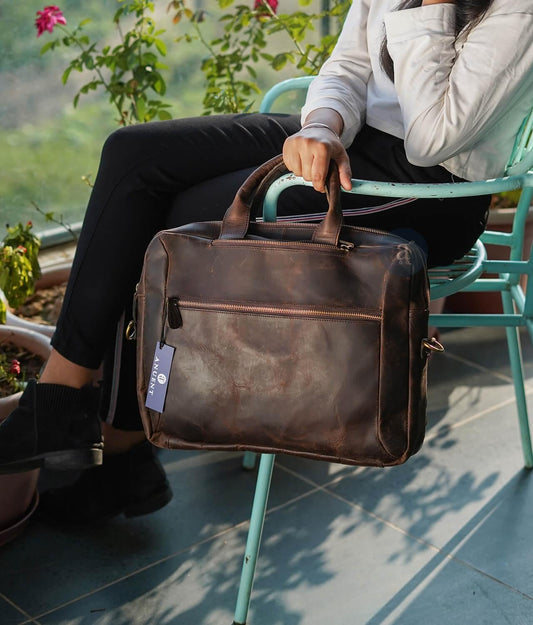
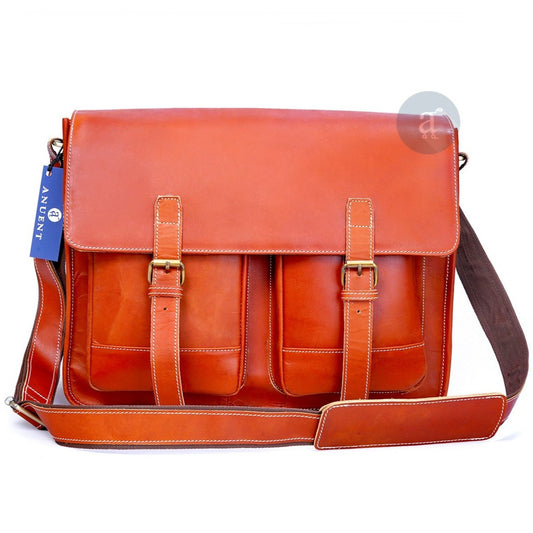
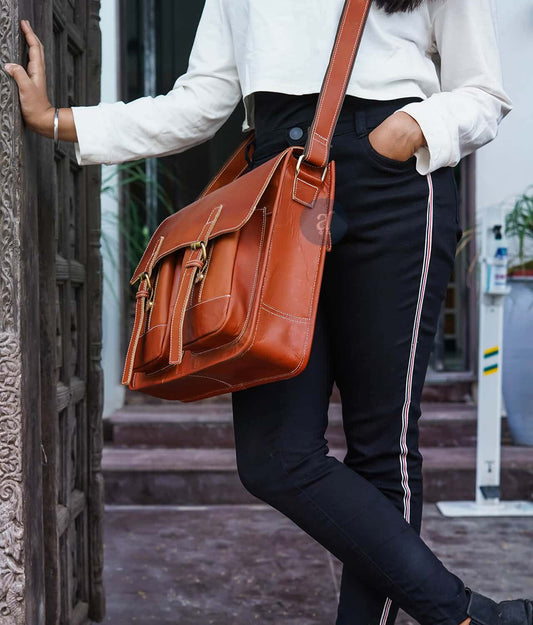
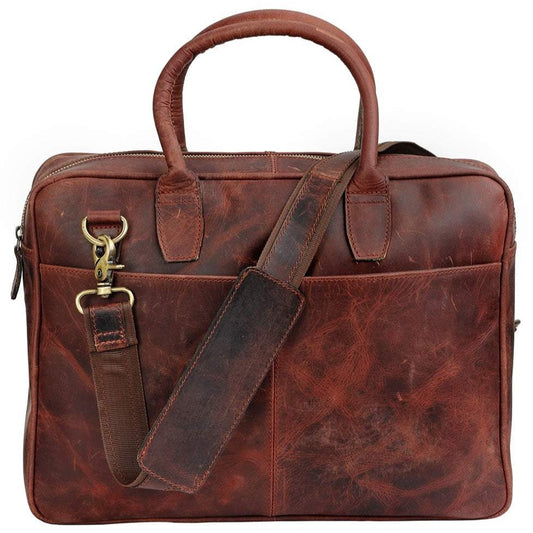
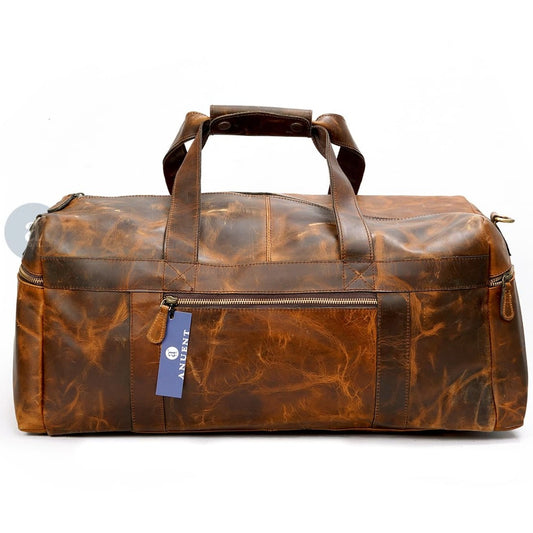
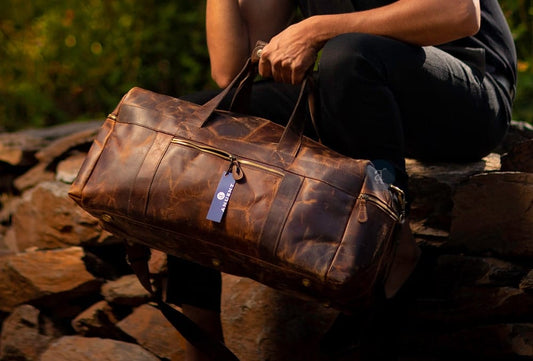
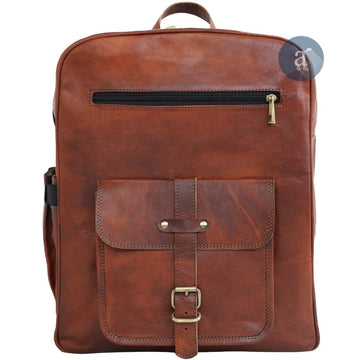
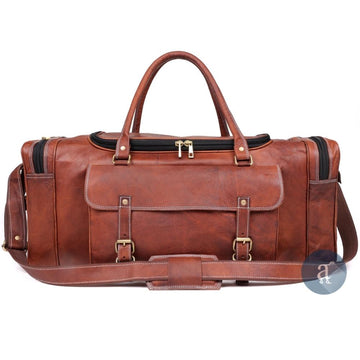
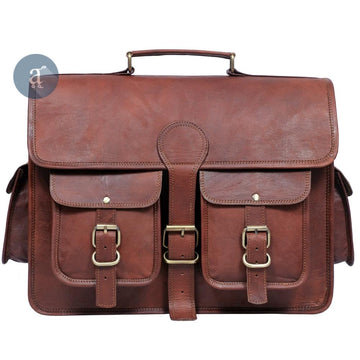
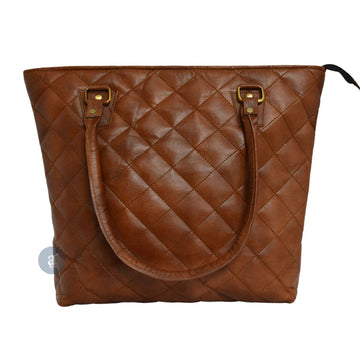
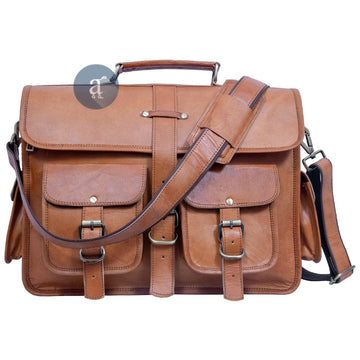
Every Anuent bag is crafted from genuine top-grain buffalo leather and goat leather. Earthy smell, natural grain, fibrous edges. The real thing. Free shipping to USA, UK, and Canada. Free monogramming on every order.
Test 5: The Water Absorption Test
Genuine leather is a porous material that absorbs small amounts of water through its natural surface.
When a small drop of water is placed on uncoated genuine leather, it absorbs into the fibers within 15 to 60 seconds, darkening the spot slightly before drying back to the original color.
Fake leather is sealed and repels water. A drop placed on a PU or PVC surface beads up and stays on the surface without absorbing.
How to perform this test safely:
- Find a truly hidden area, the underside of the base, inside a small pocket, or under a strap.
- Place a single small drop of water on the surface using a fingertip.
- Observe for over 30 to 60 seconds. Real leather absorbs; fake leather beads.
- Blot the area dry with a clean cloth after testing.
Important caveat: Heavily waxed or fully finished genuine leather may initially repel water before eventually absorbing it, because the wax surface delays penetration. If the water sits on the surface for more than two minutes without absorbing at all, the test points toward synthetic material. If you are uncertain, combine with the smell and edge tests for confirmation.
Test 6: How It Ages The Long-Term Test
The most definitive confirmation that a leather bag is genuine does not come from any single test at the point of purchase.
It comes from how the bag behaves over months of regular use.
Signs of genuine leather ageing:
- Patina development: The surface gradually deepens and enriches in color as natural oils from handling absorb into the leather fibers. This typically begins to appear after several months of regular daily carry. Full-grain leather develops the most pronounced patina; top-grain leather develops a lighter version of the same process.
- Softening over time: Genuine leather becomes noticeably more supple and comfortable with use. The fibers loosen slightly as they are exercised and conditioned, producing a bag that feels better in the hand after a year than when new.
- Response to conditioning: Apply a leather conditioner to any area of the bag after a few months of use. Genuine leather visibly absorbs the conditioner, and the area looks and feels more supple afterward. Fake leather sits on top of the surface, and the conditioner cannot penetrate.
- Surface scratching that heals: Light surface scratches on genuine leather can often be reduced by rubbing gently with a finger. The heat and pressure from fingertip buffing softens the leather oils in the scratch area and helps the fibers return to position. Fake leather scratches are cuts in the PU coating and cannot be healed this way.
Signs that a bag is not genuine leather over time:
- Peeling and delamination at handle attachment points, strap fold areas, base corners, and zip pulls
- A network of surface cracking that spreads from flex points
- The surface layer is visibly separated from a fabric or paper backing at the edges
- No patina development despite months of regular handling
Once peeling begins on a fake leather bag, it cannot be meaningfully repaired. The polyurethane coating continues to separate from the backing under the ongoing mechanical stress of use.
Test 7: How to Tell If a Leather Bag Is Real When Buying Online
Online leather shopping removes access to the smell, touch, heat, and edge tests.
Seven listing signals help assess genuine leather claims before buying without physical testing.
- Specific leather grade stated: Legitimate genuine leather retailers state the specific leather grade, full-grain, top-grain, vegetable-tanned, or the specific hide type (buffalo, goat, calfskin). Vague descriptions saying only "quality leather" or "premium leather" without specifying grade are a red flag.
- Product weight listed: Real leather is heavier than synthetic material. A medium leather bag typically weighs between 600 grams and 1.2 kilograms, depending on size and construction. A bag listed under 400 grams, claiming to be genuine leather, is likely synthetic.
- Tanning method or leather source disclosed: Sellers confident in their material typically state where the leather comes from and how it was tanned. Vegetable-tanned, chrome-tanned, or Leather Working Group certified are all positive signals of material transparency.
- Customer review photos showing natural grain: Look at customer-submitted photos rather than professional product photographs. Real leather shows visible grain variation, natural imperfections, and characteristic earthy tones in casual photography. Fake leather appears uniformly smooth and plastic-like.
- Price consistency: Compare the asking price against similar genuine leather bags from other reputable retailers. Genuine leather production has real costs that are always reflected in price. An implausibly cheap "full-grain leather" claim compared to market pricing is a clear warning sign.
- Return policy and material guarantee: Reputable, genuine leather retailers stand behind their material claims with clear return policies. A seller who provides no material specifics and offers no returns is selling a product they are not willing to be accountable for.
- Brand material transparency: Check the brand's website for a clear material sourcing or care guide page. Brands genuinely working with quality leather almost always publish care guides and material details because this information adds value. Brands working with synthetic leather tend to avoid specific material discussions.
For broader guidance on how to avoid the most common purchasing mistakes and what to look for across all leather bag types, the guide on how to spot a fake leather bag before you buy covers the pre-purchase identification process from both the in-store and online perspectives.
For a deeper understanding of what the synthetic alternatives actually are, the article on what PU leather actually is explains the construction, marketing, and durability characteristics of the most common fake leather type.
And for a guide to caring for the genuine leather bag once you have confirmed its authenticity, the long-term leather care guide covers conditioning, storage, cleaning, and how to maximize the lifespan of a bag that will actually reward the investment.
Frequently Asked Questions
How can you tell if a leather bag is real?
The three fastest and most reliable tests: the smell test (real leather has a distinctive earthy, organic smell; fake leather smells chemical or plastic), the surface grain check (real leather has natural variation and slight imperfections; fake leather has a perfectly uniform repeating pattern), and the edge inspection (real leather shows fibrous texture at cut edges; fake leather shows smooth plastic or fabric backing).
Combining these three tests identifies the vast majority of synthetic bags without damaging the product.
What does real leather feel like?
Real leather feels soft yet firm, with a slightly grainy surface texture that is inconsistent rather than uniform.
It warms up when held because it breathes.
When pressed gently, it leaves a slight impression that fades naturally.
It flexes and folds without cracking or showing white stress marks.
Fake leather feels colder initially, more uniform and plastic-like to the touch, and springs back more rigidly when pressed.
Is genuine leather real leather?
Yes, but it is the lowest grade of real leather.
"Genuine leather" is a grade label applied to the lower split layers of the hide after higher-quality full-grain and top-grain sections have been cut away.
It is technically real leather but is heavily processed and typically lasts only two to five years under daily use.
Both full-grain and top-grain leather are also genuine leather, but are far superior in quality and character.
How do you tell if a leather bag is real when buying online?
Six signals to look for: the product description states the specific leather grade rather than just "genuine leather"; the product weight is listed and is consistent with real leather; the seller describes the tanning process or leather source; customer review photos show natural grain variation; the price is consistent with genuine leather production costs; and the brand has a clear material transparency policy.
Vague descriptions, missing weight information, and suspiciously low prices are the most reliable red flags when buying online.
What are the long-term signs that a bag is real leather?
Real leather develops a patina over time, softens with use, responds visibly to conditioning, and ages with character.
Light surface scratches can be partially buffed out by fingertip pressure.
Fake leather, by contrast, begins to crack and peel at flex points within one to three years as the polyurethane coating separates from the backing.
Once peeling begins, it cannot be repaired.
Does real leather warm up when you hold it?
Yes.
Real leather is porous and warms to body temperature relatively quickly when held because it breathes.
Hold a section of the bag firmly in your hand for 20 to 30 seconds.
Genuine leather warms noticeably. Fake leather stays colder for longer because the sealed polyurethane surface does not breathe the same way.
What is the back of real leather supposed to look like?
The flesh side (underside) of real leather has a soft, slightly fuzzy or napped texture similar to suede.
The color is typically slightly different from the finished grain surface.
Fake leather has a fabric or paper-like backing that looks nothing like natural hide.
Checking any exposed edge or the underside of a strap end is the quickest way to use this test.
Can you use the fire test to tell if leather is real?
Yes, but it is a destructive test and should only be used as a last resort on a small, hidden area of a bag you are prepared to damage.
Real leather chars and smells like burning hair. Fake leather melts, drips, and smells of burning plastic.
The smell test on unburned leather is far less destructive and almost as reliable, so the fire test should only be used when other tests are inconclusive, and you are strongly considering returning the bag anyway.
THE REAL THING EVERY TIME
Genuine Leather Bags That Age Beautifully and Last for Years
All Anuent bags are crafted from top-grain buffalo leather and genuine leather that smells right, feels right, develops a patina, and gets better every year. Free shipping to the USA, UK, and Canada. Free monogramming on every order.